
A circuit breaker typically trips due to a circuit overload (too many devices running at once), a short circuit (a hot wire touching a neutral wire), or a ground fault. In Texas, breakers often trip when a struggling AC unit draws too much power during extreme heatwaves, indicating a need for electrical or HVAC service.
The “Midnight Heat” Mystery
We’ve all been there: It’s 102°F in the shade, and your Texas home is finally cooling down for the night. Suddenly—thump—the hum of the AC stops, the TV goes black, and you’re standing in total silence and rising heat. You head to the garage, flip the plastic switch in the gray metal box, and things work for five minutes before it happens again.
If you are asking why does my breaker keep tripping, you aren’t just dealing with an inconvenience; your electrical panel is performing a life-saving function. It is sensing a “fault” and cutting power before a fire starts. At Valderrama A/C & Refrigeration, we know that in our climate, your electrical and cooling systems are deeply connected.
5 Common Reasons Why Your Breaker Keeps Tripping
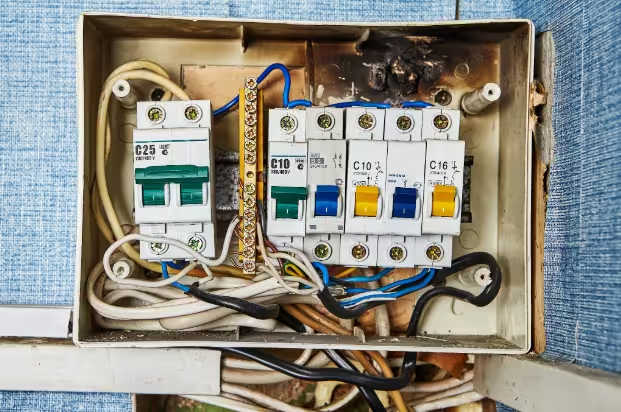
1. Circuit Overload (The Most Common Cause)
This happens when you ask a single circuit to carry more electricity than it’s rated for. Think of it like a bridge: if the bridge is rated for 20 tons and you drive 30 tons across it, the system “breaks” to prevent a collapse.
- The Symptom: The breaker trips only when you turn on a specific high-power device (like a hair dryer or space heater) while other things are already running.
2. Short Circuit
A short circuit is more serious. It occurs when a “hot” wire touches a “neutral” wire. This creates a sudden, massive burst of energy that generates intense heat.
- The Symptom: The breaker trips immediately after you reset it, often accompanied by a visible spark, a popping sound, or a burning smell.
3. Ground Fault
Similar to a short circuit, a ground fault happens when a “hot” wire touches the ground wire or the metal side of the electrical box. This is common in areas where moisture is present, such as kitchens, bathrooms, or outdoor outlets.
- The Symptom: Frequent tripping in rooms with water access, often involving a GFCI (Ground Fault Circuit Interrupter) outlet.
4. Arc Fault
Modern Texas homes are equipped with AFCI breakers. These are designed to sense “arcing”—when electricity jumps between loose connections or damaged wires (like a wire chewed by a rodent in the attic).
- The Symptom: The breaker trips seemingly at random, without a heavy load being present.
5. A Struggling AC Compressor
In Texas, your AC is the heaviest electrical load in the house. As units age, the compressor may “seize up” or struggle to start, drawing a massive “inrush” of current that exceeds the breaker’s limit.
- The Symptom: The breaker trips specifically when the outdoor AC unit tries to kick on.
The Texas Factor: Heat, Humidity, and High Voltage
Texas weather places extreme strain on your electrical system. During a record-breaking summer, your electrical panel is under constant load for 12 to 15 hours a day.
Furthermore, our high humidity can lead to corrosion inside outdoor electrical panels or junction boxes. This corrosion increases electrical resistance, which generates heat and causes breakers to “weak out” and trip more easily. If you live near the coast, salt air can accelerate this process, making regular electrical inspections a necessity for home safety.
DIY Checks: What You Can Do Safely
Before calling an electrician, try these steps:
- The “One-at-a-Time” Test: Unplug everything on that circuit and reset the breaker. If it stays on, plug items back in one by one. If it trips when you plug in the toaster, you’ve found your “bridge-breaker.”
- Inspect for Heat: Touch the front of the breaker (carefully). If it feels hot to the touch, do not reset it again.
- Check the “Airflow” Around the Panel: Ensure your electrical panel isn’t buried behind boxes in a hot garage. Overheating panels trip more frequently.
When to Call a Professional Electrician
Electrical work is not a “weekend warrior” project. You should call Valderrama A/C & Refrigeration if:
- You smell burning plastic or see “soot” around an outlet.
- The breaker trips immediately every time you reset it.
- Your lights flicker whenever the AC or refrigerator turns on.
- You have an older home with a Zinsco or Federal Pacific brand panel (these are known fire hazards in Texas).
For a long-term solution to flickering lights and constant trips, we recommend booking a comprehensive electrical safety inspection and panel audit to ensure your home can handle the 2026 Texas heat.
5 Signs You Need an Electrical Panel Upgrade
- You’re Installing a New AC: High-efficiency units often require dedicated, updated circuitry.
- You Still Have Fuses: If your home uses fuses instead of breakers, it is time for a modern upgrade.
- The Panel is Noisy: Buzzing or humming sounds coming from the box are a major red flag.
- You Use Too Many Power Strips: If every outlet has a “daisy-chain” of extensions, your home’s wiring is overtaxed.
- Corrosion or Rust: Any sign of water damage inside the panel is an emergency.
FAQ: Breaker Troubleshooting in Texas
Q: Can a breaker just “wear out”? A: Yes. Like any mechanical switch, the spring inside a breaker can weaken over 15–20 years, causing it to trip even when there isn’t a fault.
Q: Why does my breaker trip only when it rains? A: This usually points to a ground fault in an outdoor outlet or a leak in your electrical meter base that is letting moisture into the wires.
Q: Is it dangerous to keep resetting a tripping breaker? A: Yes. If there is a short circuit or ground fault, repeatedly resetting the breaker can cause the wires to overheat and start a fire behind your walls.
Q: Does whole-home surge protection help with tripping breakers? A: Surge protection protects against external spikes (like lightning), but it won’t fix a circuit that is overloaded by too many internal appliances.
Q: Why does my AC trip the breaker only in the afternoon? A: This is usually because the outdoor heat makes the compressor work harder, drawing more “amps” than it does during the cooler morning hours.
Keep Your Power On and Your Home Safe
A tripping breaker is your home’s way of asking for help. Don’t ignore the warning signs. At Valderrama A/C & Refrigeration, we are licensed Texas experts who understand the intersection of electrical safety and home comfort.
Ready to stop the resets and start the cooling?
Schedule your Professional Electrical Repair or Panel Upgrade today!
Call us at (281) 974 – 4599 for immediate priority service in Texas!