
The most common home electrical problems stem from overloaded circuits, outdated panel wiring, degraded outlets, and unsealed fixtures. Anomalies like flickering lights, frequent circuit breaker trips, dead wall receptacles, and warm outlet cover plates serve as immediate indicators that your electrical grid requires professional inspection to eliminate fire hazards.
The Hidden Power Network Behind Your Walls
It is a heavy, humid Tuesday afternoon. Outside, our local weather index is creeping into the upper nineties, and inside your home, your central air conditioning unit is working hard to keep things comfortable. You walk into your home office, turn on your computer, plug in a small desk fan, and suddenly—snap. The power cuts completely out in half of the room. Down in the hallway, you hear the central AC fan motor drop offline, and an ominous silence takes over the house.
Most of us interact with our electrical grid hundreds of times a day without ever thinking about the complex network of copper paths, bus bars, and safety switches channeling power through our sheetrock. We expect our outlets and switches to perform flawlessly year after year, yet we rarely give them a second thought until a sudden breakdown occurs or a smell of burning plastic catches our attention.
When you look up common home electrical problems online, you aren’t searching for an abstract physics lesson. You need an honest, practical safety roadmap to figure out what is happening with your wiring, how to distinguish a minor glitch from a dangerous fire hazard, and how to protect your property. At Valderrama A/C & Refrigeration, we treat your residential grid with a strict mechanical and technical focus, giving your property a clean, stable foundation of safety.
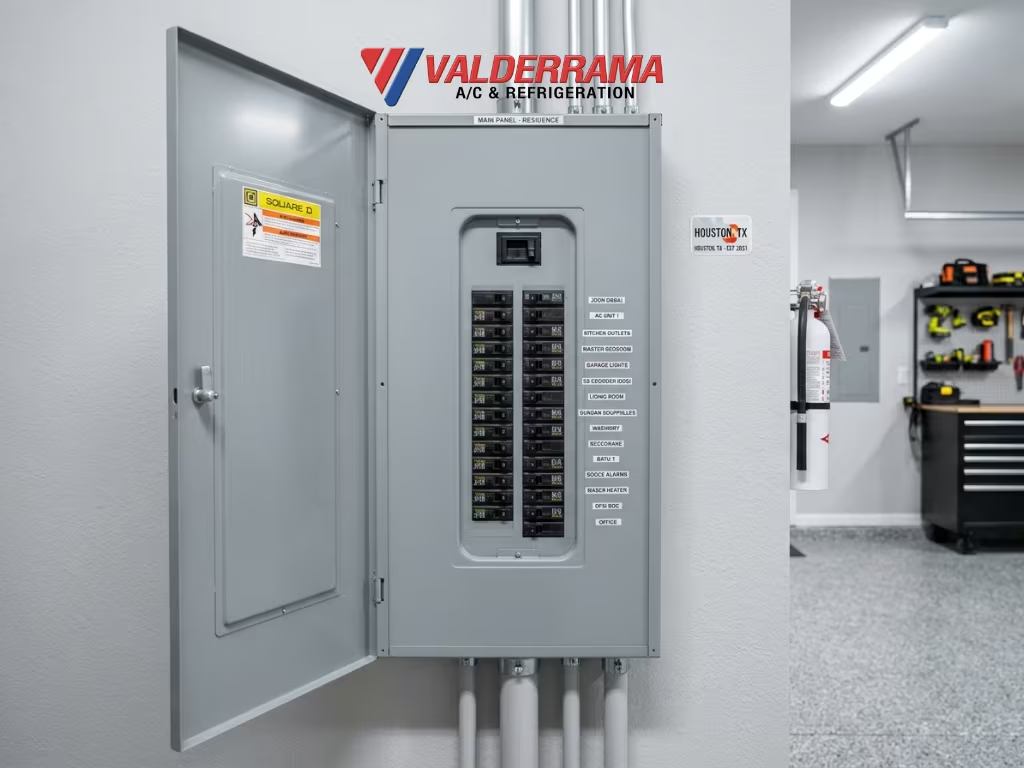
The Houston Factor: How Brutal Seasonal Climates Strain Residential Electrical Grids
Operating a reliable home electrical grid in Southeast Texas brings specific, high-load challenges that properties in milder climates rarely face.
Houston’s heat and humidity place extreme strain on AC systems, which in turn forces your property’s main electrical panel to work under severe stress for months at a time. During our prolonged summer cooling seasons, a central air handler and an outdoor compressor pump draw a massive, continuous volume of electrical current (amperage) to manage indoor humidity.
When your HVAC hardware runs at peak capacity on a hot afternoon, it raises the baseline operating temperature inside your main breaker box. If your electrical panel features loose aluminum wire terminations, oxidized bus bars, or aged circuit breakers, this extreme thermal load will cause the metals to expand and contract rapidly. Over time, this thermal cycling breaks down wire insulation, creates high-resistance connection blocks, and causes sudden power blackouts or premature mechanical component failures across your entire property.
Main Causes & Symptoms: Demystifying Common Electrical Gremlins
Most home electrical anomalies don’t occur out of nowhere. They are the direct result of age, environmental wear, or modern technology demands overloading old electrical designs.
1. Circuit Overloads (The Classic Power Squeeze)
- The Cause: Plugging high-wattage modern appliances—such as hair dryers, space heaters, or portable AC units—into a single circuit line that was only engineered to handle basic lighting tracks.
- The Symptoms: A circuit breaker that trips instantly the moment a specific combination of appliances is turned on, accompanied by dimming lights across the room.
2. Degraded or Back-Stabbed Outlets
- The Cause: Builders often use a fast wiring shortcut known as “back-stabbing,” where wires are pushed into spring-loaded slots behind the outlet instead of being securely fastened under terminal screws. Over a decade of regular use, these spring clips lose tension and create loose connections.
- The Symptoms: Plugs slide out of the wall easily, devices cut in and out when you wiggle the cord, or you hear a faint sizzling sound coming from the wall receptacle.
5 Signs You Have Deep Underlying Electrical Problems
Your home’s electrical network will display clear sensory and physical red flags when its core internal pathways are deteriorating. Monitor your property closely for these five critical warning indicators:
- Persistent Flickering or Dimming Lights: Overhead fixtures dim sharply whenever your central air conditioner cycles on or your microwave runs, signaling a major voltage drop in your main electrical service.
- Warm, Discolored, or Scorched Outlet Plates: Wall receptacles that feel physically hot to the touch or display a faint brown or gray burn mark along the plastic slots.
- A Sharp, Acrid Burning Odor: An unmistakable smell resembling burning fish or melting plastic coming from your switches, panel, or appliance plugs.
- Frequent, Unexplained Circuit Breaker Trips: A specific breaker snaps into the “Off” position multiple times a month, even when you aren’t running heavy equipment.
- A Constant Buzzing or Hissing Sound: A distinct audible crackle or hum radiating from behind your switches or inside your main breaker cabinet, signaling an active electrical arc.
If your home’s main panel box is hot to the touch or your primary appliances are cutting off unexpectedly during high-heat afternoons, do not leave your safety to chance. Take a moment to explore our licensed residential electrical services to schedule an advanced technical diagnostic review of your property’s wiring tracks immediately.
Homeowner DIY Checks: What You Can Troubleshoot Safely
While you should never strip raw high-voltage wires or open a live electrical panel box yourself, you can execute these three safe visual checks to diagnose issues before calling an expert:
The Safe Breaker Reset Routine
If a circuit cuts out completely, head to your main service panel. Look for a breaker handle that isn’t fully aligned with the rest—it will usually be resting in the middle position or showing a small red window. To reset it safely, click the handle completely to the “Off” position first until you hear a sharp snap, then flip it firmly back to the “On” position. If it trips again instantly, do not force it; you have a direct short circuit or an active hazard.
The GFCI Receptacle Test
Walk through your kitchen, bathrooms, and garage to inspect your Ground Fault Circuit Interrupter (GFCI) outlets. These specialized safety devices feature “Test” and “Reset” buttons and are designed to cut power in milliseconds if they detect water contact. Press the “Test” button—the outlet should click loudly and cut power to anything plugged into it. Press “Reset” to restore power. If the button refuses to snap back in or stays loose, the internal safety sensor has failed.
Check Your Lightbulb Wattage Labels
If a single light fixture blinks constantly or smells hot, twist out the bulb and look closely at the printing near the base. Compare its actual wattage draw against the maximum allowed rating stamped inside the plastic socket rim. Screwing a 100-watt incandescent bulb into a fixture rated for a maximum of 60 watts causes a severe overheating condition known as “overlamping,” which melts wire coatings inside your ceiling boxes.
Prevention Tips: Keeping Your Grid Safe and Stable
Preventing unexpected electrical failures and protecting your expensive electronics comes down to reducing resistance and safeguarding against incoming voltage spikes:
- Upgrade to Whole-Home Surge Protection: Lightning strikes or local power grid switching can send massive voltage surges down your utility lines, instantly destroying the sensitive solid-state computer boards inside your modern variable-speed AC units, smart TVs, and kitchen appliances. Installing an industrial-grade surge protector directly onto your main panel intercepts these currents and dumps them safely into the ground.
- Map and Label Your Electrical Panel: Spend an hour with a helper using walkie-talkies or phones to systematically identify exactly which breakers control which rooms. Write a clear, itemized directory on the inside door sheet. This ensures your family can act quickly during an emergency instead of guessing in the dark.
Why Licensed Master-Level Electrical Craftsmanship Matters
Your residential electrical grid is a strictly regulated infrastructure network that requires expert precision to modify or repair.
Our fully licensed, background-checked field crews handle your technical repairs cleanly—calculating accurate load balances across your bus bars, running code-compliant solid copper wire paths, pulling necessary municipal safety permits, and utilizing calibrated digital multi-meters to verify perfect voltage and resistance specs.
Bypassing this professional care by letting an unpermitted handyman alter your circuits to save a few dollars upfront can introduce severe financial and legal liabilities. If an illegal installation triggers a structural electrical fire, your property insurance provider can legally deny your entire damage claim. Furthermore, local Texas code enforcement can issue steep citations if they find structural work was performed without official licensing or master sign-offs.
Why Choose Valderrama A/C & Refrigeration?
We understand that electrical anomalies introduce immediate stress and safety concerns into your home. When you select our family-owned team to protect your property, you secure an unmatched tier of professional support:
- Guaranteed, Upfront Project Estimates: The itemized, line-item written quote we hand you before physical mechanical or electrical work begins is the exact price your family pays—with zero hidden markups or surprise surcharges.
- Licensed Texas Technical Experts: Background-checked, fully insured field specialists who specialize in advanced building science, complex grid thermodynamics, and electrical safety codes.
- Turnkey Home Infrastructure Protection: From simple outlet diagnostic changes to complete multi-panel upgrade designs, we ensure your building runs cool, safe, and entirely efficient through any season.
FAQ: Navigating Residential Electrical Realities
Q: Why do my home’s lights flicker whenever the central vacuum or microwave turns on?
A: This common symptom indicates that the high-draw appliance is sharing a heavily loaded circuit with your light fixtures, or your main service panel lines are loose. This resistance drops the available voltage instantly whenever a motor draws its initial startup current.
Q: What is the main difference between a fuse and a circuit breaker?
A: Both components are safety valves designed to interrupt power before wires overheat. A fuse features a thin metal strip that physically melts when excess current passes through it, requiring total replacement once it blows. A circuit breaker uses an internal bimetallic switch that snaps open under heat or magnetic shorts, allowing it to be easily reset and reused thousands of times.
Q: Are old aluminum wiring systems safe to leave intact inside a home?
A: Single-strand aluminum wiring, commonly used in homes built between 1965 and 1973, introduces significant structural fire risks. Aluminum expands and contracts far more than copper when carrying a load, which rapidly loosens terminal screws and creates dangerous electrical arcs. These systems must be professionally remediated using specialized copper-clad connectors or completely re-wired.
Q: How often should a residential electrical panel be completely replaced?
A: A high-quality electrical service panel typically maintains a safe operational lifespan of 30 to 40 years. If your property relies on an obsolete brand (such as Federal Pacific, Zinsco, or Challenger panels), these boxes feature known mechanical design defects that prevent breakers from tripping during a short circuit, requiring immediate replacement for safety.
Q: What does a flashing red or orange light on a GFCI outlet mean?
A: A persistent flashing or solid red status light on a modern GFCI outlet indicates that the device’s internal self-test diagnostics have detected an internal circuit failure. The outlet can no longer provide shock protection and must be removed and replaced by a licensed electrician immediately.
Reclaim Complete Control Over Your Property’s Safety and Power Today
You do not have to live with flickering lights, mystery power cuts, or guess whether your home’s hidden wiring is on the verge of a dangerous failure. Securing an engineered understanding of common home electrical problems gives your household the ultimate edge: the absolute peace of mind that comes with a perfectly balanced, code-compliant power network built to protect your family and assets for decades to come.
At Valderrama A/C & Refrigeration, we are your local comfort and safety advocates. We provide honest flat-rate pricing, high-caliber technical diagnostics, and a total commitment to keeping your property safe, dry, and highly efficient.
Ready to eliminate electrical hazards and protect your expensive appliances?
Schedule Your Precision Home Electrical Safety Assessment Now!
Call our support response group right now at (281) 974 – 4599 to get an expert technical vehicle heading straight to your driveway!