
In HVAC, an RTU (Rooftop Unit) is a self-contained, packaged heating and cooling system mounted directly on a building’s roof. It houses all primary components—including the compressor, condenser, evaporator coil, and blower—inside a single weatherproof cabinet, delivering conditioned air directly into commercial spaces through rooftop ductwork.
Running a business or managing a commercial facility in Southeast Texas comes with enough daily headaches without worrying about a failing air conditioner. When indoor temperatures climb, employees lose focus, customers walk out, and inventory can suffer. If you are looking at upgrading your building’s climate control or managing existing roof-mounted equipment, understanding what is rtu in hvac—and how these heavy-duty systems handle extreme Gulf Coast heat—is essential for protecting your bottom line.
At Valderrama A/C & Refrigeration, we help business owners and property managers across Greater Houston install, maintain, and repair commercial rooftop units built for demanding climates. Here is everything you need to know about how RTUs work, why they dominate commercial cooling, and how professional care keeps them running reliably.
How a Rooftop Unit (RTU) Works
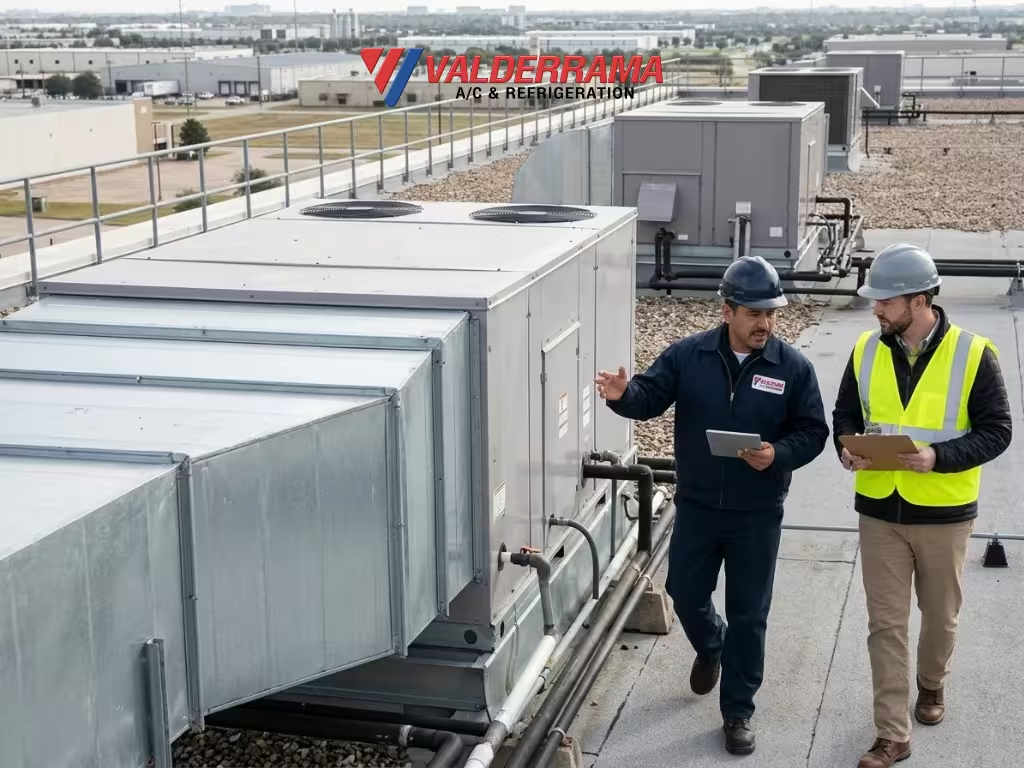
Unlike residential split systems that divide components between an indoor air handler and an outdoor condenser, a commercial RTU is a packaged system. Every mechanical part required to cool, dehumidify, and heat your building sits inside one heavy-duty metal cabinet on the roof.
- All-in-One Cooling & Heating: The cabinet contains the compressor, evaporator coil, condenser coil, expansion valve, and supply/return fans. Many commercial RTUs also integrate gas burners or electric heat strips for year-round climate control.
- Direct Ductwork Connection: The unit sits over a roof curb—a raised structural frame—that connects directly to the building’s main supply and return air ducts.
- Economizer Integration: Modern RTUs often feature built-in economizers that draw in cool outside air when weather permits, drastically reducing mechanical cooling demand and lowering utility costs.
Because the entire system resides outdoors on the roof, businesses reclaim valuable interior square footage while keeping loud compressor noise far away from offices, retail floors, and dining rooms.
Houston’s Heat and Humidity Challenges
Houston’s heat and humidity place extreme strain on AC systems from early spring well into autumn. With roof surface temperatures frequently exceeding 140°F under direct Texas sun and ambient humidity regularly topping 70%, commercial rooftop units operate in one of the harshest HVAC environments in the country.
Unlike shaded ground-level condensers, an RTU absorbs intense radiant heat directly from the roof membrane while simultaneously working to pull massive amounts of moisture out of high-occupancy commercial spaces. Over time, extreme thermal stress degrades belts, overheats compressors, and bakes electrical contactors. Without routine cleaning and calibration, Houston weather quickly turns minor wear into costly emergency shutdowns.
Why Professional RTU Service Matters
Commercial rooftop units are complex, high-voltage machines that require specialized diagnostic tools, crane access for major component replacements, and strict adherence to commercial safety codes. Skipping maintenance or relying on general handymen often leads to voided manufacturer warranties and premature equipment failure.
When you partner with Valderrama A/C & Refrigeration, our commercial HVAC specialists keep your rooftop equipment operating at peak efficiency:
- Coil & Cabinet Cleaning: Removing airborne grease, pollen, and Texas dust from condenser coils prevents high head pressure and compressor burnout.
- Belt & Blower Calibration: Inspecting fan belts, sheaves, and bearings ensures proper static pressure and consistent airflow across every zone.
- Economizer & Damper Testing: Verifying that fresh-air dampers open and close properly prevents humid outside air from flooding your building.
- Refrigerant & Electrical Diagnostics: Checking superheat/subcooling levels, contactors, and control boards stops mid-day cooling failures before they disrupt operations.
Key Benefits of Commercial Rooftop Units
Installing and maintaining a modern RTU offers major operational advantages for commercial facilities:
- Maximized Interior Floor Space: Moving mechanical equipment to the roof frees up valuable indoor rooms for inventory, seating, or workspaces.
- Quieter Indoor Environment: Isolating motors and compressors above the roofline eliminates disruptive mechanical noise inside the building.
- Simplified Maintenance Access: Technicians can service the entire HVAC system on the roof without interrupting employees, tenants, or customers below.
- Scalable Multi-Zone Comfort: Multiple RTUs can be staged across large roofs to provide independent temperature control for different wings or suites.
5 Signs You Need Air Conditioner Service
Even the toughest commercial rooftop units show warning signs before breaking down completely. Our technicians at Valderrama A/C & Refrigeration advise facility managers to watch for these 5 red flags:
- Warm or Weak Airflow From Ceiling Vents: Often caused by slipping blower belts, dirty evaporator coils, or low refrigerant charges.
- Rising Commercial Electric Bills: A sudden spike in monthly kWh usage indicates your RTU is running longer cycles to overcome dirty coils or failing components.
- High Indoor Humidity & Muggy Air: If your building feels damp or sticky, the RTU may be short-cycling or failing to drain condensate properly.
- Loud Squealing, Banging, or Vibration: Worn fan bearings, loose panels, or misaligned belts create distinct noises that travel down through the ductwork.
- Frequent Breaker Trips or Fault Codes: Electrical shorts, failing capacitors, or overheating compressors will repeatedly trip disconnect switches during peak afternoon heat.
If you spot any of these symptoms on your property, address them before a total outage halts business operations. Explore our comprehensive commercial HVAC services in Houston to schedule a thorough rooftop inspection and keep your facility cool.
Frequently Asked Questions
What does RTU stand for in HVAC?
RTU stands for Rooftop Unit. It refers to a self-contained, packaged air conditioning and heating system installed on the roof of commercial buildings such as retail stores, warehouses, offices, and restaurants.
How long does a commercial rooftop unit last in Houston?
With consistent preventative maintenance, a commercial RTU typically lasts 12 to 15 years in Houston’s demanding climate. Neglecting seasonal coil cleanings and belt replacements can cut that lifespan short by several years.
How often should a commercial RTU be serviced?
Most commercial buildings in Southeast Texas require quarterly or semi-annual HVAC maintenance. Restaurants, warehouses, and high-traffic retail spaces benefit from quarterly filter and belt checks to handle heavy runtime and airborne debris.
Can an RTU both heat and cool a commercial building?
Yes. Most modern RTUs are packaged heating and cooling systems that combine electric air conditioning with either gas heat exchangers, electric resistance heat strips, or heat pump technology for year-round comfort.
When should I call Valderrama A/C & Refrigeration for commercial RTU service?
Reach out to our team whenever you notice uneven temperatures between office zones, rising utility costs, water stains near ceiling diffusers, or before peak summer temperatures arrive.
Ready to optimize your indoor climate and lower your energy costs?
Schedule Your Precision HVAC System Inspection Now!
Call our team today at (281) 974 – 4599 to speak with an experienced specialist and confirm your service visit.