
Electricians install, inspect, maintain, and repair electrical power systems, wiring, circuit breakers, and dedicated equipment circuits in homes and businesses. They ensure safe power distribution, troubleshoot electrical faults, upgrade overloaded breaker panels, and wire high-demand appliances like air conditioners, heat pumps, and commercial refrigeration units.
Imagine settling in on a sweltering Southeast Texas afternoon, turning down your thermostat, and watching your living room lights dim right before your air conditioner shuts off completely. When you walk out to the garage and find a tripped breaker—or worse, smell faint burning plastic near your utility closet—a critical question immediately comes to mind: what do electricians do, and is your current problem an HVAC mechanical issue or an electrical hazard?
Modern heating, cooling, and refrigeration systems rely heavily on clean, stable electrical power. At Valderrama A/C & Refrigeration, we frequently see homeowners caught between HVAC troubleshooting and home electrical limitations. Understanding the full scope of electrical work helps you protect your property, prevent fire hazards, and keep your indoor climate systems running without interruption.
Core Responsibilities: What Do Electricians Do in a Home?
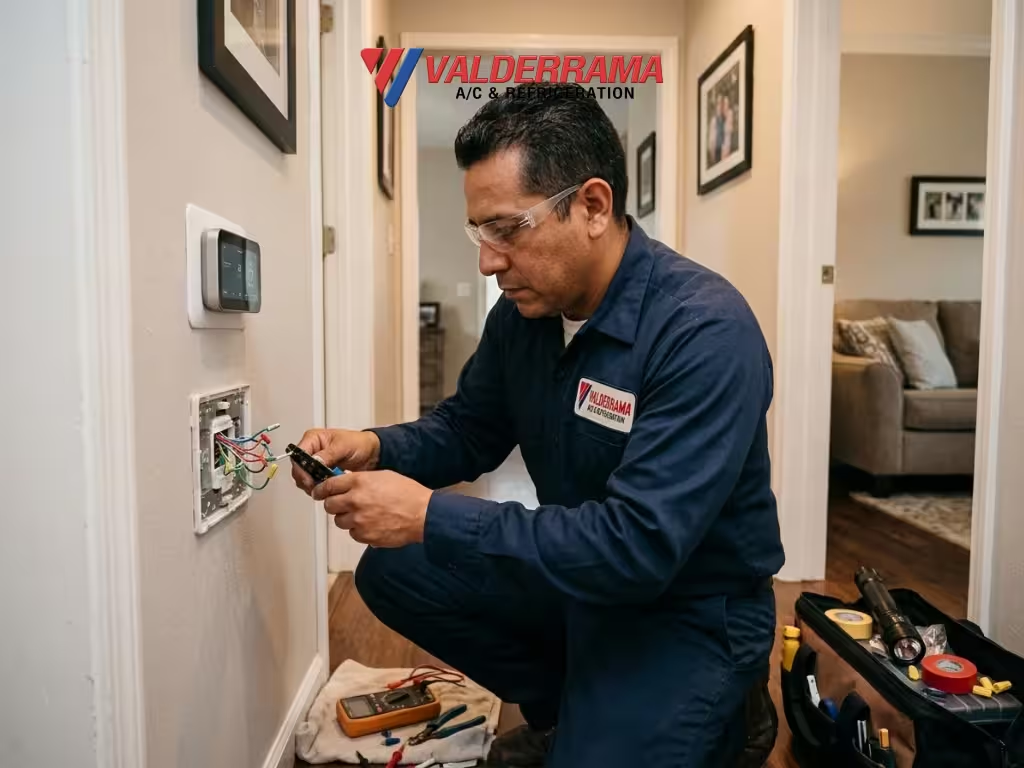
Licensed electricians manage the entire electrical infrastructure that brings power from the utility grid safely into every outlet, switch, and major appliance in your home. Their daily work spans installation, diagnostics, code compliance, and emergency repairs:
- Electrical Panel Upgrades and Circuit Breakers: Replacing outdated fuse boxes or undersized 100-amp panels with modern 200-amp systems capable of supporting high-efficiency HVAC units, EV chargers, and modern kitchen appliances.
- Dedicated Appliance Wiring: Installing dedicated 240-volt circuits and outdoor disconnect boxes specifically engineered for central air conditioners, heat pumps, furnaces, and water heaters.
- Wiring Installation and Rewiring: Running safe copper wiring through walls and attics during renovations, or replacing deteriorated aluminum and cloth-insulated wiring in older properties.
- Surge Protection and Grounding: Installing whole-home surge protectors at the main breaker panel to shield sensitive HVAC control boards and smart thermostats from lightning strikes and grid spikes.
- Lighting, Outlets, and GFCI Safety: Installing Ground Fault Circuit Interrupter (GFCI) outlets in moisture-prone areas like bathrooms, kitchens, garages, and outdoor patios to prevent electrocution.
- Electrical Diagnostics and Code Inspections: Using thermal imaging, multimeters, and circuit analyzers to trace hidden short circuits, overloaded lines, and loose connections.
Common Causes of Residential Electrical and HVAC Power Issues
Electrical failures rarely happen out of nowhere. Most residential power issues stem from gradual wear, environmental stress, or increasing energy demands inside the home:
- Overloaded Circuits: Plugging space heaters, portable AC units, or heavy electronics into standard 15-amp bedroom circuits forces wires to carry more current than they were designed to handle.
- Undersized Breaker Panels: Homes built 30 to 40 years ago were not wired for today’s high-draw variable-speed heat pumps, multiple computers, and smart home equipment.
- Loose Wire Connections: Over years of thermal expansion and contraction, wire terminals inside breaker boxes, outlets, and outdoor AC disconnect switches can loosen, creating dangerous electrical arcing.
- Pest Damage in Attics and Crawlspaces: Rodents chewing through non-metallic sheathed cable (Romex) expose live copper conductors, causing intermittent shorts or fire risks.
- Corroded Outdoor Disconnects: Moisture intrusion inside exterior electrical boxes oxidizes metal contacts, starving your outdoor AC condenser of proper voltage.
Symptoms of Underlying Electrical Problems
Recognizing early warning signs allows you to address electrical faults before they damage expensive HVAC compressors or spark an electrical fire. Watch for these common symptoms:
- Flickering or Dimming Lights: Lights that briefly dim whenever your central air conditioner or refrigerator compressor starts up indicate a heavy voltage drop or loose neutral wire.
- Warm or Discolored Outlets: Switch plates or wall outlets that feel warm to the touch or show faint brown scorch marks signal active overheating behind the wall.
- Buzzing or Crackling Sounds: A healthy electrical system is completely silent. Humming from the breaker panel or crackling inside a wall switch points to loose wiring or a failing breaker.
- Frequent Breaker Trips: A circuit breaker that trips repeatedly under normal use is actively protecting your home from an overload or ground fault.
- Burning or Fishy Odors: Overheating electrical insulation emits a distinct acrid, chemical, or fishy smell near outlets, attics, or utility closets.
Safe DIY Checks Before Calling a Specialist
While you should never open a main electrical panel or handle exposed wiring yourself, there are a few safe, simple checks you can perform when power issues occur:
- Identify What Stopped Working: Check whether power is out in a single room, across one side of the house, or throughout the entire property. If neighbors also lost power, contact your utility provider.
- Test and Reset GFCI Outlets: Press the “Reset” button on GFCI outlets in bathrooms, kitchens, garages, and exterior walls—one tripped GFCI often cuts power to several downstream outlets.
- Unplug High-Draw Devices: If a bedroom or living room breaker tripped, unplug hair dryers, space heaters, or vacuums before flipping the breaker switch firmly to “Off” and back to “On.”
- Check Your Thermostat Display: If your HVAC system will not turn on, verify whether the thermostat screen is blank (which may indicate a tripped indoor air handler float switch or blown low-voltage fuse rather than a main breaker failure).
- Inspect Your Air Filter: A severely clogged HVAC filter restricts airflow and forces blower motors to draw excess amperage, which can trigger thermal overload switches.
If a breaker trips immediately after resetting, stop trying to force it back on and call a qualified technician right away.
Beaumont’s Weather and Climate Challenges on Electrical & HVAC Systems
Beaumont’s heat and humidity place extreme strain on AC systems and the residential electrical infrastructure powering them. Located along the humid Gulf Coast, Beaumont experiences prolonged stretches of 90°F+ heat, oppressive moisture levels, and frequent severe thunderstorms from spring through late autumn.
High humidity accelerates corrosion inside outdoor AC disconnect boxes, electrical contactors, and exterior meter bases. Meanwhile, afternoon lightning storms regularly send massive voltage surges through local power grids, frying unprotected HVAC control boards and smart thermostats. Because air conditioners in Beaumont run nearly non-stop for months at a time, weak circuit breakers and aging attic wiring are pushed to their thermal limits—making routine electrical and HVAC inspections essential for Southeast Texas homeowners.
When to Call a Professional vs. Handling It Yourself
Knowing where homeowner maintenance ends and professional service begins keeps your family safe and ensures your home remains compliant with the National Electrical Code (NEC):
- Handle Yourself: Replacing standard light bulbs, resetting tripped GFCI outlets, replacing HVAC air filters, and changing thermostat batteries.
- Call a Professional Immediately: Whenever a breaker trips repeatedly, an outdoor AC disconnect box shows rust or melted wiring, you plan to install a new heat pump or mini-split system, or you notice burning smells, sparks, or hot outlet covers.
Working with live 120-volt and 240-volt circuits carries severe risks of electrocution and hidden arc faults. Qualified professionals use calibrated diagnostic instruments to isolate faults safely without damaging sensitive electronic components.
Prevention Tips to Protect Your Home’s Electrical & HVAC Systems
Taking proactive steps reduces emergency repair costs and extends the lifespan of both your wiring and your heating and cooling equipment:
- Install Whole-Home Surge Protection: Have a Type 1 or Type 2 surge protective device installed directly at your main breaker panel to block lightning and utility surges before they reach your HVAC compressor.
- Schedule Annual HVAC & Electrical Tune-Ups: Having technicians inspect amp draws, tighten electrical lugs, and test capacitors every spring prevents mid-summer breakdowns.
- Avoid Daisy-Chaining Power Strips: Never plug power strips into extension cords or overload single outlets with high-wattage appliances.
- Upgrade Aging Panels Proactively: If your home still relies on a 100-amp panel or recalled breaker brands (such as Federal Pacific or Zinsco), schedule a panel evaluation before upgrading your air conditioner.
5 Signs You Need Electrical Service
If you notice any of the following warning signs around your home or HVAC equipment, schedule an expert evaluation right away:
- Your Air Conditioner Repeatedly Trips the Circuit Breaker: If your outdoor unit trips its dedicated double-pole breaker every time it tries to start, you may have a failing compressor, shorted fan motor, or worn-out breaker.
- Lights Flicker When Major Appliances Turn On: Noticeable dimming across rooms when your AC or dryer kicks on indicates an overloaded panel or loose main service connection.
- Outlets Spark, Feel Hot, or Lack Three-Prong Grounding: Two-prong ungrounded outlets and warm faceplates create shock hazards and cannot safely support modern electronics.
- You Smell Burning Plastic Near Panels or Vents: Overheated wire insulation or failing blower motor windings require immediate shutdown and professional inspection.
- Your Breaker Panel Shows Rust, Corrosion, or Scorch Marks: Moisture intrusion inside a breaker box compromises internal bus bars and prevents breakers from tripping properly during an overload.
For dependable local support keeping your home’s power and comfort systems running safely, explore our Beaumont, TX HVAC and electrical service area to connect with our team.
Frequently Asked Questions
What is the difference between a residential electrician and an HVAC technician?
A residential electrician handles whole-home power distribution, main breaker panels, wall outlets, lighting, and running dedicated circuits from the panel to the disconnect box. An HVAC technician specializes in heating, cooling, refrigeration, airflow, and the internal low-voltage and high-voltage components inside the HVAC equipment itself. At Valderrama A/C & Refrigeration, our team bridges that gap by thoroughly diagnosing how electrical supply affects your heating and cooling performance.
Why does my air conditioner keep tripping the circuit breaker?
An AC unit typically trips a breaker due to dirty condenser coils causing the compressor to overheat, a failing start capacitor drawing excessive startup amperage, a shorted wire inside the unit, or a weak circuit breaker that can no longer hold its rated load.
Do I need an electrical panel upgrade when installing a new HVAC system?
Not always, but older homes with 100-amp electrical service often need a 200-amp panel upgrade when switching from a gas furnace to an all-electric heat pump or adding multi-zone ductless mini splits.
How often should a homeowner have their electrical system inspected?
Most residential safety guidelines recommend a comprehensive electrical inspection every 3 to 5 years—or immediately when purchasing an older home, experiencing recurring breaker trips, or installing major appliances.
How can I protect my air conditioner from power surges during Texas storms?
Installing a whole-home surge protector at your main electrical panel, combined with a dedicated surge protector mounted directly on your outdoor AC disconnect box, provides dual-layer defense against lightning spikes and utility grid fluctuations.
Ready to optimize your indoor climate and lower your energy costs?
Schedule Your Precision HVAC System Inspection Now!
Call our team today at (281) 974 – 4599 to speak with an experienced specialist and confirm your service visit.