
When evaluating leading a c brands, top manufacturers like Trane, Carrier, Lennox, Daikin, Goodman, and Rheem lead the market. The best brand for your home depends on SEER2 efficiency tiers, sound ratings, parts warranty coverage, and above all, the quality of the certified professional installation.
The Maze of Badges, Logos, and Marketing Promises
It is 2:30 PM on a sweltering Tuesday afternoon. You walk into your home after work, and the digital thermostat displays an uncomfortable 82°F. You step out to the utility pad behind your garage, only to find your outdoor condenser completely silent, while the copper suction line is warm to the touch. Inside, the blower fan is merely circulating stagnant, room-temperature air.
When a diagnostic inspection reveals that your compressor has permanently shorted out, you suddenly find yourself thrust into the HVAC marketplace. You start searching online, and within minutes, you are flooded with conflicting opinions. One forum claims Brand A is the gold standard of durability. Another homeowner swears Brand B is cheap junk. A local technician insists Brand C is the only equipment worth buying.
With dozens of names plastered across outdoor metal cabinets, deciphering reputable a c brands from slick marketing spin feels overwhelming.
The reality is that most major cooling equipment lines come from a small handful of parent manufacturing groups. The real differences lie in coil engineering, compressor stages, proprietary electronic controls, and how well the equipment handles relentless regional heat. At Valderrama A/C & Refrigeration, we believe in giving property owners an unbiased, clear breakdown of how manufacturers stack up so you can invest in lasting comfort.
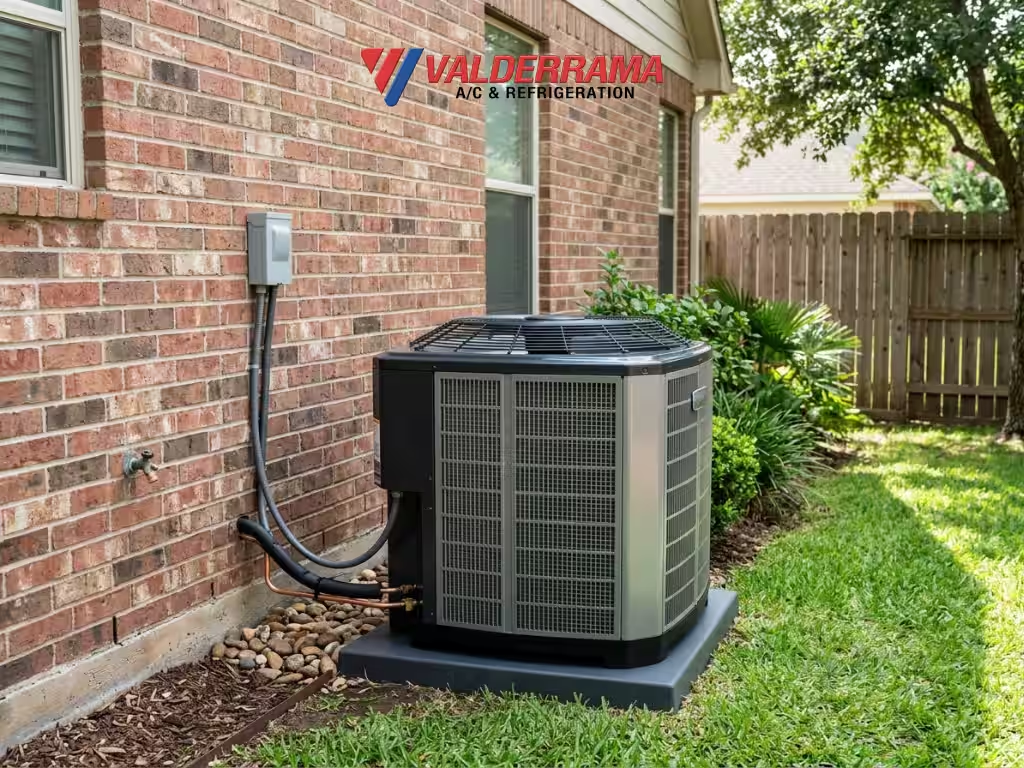
The Houston Factor: How Coastal Weather Tests Every Brand
A central air conditioner that performs fine in Colorado or Ohio faces an entirely different set of physical demands in Southeast Texas.
Houston’s heat and humidity place extreme strain on AC systems. Because our warm season routinely stretches across nine to ten months of the year, equipment here logs thousands of operating hours each season—double or even triple the annual workload of units in northern states.
Our regional climate brings a massive “latent heat load.” Your air conditioner cannot focus solely on dropping the temperature reading on your thermostat; it must continuously squeeze hundreds of gallons of raw liquid water vapor out of your indoor air every week.
When high humidity mixes with airborne salt vapors along the coast, heavy spring oak pollen, and ambient summer heat, outdoor condenser fins undergo rapid thermal stress and corrosion. In this harsh operating environment, cheap coils develop microscopic pinhole leaks, thin fan blades warp, and lower-grade run capacitors burn out under sustained heat. The brand and model tier you select must be built with heavy-gauge galvanized steel cabinets, robust coil coatings, and compressors designed to handle intense head pressures day after day.
Causes of AC Brand Failures: Why Even Good Units Break Down
When homeowners leave angry reviews claiming a brand is unreliable, the failure is rarely due to a defective logo. Instead, breakdowns usually trace back to three core mechanical causes:
- Mismatched Equipment Pairings: Installing a top-tier outdoor condenser while leaving an old, rusted indoor evaporator coil in place creates an immediate thermodynamic mismatch. The internal pressure drops do not align, leading to sluggish refrigerant velocity, poor oil return, and a burned-out compressor.
- Improper Airflow and High Static Pressure: Many manufacturers get blamed for noisy motors or frozen coils when the true issue is undersized, poorly engineered ductwork. Restricting return airflow starves the indoor coil of heat, driving temperatures below freezing and sending liquid refrigerant backward into the compressor pump.
- Contaminated Refrigerant Loops: High-efficiency modern systems require precision vacuum evacuation down below 500 microns. If an installer rushes the job and leaves trace moisture or non-condensables inside the copper tubing, the moisture reacts with synthetic POE oil to create corrosive acid, destroying the motor windings from the inside out.
Symptoms: 5 Signs You Need Air Conditioning Service or Replacement
Regardless of which manufacturer built your unit, watch for these five clear mechanical warning signs that your equipment is breaking down:
- Supply Air Temperature Inversion: The blower fan runs continuously, but the air coming out of your ceiling grilles is lukewarm, humid, or room-temperature.
- Sudden Spikes in Monthly Energy Bills: Your electric statements show an unexplained, sharp increase in kilowatt-hour usage compared to the same month last year under similar weather.
- Loud Metallic Clanking, Buzzing, or Squealing: Unsettling noises from the outdoor condenser or indoor air handler, indicating loose fan blades, failing motor bearings, or a worn electrical contactor.
- Persistent Clamminess and High Indoor Humidity: The thermostat displays your target setpoint (like 72°F), but indoor air feels heavy, sticky, and stuffy due to poor dehumidification cycles.
- Water Pooling Around the Indoor Air Handler: Condensate drain lines clogged with algae and dirt, which causes overflow pans to spill and risks ceiling drywall damage.
If your current unit is struggling to keep up with the heat, explore our comprehensive air conditioning services to see how our licensed team pinpoints mechanical faults and restores dependable home comfort.
Top A C Brands Compared: Tiers, Engineering, and Value
Understanding the brand landscape is much easier once you realize that most popular labels belong to a few major HVAC parent conglomerates. Here is how the leading manufacturers compare:
1. Premium Tier: Trane & American Standard
- Parent Company: Trane Technologies
- Key Strengths: Known for heavy-duty build quality, proprietary all-aluminum Spine Fin condenser coils that resist corrosion better than traditional copper-aluminum fins, and exceptionally durable Climatuff compressors.
- Best Suited For: Homeowners planning to stay in their property long-term who want maximum durability, heavy weather protection, and low operational sound levels.
2. Engineering Pioneer Tier: Carrier & Bryant
- Parent Company: Carrier Global
- Key Strengths: Outstanding energy efficiency ratings, advanced variable-speed inverter technology (Greenspeed Intelligence), and integrated humidity management controls.
- Best Suited For: Larger homes, multi-story layouts, and properties where precision humidity extraction and quiet operation are top priorities.
3. High-Efficiency Innovation Tier: Lennox
- Parent Company: Lennox International
- Key Strengths: Industry-leading SEER2 efficiency ratings (reaching up to 24+ SEER2 on top-tier models) and smart home automation integration via proprietary thermostat controls.
- Best Suited For: Homeowners focused on cutting monthly power bills and maximizing green home energy performance. (Note: Sourcing proprietary replacement parts during peak summer rushes can sometimes take longer than universal brands).
4. Value and Accessibility Tier: Goodman, Amana & Daikin
- Parent Company: Daikin Industries
- Key Strengths: Outstanding price-to-performance ratio, widely available non-proprietary replacement parts, and strong warranty options (including unit-replacement warranties on select Amana and Daikin compressor lines).
- Best Suited For: Budget-conscious replacements, rental properties, and homeowners seeking solid, dependable cooling without paying a premium for luxury branding.
5. Dependable Workhorse Tier: Rheem & Ruud
- Parent Company: Paloma Industries
- Key Strengths: Low-profile cabinet designs that fit into tight zero-lot-line residential easements, composite rust-proof base pans, and accessible internal layouts that make routine maintenance straightforward.
- Best Suited For: Properties with strict space constraints and owners looking for reliable mid-tier equipment with simple, durable mechanics.
DIY Checks: What Every Homeowner Should Inspect
Before assuming a broken unit requires thousands of dollars in replacement equipment, perform these safe, basic checks:
- Inspect the Air Filter: Slide your return filter out and hold it up toward a light source. If light cannot easily pass through the pleats, the filter is clogged with dust and choking your system of air. Replace it immediately.
- Check the Outdoor Cabinet Fins: Walk around your outdoor unit to confirm that grass clippings, leaf build-up, and outdoor clutter leave at least 24 inches of clear space on all sides so the fan can pull air freely.
- Verify Breaker Alignment: Open your home’s main electrical breaker panel and look for the switch labeled “AC” or “Condenser.” If it has tripped into the middle position, flip it firmly to “Off” and then back to “On.” If it trips again instantly, leave it off and call a professional.
- Check Thermostat Programming: Ensure your thermostat is switched to “Cool” rather than “Fan Only,” check that the setpoint is at least three degrees below the current room temperature, and confirm the screen does not show a low-battery indicator.
When to Call a Licensed HVAC Professional
While changing filters and clearing loose leaves are great DIY habits, the high-voltage circuits and pressurized chemical refrigerants inside your unit require certified tools and safety training.
Call an authorized mechanical contractor immediately if you encounter:
- A suspected refrigerant leak (indicated by bubbling sounds, ice on copper lines, or air blowing warm in cooling mode).
- An acrid, burning electrical smell coming from your registers or outdoor unit.
- A circuit breaker that trips instantly every time the system turns on.
- Standing water pooling beneath your indoor unit or dripping through drywall ceilings.
Prevention Tips: Protecting Any AC Brand for the Long Haul
The brand badge on the front of the unit only accounts for part of its overall lifespan. How you care for the system determines whether it lasts 8 years or 15 years:
- Stick to a Strict Filter Schedule: Replace basic 1-inch pleated filters every 30 to 60 days. If your home has thick 4- or 5-inch media cartridges, inspect them quarterly and replace them every 6 to 12 months.
- Flush the Condensate Line Regularly: Pour a cup of distilled white vinegar into the primary condensate drain access pipe every two to three months to dissolve algae and prevent standing drain clogs.
- Never Block Return Grilles: Avoid placing large sofas, heavy rugs, or filing cabinets over return vents. Choking airflow raises static pressure and strains the blower motor.
- Schedule Biannual Professional Maintenance: Have a licensed technician inspect the system twice a year—performing a cooling tune-up in the spring and a heating safety check in the fall to test capacitors, wash coils, and measure motor amp draws.
Why Professional Installation Matters More Than Brand
Here is an open secret in the HVAC industry: the most important day in an air conditioner’s life is the day it is installed.
A budget-friendly Goodman or Rheem system installed by a master technician who pulls a deep vacuum, balances ductwork static pressure, and tunes refrigerant charge down to the ounce will easily outlast a high-end, premium Trane or Carrier unit installed carelessly by an uncertified handyman.
Cutting corners with unpermitted labor to save a few dollars upfront introduces serious risks:
- Voided Factory Warranties: Every major manufacturer requires systems to be installed by a licensed contractor. Unlicensed work immediately voids the standard 10-year parts warranty.
- Premature Compressor Failure: Trapped moisture or improper line-set brazing creates internal acid that burns out motor windings within a few seasons.
- Wasted Energy: Poorly matched equipment and leaking attic ductwork can waste up to 30% of your system’s cooling capacity, leading to sky-high electric bills regardless of the unit’s SEER2 rating.
Why Choose Valderrama A/C & Refrigeration?
Finding the right equipment for your property requires an honest, experienced contractor who understands local building construction and climate demands. When you work with our family-owned team, you get:
- Unbiased Brand Guidance: We recommend equipment based on your home’s layout, duct capacity, and budget—not manufacturer sales quotas.
- Licensed Texas Master Technicians: Our technicians hold active TDLR credentials, carry full insurance, and receive regular training on variable-speed inverter systems and updated building codes.
- Upfront, Transparent Pricing: We provide itemized written quotes before starting any work—eliminating hidden trip charges, unexpected add-ons, or surprise emergency fees.
- Turnkey Installation Craftsmanship: From pulling municipal permits and performing ACCA Manual J load calculations to balancing duct static pressure, we handle every detail from start to finish.
Frequently Asked Questions About AC Brands
Q: Which AC brand lasts the longest in Texas?
A: With regular preventative maintenance, top brands like Trane, Carrier, and American Standard routinely last 12 to 15 years in our climate. However, equipment lifespan depends far more on installation quality, proper sizing, and seasonal maintenance than the brand badge alone.
Q: Are expensive AC brands really worth the extra money?
A: Premium brands generally feature quieter operation, sturdier cabinets, and advanced multi-stage or variable-speed compressors that handle humidity exceptionally well. For long-term homeowners, the energy savings and comfort gains often justify the higher upfront investment. For rental properties or short-term living situations, value brands like Goodman or Rheem provide excellent performance at a lower price point.
Q: Can I mix different brands for my indoor and outdoor units?
A: Mixing different brands between your outdoor condenser and indoor evaporator coil is strongly discouraged. HVAC systems are engineered as matched thermodynamic pairs. Mismatched components reduce efficiency, cause erratic refrigerant pressures, and usually void the manufacturer’s warranty.
Q: What is the standard warranty on a new central air conditioner?
A: Most major manufacturers offer a 10-year limited parts warranty on compressors and functional parts, provided the equipment is registered online within 60 to 90 days of installation. Unregistered systems typically default to a 5-year warranty.
Q: What SEER2 rating should I look for when comparing brands?
A: In our southern climate zone, regional building codes require a minimum of 14.3 SEER2 for split systems. For the best balance of initial cost, energy savings, and humidity control, we recommend choosing a unit rated at 16 to 18+ SEER2.
Find the Ideal Cooling System for Your Home Today
You do not have to navigate brand brochures, confusing technical specs, or conflicting contractor bids on your own. Understanding the strengths of leading a c brands gives you the knowledge to choose equipment that delivers reliable, ice-cold comfort through the hottest Texas summers.
At Valderrama A/C & Refrigeration, we take pride in delivering honest evaluations, skilled technical craftsmanship, and dependable cooling care across our local communities.
Ready to compare the best AC brand options for your home and budget?
Schedule Your Free, In-Home AC Equipment Consultation Today!
Call our local office directly at (281) 974 – 4599 to speak with an experienced comfort specialist and book your appointment!