
Ductless air conditioners work by transferring heat from inside your home to the outdoors through a closed loop of refrigerant. An indoor wall-mounted air handler absorbs indoor warmth and humidity across an evaporator coil, sending that heat through a thin refrigerant line to an outdoor condenser unit, which vents it outside without requiring air ducts.
If you have ever walked from a freezing living room into a stifling upstairs bedroom, or watched your summer electric bill climb while trying to cool a converted garage, you know the frustration of traditional central air conditioning. Standard ductwork often loses massive amounts of cooled air before it ever reaches the rooms you actually use. That is why so many Texas homeowners are asking: how do ductless air conditioners work, and why are they so effective at solving stubborn hot spots?
At Valderrama A/C & Refrigeration, we work with homeowners every day who want reliable, energy-efficient cooling without tearing open walls to install bulky sheet-metal ductwork. Understanding the science and mechanics behind ductless systems helps you get the most out of your equipment—and spot trouble before a minor issue turns into a mid-summer breakdown.
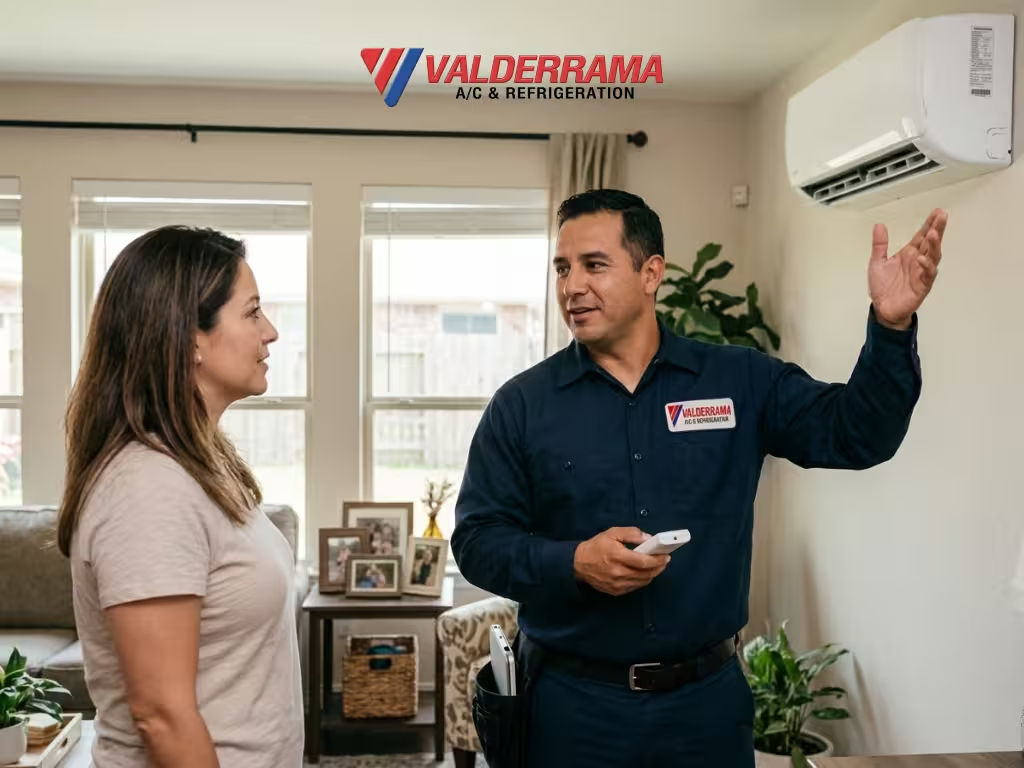
How Ductless Air Conditioners Work: Step-by-Step
A ductless air conditioner—commonly called a mini-split—relies on the exact same thermodynamic refrigeration cycle as a traditional central AC, just packaged in a far more targeted and efficient way. Instead of pushing conditioned air through a maze of attic ducts, a ductless system delivers cool air directly into the living space.
Every ductless setup consists of three core components connected through a small, three-inch opening in your exterior wall:
1. The Indoor Air Handler
Mounted high on an interior wall, recessed into the ceiling, or placed near the floor, the indoor unit houses a quiet blower fan, washable air filters, and an evaporator coil filled with cold refrigerant. When you turn the system on, the fan draws warm, humid room air across the cold coil. As the air passes over the metal fins, the refrigerant absorbs the heat energy and causes excess moisture to condense into a drain pan, blowing crisp, chilled air directly back into the room.
2. The Conduit Line Set
Connecting the indoor air handler to the outdoor cabinet is a slim bundle known as a line set. This conduit contains four essential pathways:
- A liquid refrigerant line carrying chilled refrigerant indoors.
- A suction refrigerant line carrying absorbed heat outdoors.
- A condensate drain line that safely channels collected indoor humidity outside.
- Power and communication wiring that lets the indoor and outdoor units synchronize speeds automatically.
3. The Outdoor Condenser Unit
Sitting outside on a concrete pad or wall bracket, the outdoor cabinet houses the compressor, condenser coil, and exhaust fan. Once the warm refrigerant arrives from indoors, the compressor pressurizes it, raising its temperature so the outdoor coil can easily release that captured heat into the outside air. The refrigerant then cools back into a liquid state and travels back inside to repeat the cycle.
Inverter Technology: The Secret to Steady Comfort
Unlike older central air conditioners that slam on at 100% power and shut off abruptly, modern ductless systems use variable-speed inverter compressors. Rather than constantly starting and stopping, the compressor adjusts its speed smoothly—ramping up when a room is hot and throttling down to a whisper-quiet hum once your target temperature is reached. This eliminates temperature swings and slashes electricity consumption.
Sugar Land’s Heat and Humidity Challenges
Sugar Land’s heat and humidity place extreme strain on AC systems from late spring well into October. With afternoon temperatures regularly climbing into the mid-to-upper 90s and Gulf Coast humidity frequently hovering above 70%, air conditioners in Fort Bend County cannot simply cool the air—they must work relentlessly to extract heavy moisture so your home does not feel sticky or clammy.
In homes with traditional central air, attic ductwork often bakes in 130°F heat, causing conditioned air to warm up before it ever exits the supply vents. Ductless systems bypass attic heat gain entirely. However, because Sugar Land units run for months on end under high moisture loads, indoor filters clog faster and condensate drain lines work overtime. Keeping airflow unrestricted and drainage clear is critical for preventing water leaks and preserving cooling capacity during peak summer heatwaves.
Common Causes of Ductless AC Performance Issues
Even though ductless systems eliminate leaky ductwork, they are still precision mechanical appliances. When a mini-split stops cooling effectively, the root cause usually traces back to one of several issues:
- Clogged Mesh Air Filters: Because indoor heads pull room air directly across compact coils, dust, pet hair, and pollen quickly coat the reusable filters, starving the evaporator coil of airflow.
- Blocked Condensate Drain Lines: High indoor humidity creates significant condensation. Algae, dust, or biofilm can clog the narrow drain tubing, triggering float switches that shut the unit down to prevent water damage.
- Low Refrigerant Levels: Improperly torqued flare fittings or microscopic tubing leaks reduce refrigerant pressure, preventing the coil from absorbing heat properly.
- Dirty Outdoor Condenser Fins: Grass clippings, cottonwood, dirt, and yard debris pack against the outdoor unit, trapping heat inside the compressor and driving up operating pressures.
- Communication or Sensor Faults: Fluctuating power surges during summer storms can disrupt the communication boards linking the indoor head and outdoor inverter.
Symptoms of a Struggling Ductless Air Conditioner
Catching early warning signs saves you from uncomfortable nights and expensive component repairs. Pay close attention if you notice any of these symptoms:
- Weak or Lukewarm Airflow: The indoor fan runs, but the air coming out of the louvers feels room-temperature rather than crisp and cold.
- Water Dripping Down the Interior Wall: Moisture leaking from beneath the indoor air handler typically signals a backed-up condensate line or frozen coil thawing out.
- Musty or Sour Odors: Trapped moisture on dusty blower wheels or evaporator fins encourages microbial growth inside the indoor unit.
- Blinking Error Codes on the Display: Modern ductless units flash specific LED sequences when internal sensors detect pressure, temperature, or electrical anomalies.
- Outdoor Unit Running Constantly Without Cooling: If the outdoor fan spins non-stop while indoor temperatures climb, refrigerant loss or inverter issues may be to blame.
Safe DIY Checks Homeowners Can Perform
Before scheduling a service call, there are a few safe, straightforward checks you can perform yourself to rule out simple airflow or setting issues:
- Verify Remote Control Mode: Ensure the thermostat remote is set to the Cool (snowflake) icon rather than Fan, Dry, or Auto, and confirm the target temperature is at least 3°F to 5°F below the current room temperature.
- Clean the Indoor Mesh Filters: Pop open the front panel of your indoor air handler, slide out the mesh filters, rinse them gently with lukewarm water, and let them dry completely before reinstalling.
- Clear Obstructions Around the Outdoor Unit: Trim back shrubs, weeds, and vines so there is at least two feet of open clearance on all sides of the outdoor condenser.
- Check the Breaker Panel: If the system has no power at all, inspect your home’s electrical panel to see if the dedicated outdoor disconnect or circuit breaker has tripped.
Important Note: Never attempt to open sealed refrigerant lines, force frozen ice off coils with sharp tools, or dismantle high-voltage inverter boards on your own.
When to Call a Professional HVAC Technician
While cleaning filters and checking remote settings are easy homeowner tasks, internal diagnostics require specialized tools and EPA-certified handling. You should contact a licensed HVAC technician whenever you encounter:
- Ice Forming on Copper Lines or Indoor Coils: Icing indicates restricted internal airflow or low refrigerant charge that must be measured with precision digital gauges.
- Repeated Circuit Breaker Trips: A breaker that trips again immediately after resetting points to a grounded compressor, damaged wiring, or failing inverter board.
- Persistent Water Leaks After Filter Cleaning: Deep-seated drain clogs or failed condensate pumps require professional flushing and sanitization.
- Unusual Grinding, Buzzing, or Rattling Noises: Mechanical noises inside the indoor blower wheel or outdoor compressor signal worn bearings or loose fan blades that can worsen rapidly.
5 Signs You Need Air Conditioner Service
If your cooling system is struggling to keep up with Texas heat, watch closely for these 5 clear signs that it is time for expert repair or maintenance:
- Uneven Cooling or Warm Air From Vents: When your system blows air that fails to lower the room temperature, low refrigerant or compressor strain is often the culprit.
- Moisture Leaks or Water Stains Near the Unit: Any water dripping from your indoor air handler or pooling around the base requires immediate attention to prevent drywall and flooring damage.
- Rising Monthly Electricity Bills: A sudden spike in energy usage without extreme weather changes shows your inverter or compressor is working harder than normal to maintain comfort.
- Short-Cycling or Frequent Error Codes: Units that turn on and off rapidly or repeatedly display fault lights are protecting themselves from internal overheating or electrical stress.
- Loud or Unusual Operational Sounds: Ductless systems are built to run quietly; new rattling, squealing, or vibrating noises mean internal components need inspection before failure.
Whether you need routine maintenance, fast repairs, or help sizing a new multi-zone system, explore our Sugar Land HVAC and cooling services to keep your home comfortable year-round.
Prevention Tips to Extend Your Ductless AC’s Lifespan
With proper care, a quality ductless air conditioner can reliably cool your home for 15 to 20 years. Follow these preventive habits to maximize efficiency and avoid unexpected breakdowns:
- Clean Indoor Filters Every 3 to 4 Weeks: During peak summer usage, monthly filter rinses keep static pressure low and prevent dust from coating the internal blower wheel.
- Keep the Fan on “Auto” Instead of “On”: Running the indoor fan continuously after the cooling cycle finishes can blow moisture trapped on the coil back into the room, raising indoor humidity.
- Maintain Clear Outdoor Airflow: Rinse dirt and pollen off the outdoor condenser fins gently with a garden hose every few months, keeping power turned off at the disconnect box while rinsing.
- Schedule Annual Deep Coil and Drain Maintenance: Having Valderrama A/C & Refrigeration perform a yearly deep cleaning of the indoor blower wheel, evaporator coil, and condensate pan prevents biological buildup and keeps your system operating at peak SEER2 efficiency.
Frequently Asked Questions
Do ductless air conditioners need ductwork at all?
No. Ductless air conditioners deliver cooled air directly from wall-mounted or ceiling-recessed indoor units into the room. Only a small three-inch hole is needed in the exterior wall to pass the refrigerant tubing, power cable, and drain line outside.
Can one outdoor ductless unit cool multiple rooms?
Yes. Multi-zone ductless systems connect a single outdoor condenser to anywhere from two to five (or more) indoor air handlers. Each indoor unit has its own thermostat, letting you set customized temperatures for different bedrooms, living areas, or additions.
Are ductless air conditioners more energy-efficient than central AC?
In most applications, yes. Because ductless systems avoid the 20% to 30% energy losses commonly caused by leaky or poorly insulated attic ductwork—and use variable-speed inverter compressors—they typically use significantly less electricity than conventional central systems.
Do ductless air conditioners also provide heat in the winter?
Most modern ductless mini-splits are actually reversible heat pumps. By reversing the flow of refrigerant, the same system that cools your home in July can efficiently absorb outdoor heat energy to warm your rooms during chilly Texas winter mornings.
How often should I schedule professional maintenance with Valderrama A/C & Refrigeration?
We recommend scheduling professional preventive maintenance at least once a year—ideally in the spring before peak summer heat arrives—or twice a year if you rely on your ductless system for both heating and cooling.
Ready to optimize your indoor climate and lower your energy costs?
Schedule Your Precision HVAC System Inspection Now!
Call our team today at (281) 974 – 4599 to speak with an experienced specialist and confirm your service visit.