
A split system air conditioner is a central cooling unit divided into two separate components: an indoor unit (evaporator coil and air handler) that absorbs heat from inside your home, and an outdoor unit (compressor and condenser coil) that releases that heat outside through connecting refrigerant lines.
When summer temperatures in Southeast Texas surge past 95°F, your home’s air conditioner becomes the most important equipment on your property. If your current unit is struggling to keep up with the heat or driving your monthly power bills through the roof, understanding what is a split system air conditioner—and how it works in humid climates—is the key to making smart heating and cooling decisions for your home.
At Valderrama A/C & Refrigeration, we help property owners across the area install, maintain, and repair high-performance split systems designed to handle demanding Gulf Coast summers. Here is your complete guide to how split systems work, why they are the preferred choice for Texas homes, and how professional service keeps them operating at peak efficiency.
How a Split System Air Conditioner Works
Unlike window units or packaged systems that contain all mechanical parts in a single cabinet, a split system splits its core cooling duties between two main components:
- The Indoor Component: Located in an attic, utility closet, or basement, the indoor unit houses the evaporator coil and blower fan. It draws warm indoor air across the cold coil, absorbing heat and extracting excess humidity before blowing cooled air back through your ductwork.
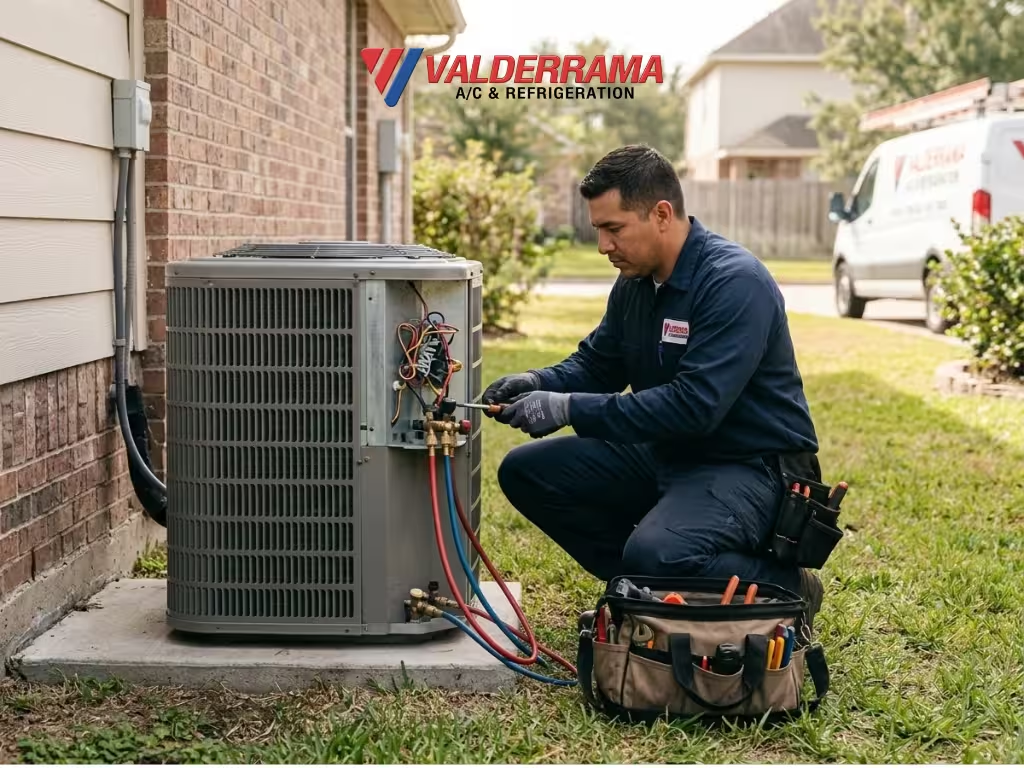
- The Outdoor Component: Situated in your yard or on a concrete pad outside, the cabinet contains the compressor, condenser coil, and fan motor. Its primary job is to take heat transferred from indoors and vent it into the outside air.
- The Refrigerant Line Set: Copper tubing connects the indoor and outdoor units, circulating chemical refrigerant that continuously absorbs and releases heat in a closed loop.
Whether you have a traditional ducted setup or a mini-split configuration, this two-part design delivers quieter indoor operation and significantly higher cooling efficiency than single-cabinet alternatives.
Houston’s Heat and Humidity Challenges
Houston’s heat and humidity place extreme strain on AC systems throughout the long summer months. With afternoon heat indices frequently topping 100°F and relative humidity levels exceeding 70%, your air conditioner works twice as hard—not just to lower the indoor temperature, but to strip gallons of moisture out of the air each day.
Because a split system houses its heat-releasing compressor outside while keeping the moisture-removing evaporator coil protected indoors, it is uniquely equipped to handle Texas weather. However, extended heatwaves force outdoor units to operate under high pressure. Dirt accumulation on outdoor coils or improper refrigerant levels can cause the system to run non-stop, increasing electricity costs and risking severe compressor damage.
Why Professional Split System Service Matters
While modern split system air conditioners are engineered for long-term durability, their performance depends directly on precise installation and regular maintenance. A split system that is incorrectly sized or improperly charged with refrigerant will struggle to maintain comfortable indoor temperatures during summer heat spikes.
When you trust Valderrama A/C & Refrigeration for your cooling needs, our certified technicians ensure every component of your split system meets manufacturer specs:
- Refrigerant Line Calibration: Precise refrigerant charge levels ensure maximum heat transfer without freezing the indoor coil.
- Outdoor Condenser Cleaning: Clearing dirt, grass clippings, and debris from outdoor fins prevents compressor overheating.
- Airflow Optimization: Inspecting blower motors and duct connections eliminates hot spots and ensures balanced airflow across all rooms.
- Electrical Component Testing: Checking capacitors, contactors, and relays prevents sudden system breakdowns on peak heat days.
Key Benefits of a Split System Air Conditioner
Investing in a professionally installed and maintained split system delivers clear advantages for local homeowners:
- High Energy Efficiency: Modern split systems achieve high SEER2 efficiency ratings, lowering monthly power bills compared to older central units.
- Whisper-Quiet Indoor Cooling: Because the noisy compressor sits outside, indoor air delivery remains exceptionally quiet.
- Superior Humidity Control: Efficient variable-speed split systems remove indoor moisture effectively, keeping your air crisp rather than sticky.
- Flexible Sizing Options: Available in both traditional ducted models and ductless multi-zone options to fit any home layout or addition.
5 Signs You Need Air Conditioner Service
If your split system is failing to keep your living space comfortable, your equipment needs expert attention. The specialists at Valderrama A/C & Refrigeration recommend watching for these 5 indicators:
- Warm Air Blowing From Supply Vents: Low refrigerant levels or a failing outdoor compressor can cause your system to blow lukewarm air instead of cold air.
- Unusual Mechanical Noises: Grinding, squealing, or rattling from either the outdoor compressor or indoor air handler signals motor wear or loose components.
- Ice Buildup on Refrigerant Lines: Frozen coils or iced copper tubing indicate severely restricted airflow or refrigerant leaks that require prompt repair.
- Sudden Power Bill Spikes: A sharp increase in electric bills without changes in usage points to an overworked system suffering from mechanical inefficiency.
- High Indoor Humidity Levels: If your home feels clammy or muggy even while the AC is running, your system is failing to extract moisture properly.
If you notice any of these warning signs, don’t wait for a complete system breakdown during peak heat. Explore our professional Houston air conditioning services to schedule a diagnostic inspection and restore total indoor comfort.
Frequently Asked Questions
What is the main difference between a split system and a central AC?
A split system is a type of central AC. The term “split” simply refers to the two-part design with components divided between indoor and outdoor locations, whereas some central systems use a single outdoor “packaged” box.
How long does a split system air conditioner last in Houston?
With routine annual maintenance, a quality split system typically lasts 10 to 15 years in Southeast Texas. The extreme summer workload makes regular tune-ups essential for reaching the upper end of that lifespan.
What is the difference between a ducted and ductless split system?
A ducted split system uses central ductwork to distribute air throughout the home. A ductless split system (mini-split) connects the outdoor unit directly to individual wall-mounted indoor air handlers, offering room-by-room temperature control without ducts.
How often should I replace the air filter in my split system?
In summer, check your air filter monthly and replace it every 30 to 60 days. Clean filters preserve airflow, protect indoor coils from dirt buildup, and maintain high operating efficiency.
When should I call Valderrama A/C & Refrigeration for AC repairs?
Contact us immediately if your unit runs non-stop without cooling, makes loud metallic noises, leaks water indoors, or trips your electrical circuit breaker repeatedly.
Ready to optimize your indoor climate and lower your energy costs?
Schedule Your Precision HVAC System Inspection Now!
Call our team today at (281) 974 – 4599 to speak with an experienced specialist and confirm your service visit.