
Ductless mini splits work by circulating refrigerant between an outdoor compressor unit and one or more indoor air handlers via small copper lines. Instead of forcing air through ductwork, the system absorbs heat from inside your home and transfers it outdoors to cool your space, or reverses the cycle to provide efficient heating during colder weather.
If you have a room in your house that never seems to cool down—no matter how low you set your central thermostat—you are not alone. Whether it is a sunroom, a garage conversion, or an upstairs master suite in Friendswood, traditional central air units often struggle to cool uneven spaces evenly. When exploring modern alternatives, most homeowners start with one fundamental question: how do mini splits work, and can they truly keep your entire house comfortable without ductwork?
At Valderrama A/C & Refrigeration, we help local property owners understand their climate options and optimize their indoor comfort with high-efficiency cooling technology. Here is your complete guide to how ductless mini split systems operate, their key components, and how they perform in our Gulf Coast climate.
How Ductless Mini Splits Work: The Core Heat Transfer Process
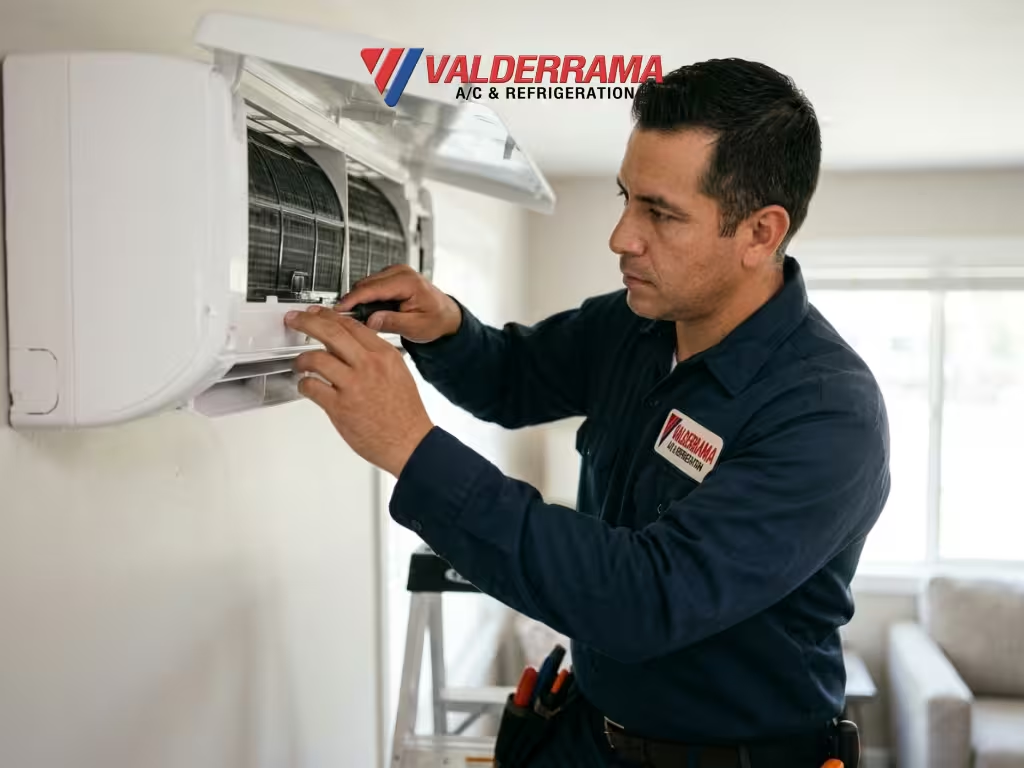
At its heart, a ductless mini split is a heat pump system. Rather than creating cold air from scratch, it moves heat energy from inside your home to the outside environment using the principles of vapor-compression refrigeration.
Here is the step-by-step breakdown of how the process unfolds:
- Heat Absorption: The indoor unit contains an evaporator coil filled with cold liquid refrigerant. Warm indoor air is pulled across this coil by a quiet blower fan.
- Refrigerant Expansion & Heat Transfer: The refrigerant absorbs thermal energy from the indoor air, causing the refrigerant to evaporate into a warm gas while cooling the surrounding air.
- Heat Displacement Outdoors: The warm refrigerant gas travels through small, insulated copper lines out to the exterior condenser unit.
- Compression & Release: The outdoor compressor squeezes the gas, raising its temperature and pressure. Condenser fan blades blow outdoor air across the coil, releasing the absorbed indoor heat outside.
- Reversing the Cycle for Winter: Equipped with a reversing valve, the system simply flips the direction of refrigerant flow when outdoor temperatures drop. It absorbs ambient heat energy from outside air and moves it indoors to warm your living space.
Because mini splits deliver conditioned air directly into individual rooms, they eliminate the 20% to 30% air loss typical of leaky attic ductwork.
Causes of Uneven Home Cooling & Ductless Solutions
Many homeowners ask how mini splits work because their traditional central HVAC systems leave uncomfortable hot zones throughout the home. Common root causes include:
- Long Duct Runs: Rooms located furthest from your central furnace or air handler lose airflow pressure before air reaches supply registers.
- Attic Heat Gain: Uninsulated or leaking attic ductwork absorbs extreme heat, warming conditioned air before it enters bedrooms.
- Inadequate System Sizing: Single-stage central ACs cool the area near the thermostat quickly, shutting off before upper floors or additions reach comfort levels.
- Structural Additions: Converting a garage or enclosed patio often leaves the space without access to existing central ducts.
Symptoms That Your Current Cooling Setup Is Inefficient
If your existing air conditioning layout isn’t meeting your family’s needs, watch for these clear warning signs:
- Severe temperature variations (4°F to 8°F difference) between rooms.
- High indoor humidity levels that leave air feeling sticky or damp.
- Continuously high summer electricity bills despite keeping the thermostat raised.
- Excessive dust accumulation around ceiling vents.
- Constant reliance on window units, portable ACs, or noisy box fans.
Friendswood’s Climate and Humidity Challenges
Friendswood’s heat and humidity place extreme strain on AC systems throughout the long coastal summer months. With afternoon temperatures routinely reaching mid-to-upper 90s and Gulf Coast relative humidity levels exceeding 75%, local cooling units must work continuously to maintain indoor comfort.
In our humid climate, a system’s ability to extract moisture is just as critical as its ability to lower temperature. Standard single-stage central AC units often turn on at full speed, cool the air rapidly, and shut off before extracting excess humidity—a process known as short-cycling.
Ductless mini splits feature inverter-driven compressors that automatically modulate their speed up or down in real-time. By running continuously at lower, energy-efficient speeds, a ductless mini split maintains precise temperature control while steadily wringing moisture out of Friendswood homes.
DIY Checks to Keep Your Ductless System Running Smoothly
If you already have a mini split system or are planning an installation, performing regular maintenance keeps heat transfer running at peak efficiency:
- Clean Indoor Air Filters Monthly: Washable mesh filters inside your wall unit accumulate dust quickly. Rinse them under warm water every 30 days.
- Clear Outdoor Unit Clearances: Keep grass, leaves, and garden debris at least two feet away from your outdoor condenser coil to ensure unobstructed airflow.
- Inspect Condensate Drain Lines: Ensure the small PVC or flex drain tube outdoors drips freely while the unit is running in cooling mode.
- Check Coil Fins for Dust Build-Up: Visually inspect the indoor aluminum fins behind the filter to make sure airflow isn’t restricted.
5 Signs You Need Professional Air Conditioner Service
While ductless mini splits are exceptionally durable, routine wear and tear can impede their refrigeration cycle over time. Contact an HVAC professional if you experience any of these 5 indicators:
- Water Leaking From the Indoor Unit: A clogged condensate drain line or failing drain pump can cause water to back up and overflow inside your room.
- Ice Buildup on Coils or Copper Lines: Frost forming on the indoor or outdoor coils signals low refrigerant levels or severely restricted airflow.
- Unusual Noises or Rattling: Clicking, gurgling, or grinding sounds inside the wall unit point to fan motor wear or refrigerant flow restrictions.
- System Fails to Switch Between Heat and Cool: A stuck reversing valve prevents the system from changing modes when weather conditions shift.
- Loss of Cooling Power or Lukewarm Airflow: If the unit runs constantly without lowering room temperature, your system may have a slow refrigerant leak or sensor fault.
When you need trusted maintenance, custom installations, or rapid repairs, explore our expert Friendswood AC services to keep your property cool and efficient year-round.
Prevention & Maintenance Tips for Long-Term Efficiency
To protect your HVAC investment and maximize equipment lifespan, follow these preventative measures:
- Schedule Bi-Annual Tune-Ups: Have a technician inspect refrigerant pressures, electrical connections, and blower wheels before peak summer and winter seasons.
- Keep Air Handlers Clear: Avoid placing tall furniture or drapes directly in front of wall units to maintain proper air circulation.
- Use Auto-Fan Modes: Allow the inverter technology to manage fan speeds automatically rather than locking it on high speed manually.
Frequently Asked Questions
Do mini splits run continuously?
Yes, and that is by design. Unlike traditional AC systems that cycle completely on and off, mini split inverter compressors adjust speed dynamically, using minimal electricity to maintain a steady temperature.
How many rooms can one outdoor mini split unit cool?
Multi-zone outdoor units can connect to anywhere from 2 to 8 indoor air handlers, giving you independent control over multiple rooms or zones.
Do ductless mini splits require major home renovation to install?
Not at all. Installation requires only a small 3-inch hole through the exterior wall to pass refrigerant tubing, electrical wiring, and a drain line between indoor and outdoor units.
How often should ductless mini splits be professionally serviced?
We recommend professional maintenance twice per year—once in spring for cooling performance and once in fall for heating checks—especially with trusted local technicians like Valderrama A/C & Refrigeration.
Are ductless mini splits more energy-efficient than central AC?
Yes. Ductless systems frequently achieve higher SEER2 efficiency ratings (often 20 to 30 SEER2) because they eliminate energy loss through ductwork and cool only the spaces you occupy.
Ready to optimize your indoor climate and lower your energy costs?
Schedule Your Precision HVAC System Inspection Now!
Call our team today at (281) 974 – 4599 to speak with an experienced specialist and confirm your service visit.