
To change a breaker switch safely, turn off the main breaker at the top of your electrical panel, remove the metal dead-front cover, use a voltage tester to verify zero live power, disconnect the hot wire from the old breaker terminal, snap the faulty breaker out, install an exact-match replacement, reconnect the wire, and restore main power.
Nothing disrupts a comfortable afternoon in Southeast Texas faster than walking into a warm, silent house because your air conditioner suddenly lost power. When you head out to the garage and find a tripped switch inside your electrical panel that refuses to stay reset, your first instinct might be to search how to change a breaker switch yourself.
While swapping out a single-pole or double-pole circuit breaker looks straightforward on the surface, working inside a live service panel carries severe electrical shock and fire hazards. Even after you shut off the main disconnect, the main service lugs at the top of the box remain energized with lethal voltage. At Valderrama A/C & Refrigeration, our technicians routinely see tripped or burned-out breakers tied directly to overworked HVAC equipment and aging home panels. Below, we break down what causes breakers to fail, essential DIY safety checks, the exact replacement process, and when to leave high-voltage panel work to licensed professionals.
Common Causes of a Failing Circuit Breaker
Circuit breakers are built to protect your home’s wiring from overheating and catching fire. However, breakers do not last forever—most have a functional lifespan of 15 to 30 years before internal springs and thermal strips degrade. Common causes behind a failed breaker include:
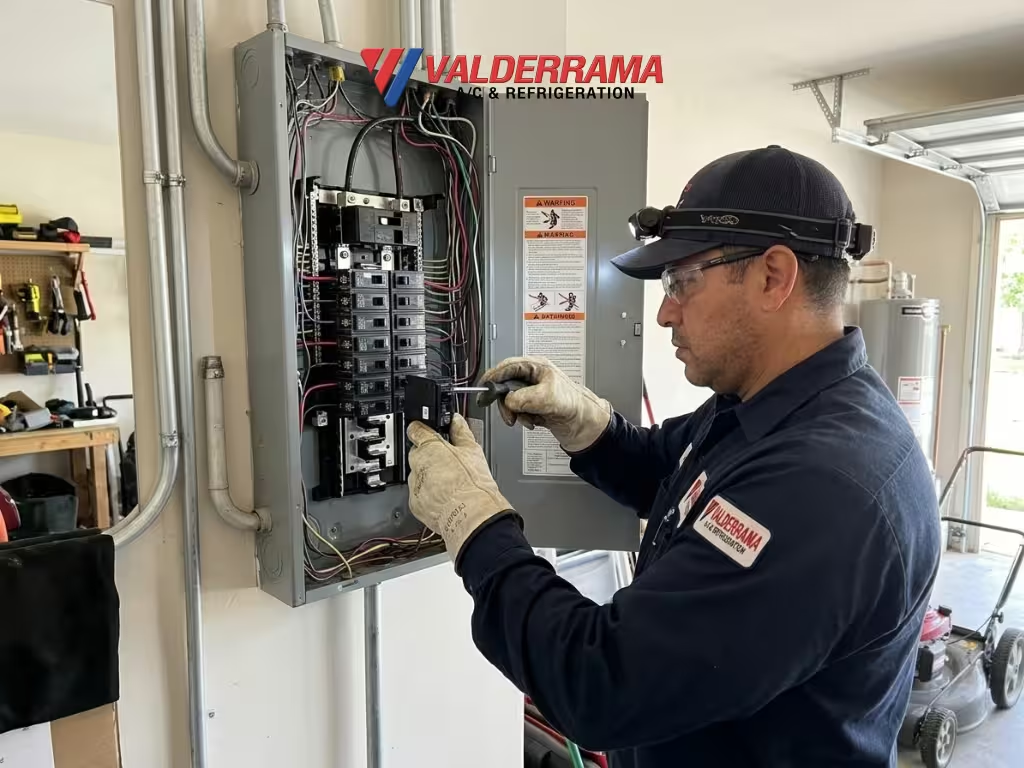
- Chronic Circuit Overloads: Running high-draw appliances—such as space heaters, microwaves, or older air conditioning compressors—on an undersized or shared circuit forces the breaker to trip repeatedly until its internal mechanism wears out.
- Loose Wire Connections: Over years of thermal expansion and contraction, the terminal screw holding the hot wire inside the breaker can loosen. This creates electrical arcing, intense heat, and melted plastic around the switch.
- Short Circuits and Ground Faults: Damaged wire insulation, rodent chew marks in the attic, or moisture intrusion inside outdoor HVAC disconnect boxes can cause an immediate surge of current that damages the breaker’s internal contacts.
- HVAC Compressor Hard Starts: When an aging air conditioner or heat pump struggles to start up, it draws massive inrush amperage, weakening double-pole HVAC breakers over time.
- Moisture and Corrosion: High humidity or water leaks near exterior electrical panels corrode internal bus bars and breaker clips, preventing clean electrical contact.
Symptoms of a Bad Breaker Switch
How do you tell the difference between a breaker doing its job during a temporary overload and a switch that has physically failed? Watch for these telltale symptoms:
- The Switch Feels Loose or Mushy: A healthy breaker snaps firmly into the “ON” and “OFF” positions. If the toggle feels spongy, flops back and forth without resistance, or refuses to latch, the internal spring is broken.
- Immediate Tripping with No Load: If you unplug every device on the circuit (or turn off your thermostat) and the breaker still trips the instant you reset it, the switch itself may be internally shorted.
- Burning Odors or Scorch Marks: Any acrid, fishy, or burnt-plastic smell coming from the service panel—or visible discoloration on the breaker casing—indicates dangerous overheating.
- Buzzing or Hissing Sounds: Electrical panels should operate silently. Audible humming, crackling, or sizzling noises point to loose bus bar connections or internal arcing.
- Breaker Feels Hot to the Touch: While heavy-load breakers like your 240-volt AC breaker may feel slightly warm during peak summer operation, a switch that feels hot enough to burn your fingers requires immediate shutdown.
Essential DIY Checks Before Replacing a Breaker
Before touching a screwdriver or buying replacement hardware, run through these safe diagnostic checks to confirm whether the breaker is actually the culprit:
- Perform a Proper Reset: Many homeowners try to flip a tripped breaker straight back to “ON.” A tripped switch sits in a middle neutral position. You must push the handle firmly all the way to the “OFF” position until you hear or feel a distinct click before pushing it back to “ON.”
- Unplug Appliances on the Circuit: Disconnect lamps, electronics, and kitchen appliances on the affected circuit, then test the breaker. If it holds steady, the breaker is fine—your circuit was simply overloaded.
- Check Your Thermostat and Outdoor Disconnect: If your 240-volt HVAC breaker tripped, turn your thermostat to “OFF” and wait 15 minutes for the outdoor compressor to cool down before attempting a single reset. If it trips again immediately, stop resetting it and call a technician—repeatedly forcing power to a shorted compressor can destroy your HVAC system.
- Verify Exact Brand and Amperage Compatibility: Circuit breakers are not universal. A Square D Homeline breaker will not safely fit a Siemens, Eaton, or General Electric panel—even if it physically snaps onto the rail. Using a mismatched brand creates poor bus bar contact and voids electrical code compliance.
Step-by-Step Overview: How to Change a Breaker Switch
If you have confirmed a faulty switch, possess proper insulated electrical tools, and are permitted by local regulations to perform minor panel maintenance, follow these strict safety steps:
- Shut Off the Main Power: Flip the large main circuit breaker at the top of your panel to the “OFF” position. This cuts power to the branch circuit bus bars below. (Warning: The heavy service cables entering the top of the main breaker remain live at all times—never touch the top lugs.)
- Remove the Panel Cover: Keep one hand clear of internal wiring while unscrewing the metal dead-front cover. Set the cover and screws aside safely.
- Test for Zero Voltage: Use a calibrated non-contact voltage tester or multimeter on the screw terminal of the target breaker and along the bus bar to confirm zero electrical current is present.
- Disconnect the Circuit Wire: Loosen the terminal screw on the faulty breaker and gently pull the black (or red, for 240V double-pole breakers) hot wire free.
- Remove the Old Breaker: Grip the outer edge of the breaker (away from the central bus bar) and pull outward to unclip it from the panel rail.
- Snap in the Exact Replacement: Ensure the new breaker switch is in the “OFF” position. Hook the rear clip onto the panel’s mounting rail and press firmly toward the center until it locks squarely onto the bus bar.
- Reconnect the Wire & Reassemble: Insert the stripped copper wire fully into the new breaker terminal, tighten the screw securely, reattach the metal panel cover, and restore power at the main breaker.
Houston’s Heat and Humidity Challenges on Electrical Panels
Houston’s heat and humidity place extreme strain on AC systems—and by extension, your home’s electrical panel. Throughout our long, oppressive summers, central air conditioners and heat pumps run for 12 to 16 hours a day to combat 95°F+ temperatures and heavy Gulf Coast humidity.
That sustained electrical draw generates significant heat inside your main breaker box, especially when service panels are mounted on sun-baked exterior garage walls. Over time, extreme ambient heat combined with high amperage loads weakens breaker trip mechanisms, loosens terminal lugs, and accelerates corrosion on outdoor AC disconnect switches. Ensuring your electrical infrastructure is properly sized and maintained is critical to keeping your cooling system running safely when you need it most.
Prevention Tips to Protect Your Breakers and HVAC System
A few proactive habits can extend the lifespan of your electrical panel and prevent unexpected power loss:
- Schedule Annual HVAC & Electrical Tune-Ups: Having a technician inspect capacitor health, compressor amperage draw, and breaker connections before summer prevents electrical overloads.
- Keep Air Filters Clean: Clogged HVAC filters force blower motors and compressors to work harder and draw excess current, triggering nuisance breaker trips.
- Install Whole-Home Surge Protection: Gulf Coast thunderstorms and utility grid fluctuations send voltage spikes straight into sensitive HVAC control boards and breakers.
- Avoid Daisy-Chaining Power Strips: Keep high-wattage space heaters, window units, and hair dryers on dedicated outlets rather than overloaded branch circuits.
5 Signs You Need Professional Electrical Service
If you are unsure about opening a live service panel—or if your breakers keep tripping after replacement—it is time to call licensed experts. The team at Valderrama A/C & Refrigeration recommends scheduling immediate professional service if you notice these 5 warning signs:
- Your AC Breaker Trips Repeatedly: Continuous tripping on a double-pole HVAC breaker points to a failing compressor, grounded wiring, or an undersized circuit that DIY breaker swaps will not fix.
- Burn Marks, Melted Plastic, or Smoldering Odors: Any visible heat damage inside your panel indicates bus bar arcing that requires professional panel repair or replacement.
- Flickering Lights When the AC Kicks On: Dimming lights across your home during HVAC startup signal loose neutral connections, voltage drops, or an outdated electrical panel struggling to meet demand.
- Outdated or Recalled Electrical Panels: Homes equipped with legacy Federal Pacific (FPE), Zinsco, or fuse-box panels pose serious fire risks and require modern panel upgrades.
- Warm Panel Cover or Buzzing Breakers: Heat or audible humming radiating through the closed metal door of your breaker box demands urgent diagnostic testing.
Electrical panel work leaves zero room for guesswork. Explore our professional Houston electrical services to have our licensed specialists safely diagnose and repair your breakers, wiring, and HVAC circuits.
Frequently Asked Questions
Can I change a breaker switch myself without turning off the main breaker?
No. Never attempt to remove or install a circuit breaker while the main bus bars are energized. Even with the main breaker turned off, the incoming utility lugs at the top of the panel remain live, which is why hiring a licensed professional is always the safest option.
Why does my AC breaker keep tripping even after I reset it?
An air conditioner breaker typically trips repeatedly due to a dirty condenser coil causing high head pressure, a failing start capacitor, a shorted compressor motor, or loose wiring inside the outdoor disconnect box. Replacing the breaker without fixing the HVAC fault will result in the new breaker tripping as well.
How much does it cost to have a professional replace a circuit breaker?
Professional circuit breaker replacement generally ranges from $150 to $350 depending on whether it is a standard single-pole breaker, a 240-volt double-pole HVAC breaker, or an AFCI/GFCI safety breaker, as well as whether underlying wiring repairs are needed.
Are circuit breakers interchangeable between different panel brands?
No. You must install a breaker specifically listed and approved by the manufacturer of your electrical panel (such as Square D, Eaton, Siemens, or GE). Installing an incompatible brand prevents proper seating on the bus bar and creates a serious fire hazard.
When should I call Valderrama A/C & Refrigeration for a tripping breaker?
Call us right away if a breaker trips immediately upon reset, feels hot to the touch, smells like burning plastic, or controls your air conditioning or heating equipment. Our team handles both the electrical diagnostics and the HVAC equipment side so nothing gets overlooked.
Ready to optimize your indoor climate and lower your energy costs?
Schedule Your Precision HVAC System Inspection Now!
Call our team today at (281) 974 – 4599 to speak with an experienced specialist and confirm your service visit.