
To properly maintain heating and air conditioning system efficiency, replace standard 1-inch air filters every 30 to 60 days, clear debris from around the outdoor unit, and keep supply vents open. Additionally, schedule a professional seasonal tune-up twice a year—once in the spring for your cooling and once in the fall for your heating.
The Silent Drag on Your Property’s Bottom Line
It is a heavy, blinding Tuesday afternoon in Southeast Texas. You walk over to your central digital thermostat and notice that while the system is set to a comfortable 72°F, the actual room temperature is stubbornly hovering at 76°F. The air trickling out of your ceiling supply registers feels weak, lukewarm, and slightly humid. You head down to your mailbox a few days later, open your monthly utility bill, and your jaw drops—your energy consumption has jumped dramatically, even though your daily routine hasn’t changed at all.
Many homeowners view their heating and cooling infrastructure as a set-it-and-forget-it appliance, tucked away in an attic, utility closet, or backyard pad. We expect these systems to run flawlessly year after year, yet we rarely think about their physical upkeep until they drop completely offline in the middle of an intense weather event.
When you look up how to maintain heating and air conditioning system setups online, you aren’t looking for a dry, technical textbook summary. You need a practical, real-world blueprint that clearly outlines how to protect your expensive mechanical investments, lower your operating costs, and ensure your home stays perfectly comfortable. At Valderrama A/C & Refrigeration, we approach home comfort with a precise engineering focus, helping you maximize system longevity while completely clearing out hidden energy waste.
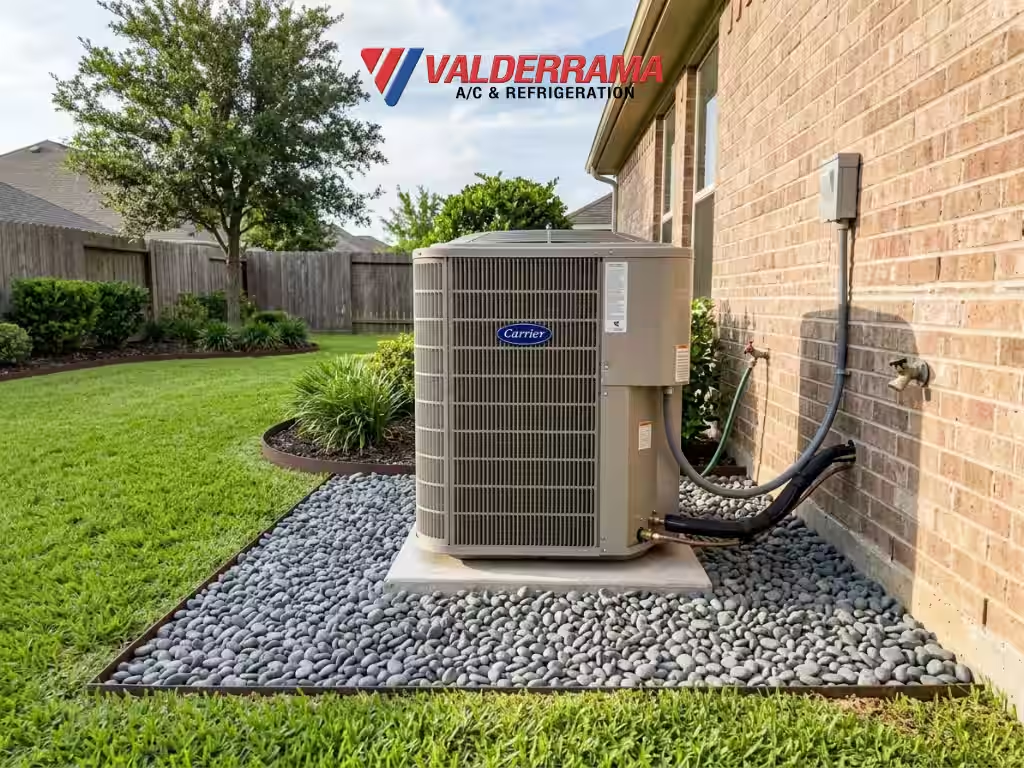
The Houston Factor: Why Dense Coastal Environments Accelerate Equipment Breakdown
Operating heavy climate control machinery in Southeast Texas presents intense environmental challenges that traditional systems in northern states never encounter.
Houston’s heat and humidity place extreme strain on AC systems. Because our local cooling season routinely stretches across nearly ten months out of the year, your central comfort network clocks double or triple the annual operational hours of an identical system in a milder climate.
Our thick relative humidity places a massive “latent load” on your equipment. This means your air conditioner cannot simply focus on dropping the actual temperature reading on your wall; it must continuously squeeze hundreds of gallons of raw liquid water vapor from your indoor air stream every single week.
Furthermore, our proximity to coastal air introduces airborne salt vapors, heavy oak tree pollen explosions, and lawn debris. These elements settle directly into the delicate aluminum fins of your outdoor condenser coil, forming a thick, crusty barrier that locks in heat. If this buildup isn’t systematically washed away, your compressor pump will run hot, pull excessive electrical currents, and suffer an early mechanical failure.
Causes of Premature HVAC Aging: The Cost of Neglect
Most premature heating and cooling equipment failures are not caused by factory manufacturing defects—they stem directly from a chronic lack of airflow maintenance and severe operational stress.
- High Static Pressure Strain: Allowing a filter to remain choked with dust creates an intense airflow bottleneck. This high static pressure chokes your return lines, forces your fan motor to work twice as hard, and can cause liquid refrigerant to travel backward down your suction line, destroying your compressor pump’s internal valves early.
- Clogged Condensate Drain Lines: Because your system extracts an immense amount of water from our humid air, your primary indoor drain pan is constantly wet. Airborne dust, pet dander, and biological algae blend with this water to form a thick, sticky slime that completely clogs your exit plumbing paths. This triggers emergency float switches that knock your entire system offline, or worse, cause massive ceiling and drywall water damage.
5 Signs You Need Immediate Heating & Air Conditioning Service
Don’t wait for your system to fail entirely during a dangerous triple-digit heatwave or a sudden winter freeze. Monitor your home’s infrastructure for these five definitive warning signs that your equipment requires a professional technical intervention:
- Weak or Sluggish Vent Airflow: The indoor fan motor is spinning at high speed, but you can barely feel air movement coming out of your room registers.
- A Sudden Surge in Monthly Utility Costs: Your electricity statements show a steep, unexplained upward trend compared to the same weather patterns over previous years.
- Loud, Severe Mechanical Noises: Unusual grinding, squealing, or rhythmic clanking echoing from your outdoor unit or attic space whenever the system cycles online.
- Ice Formations Layered Over Coils: Frost or thick ice building up across your indoor evaporator fins or the large copper lines outside, signaling an airflow restriction or a low refrigerant charge.
- An Inability to Balance Indoor Humidity: Your rooms feel persistently sticky, muggy, and clammy, even though your thermostat says it is hitting its target temperature.
If your outdoor unit is currently making strange clicking noises or struggling to drop your indoor temperatures down to comfortable levels, do not wait for a total equipment blowout. Head directly over to our air conditioning service to schedule a priority diagnostic check for your cooling assets today.
Homeowner Checklist: Safe DIY Maintenance Actions
You can easily prevent up to 80% of all unexpected system breakdowns by spending just ten minutes a month executing these three simple home maintenance steps:
1. Execute a Consistent Filter Replacement Routine
Slide out your standard 1-inch pleated air filters and inspect them closely every 30 to 60 days. If you hold the filter up to a bright light and the light cannot easily penetrate the fabric mesh, throw it away immediately. Keeping a clean filter in place allows your system to breathe free of harmful static pressure restrictions.
2. Clear Your Outdoor Equipment Perimeter
Walk out to your backyard pad and inspect your condenser box. Ensure that grass clippings, falling leaves, weeds, or lawn furniture are cleared back at least 24 inches away from the metal cabinet on all sides. This clearance allows your system to draw ambient air freely across its coils to reject heat efficiently.
3. Maintain an Open Supply Vent Strategy
Never close off more than 10% of the supply air registers in your home, even in unused guest bedrooms. Closing vents does not save energy; instead, it disrupts your system’s airflow dynamics, raises your static duct pressure, and can quickly freeze your indoor evaporator coils.
When to Call a Professional Mechanical Contractor
While changing filters and clearing leaves are excellent DIY tasks, modern high-efficiency HVAC networks run on highly complex electrical communication loops and delicate chemical pressures that require expert tools to evaluate.
You should call an authorized professional twice a year to perform comprehensive preventative maintenance tune-ups. A certified technician can safely clean your internal electrical contactor pads, evaluate compressor starting capacitors using a multimeter, wash out corrosive dirt from your condenser coils with specialized biodegradable solutions, and verify that your system’s refrigerant charge matches factory specifications down to a fraction of an ounce.
If our local winter seasons are approaching and you want to ensure your heating components are fully optimized alongside your new cooling grid, look through our primary heating service to find the perfect thermal balance for your property.
Why Choose Valderrama A/C & Refrigeration?
We don’t believe in low-value visual walkthroughs, hidden trip fees, or high-pressure sales scripts. When you partner with our family-owned team to protect your home’s climate infrastructure, you secure:
- Upfront, Fixed Project Invoicing: The itemized written estimate we deliver before any physical mechanical work begins is the exact price your household pays—with zero hidden surcharges or surprise fees.
- Fully Certified Local Specialists: Our background-checked, insured field technicians are systematically trained in advanced building science, airflow metrics, and municipal code compliance lines.
- Turnkey Home Asset Protection: From simple scheduled maintenance optimizations to complete multi-zone system engineering designs, we keep your property safe, dry, and highly efficient.
FAQ: Navigating Preventative HVAC Upkeep Realities
Q: Can a dirty air filter really cause my entire central AC system to stop cooling?
A: Yes, absolutely. A heavily clogged filter completely starves your indoor coils of heat, causing their temperature to plummet below freezing. The condensation on the fins will rapidly transform into a solid block of ice, entirely blocking airflow and knocking your entire system offline.
Q: Is it safe for me to use a high-pressure power washer to clean my outdoor unit?
A: No, you should never use a high-pressure power washer on your condenser. The intense water pressure will instantly bend and crush the delicate, paper-thin aluminum fins, permanently blocking your system’s heat-rejection pathways and overheating your compressor pump early. A standard garden hose with a gentle spray nozzle is all that is required.
Q: How often do whole-house deep media filters need to be replaced?
A: While cheap 1-inch filters require updates every 30 days, premium 4-inch or 5-inch thick deep-bed media cartridges feature massive surface areas. They are engineered to provide maximum air filtration for 6 to 12 months before requiring a professional technical swap.
Q: Why is my air conditioner’s primary drain pan overflowing into my ceiling?
A: This damage occurs when airborne dust and pet dander bypass your filter, settle on your indoor coils, and wash down into your condensate line. This dark, wet environment fosters rapid algae and slime growth, forming a thick clog that backs up your exit plumbing paths.
Q: What is the average expected lifespan of a central HVAC system in Houston?
A: Due to our intense regional heat index, high humidity, and prolonged summer cooling seasons, an unmaintained local system often fails permanently around the 8 to 10-year mark. However, with consistent professional maintenance twice a year, a premium central network can easily run cleanly for 12 to 15 years.
Reclaim Complete Control Over Your System’s Efficiency and Lifespan Today
You do not have to live with skyrocketing utility bills, weak airflow, or worry about unexpected equipment failures during our intense local seasons. Securing a reliable understanding of exactly how to maintain heating and air conditioning system efficiency gives your household the ultimate edge: the absolute peace of mind that comes with a perfectly balanced, safe, and highly efficient comfort network built to perform flawlessly for decades to come.
At Valderrama A/C & Refrigeration, we are your local corporate and residential comfort advocates. We deliver honest upfront pricing, high-caliber technical diagnostics, and a total commitment to keeping your property safe, dry, and highly efficient.
Ready to drop your energy bills and maximize your system’s service life?
Schedule Your Precision Preventative Maintenance Checkup Now!
Call our local support team right now at (281) 974 – 4599 to arrange an expert technical tune-up for your property’s climate assets!