
The answer to whether is air conditioning or heating more expensive depends heavily on your local climate and fuel source. Nationally, heating often costs more due to extreme northern winters. However, in southern climates with long, humid summers, air conditioning is far more expensive because cooling systems run thousands of hours longer each year.
The Monthly Bill Shock Homeowners Face Every Season
It is a hot Tuesday afternoon in late July. You open your electric utility statement, take a quick glance at the total balance, and feel an immediate wave of sticker shock. The bill has doubled compared to just a few months earlier in the spring. You wonder how keeping your home at a modest 74°F could possibly run up such a massive total.
Then winter arrives, an Arctic cold front rolls through for a week, and your neighbor mentions their natural gas or electric bill spiked by 40%.
This seasonal tug-of-war leaves property owners constantly asking: is air conditioning or heating more expensive, where is your hard-earned money actually going each month, and what can you do to keep both sides of your comfort system running without draining your bank account?
The truth is that neither cooling nor heating is universally more expensive across every home. The real cost comes down to a balance between regional climate demands, the fuel source powering your equipment, the physical efficiency of your hardware, and how hard your machinery must work to fight outdoor temperature extremes. At Valderrama A/C & Refrigeration, we believe homeowners deserve honest, clear insights into how their climate equipment uses energy. Here is the operational breakdown of what truly drives your seasonal utility costs.
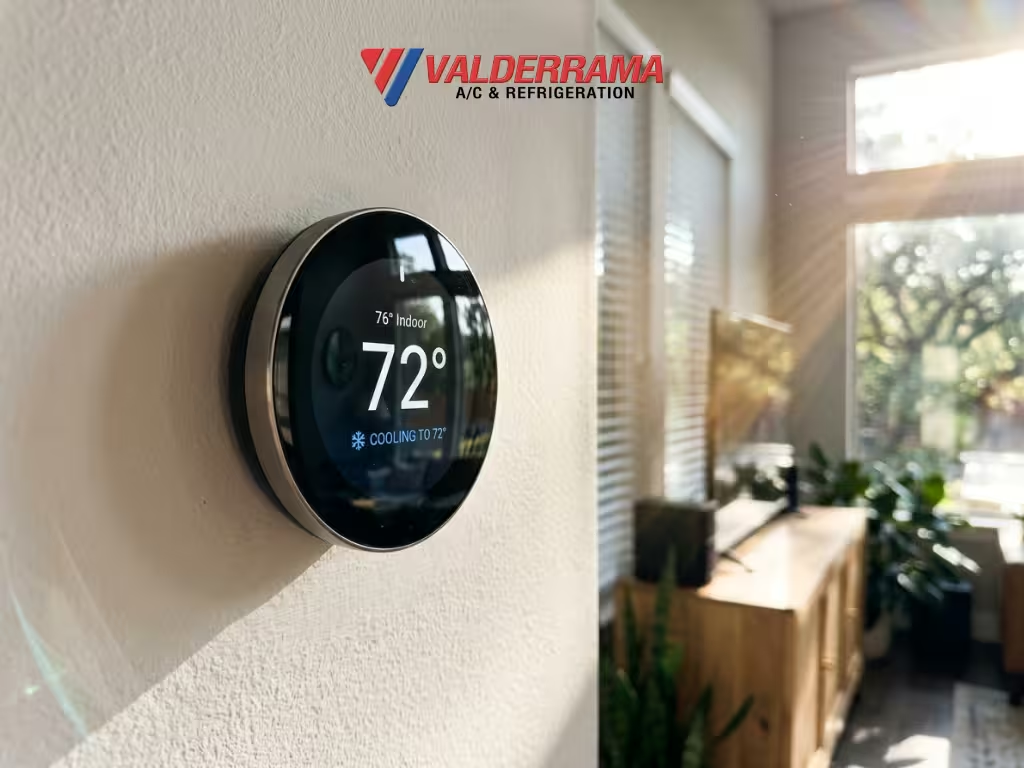
The Houston Factor: Why Local Climate Flips the National Rule
If you read general national energy statistics, you will often see articles claiming that home heating accounts for roughly 42% of a household’s utility budget, while air conditioning takes up only 6% to 12%.
For northern homeowners dealing with five months of sub-zero snowdrifts, that statistic is true. But for property owners in Southeast Texas, those national averages are completely upside down.
Houston’s heat and humidity place extreme strain on AC systems. Because our local cooling season routinely stretches across nine to ten months of the year—often kicking off in March and lingering through Thanksgiving—a central air conditioner here logs double or triple the running hours of a system in the Midwest.
Our dense coastal climate introduces a massive “latent heat load.” Your air conditioner cannot focus merely on cooling sensible air temperature; it must also act as a heavy-duty dehumidifier, wringing hundreds of gallons of raw liquid water vapor out of your indoor air every single week.
Conversely, our winters are relatively short, mild, and interrupted only by brief, passing cold snaps. A natural gas furnace or heat pump in our area might only run heavily for six to eight weeks total out of the entire year. As a result, cooling dominates local annual utility expenses by a wide margin, making air conditioning significantly more expensive to run over a typical twelve-month cycle in our region.
The Thermodynamics: Heat Transfer vs. Heat Generation
To understand the cost difference between heating and cooling, it helps to look at the physical mechanics behind both processes:
- The Cost Physics of Air Conditioning: An air conditioner does not create cold air; it absorbs heat from indoors and pumps it outdoors using a closed refrigeration loop. Because it relies entirely on electricity to drive high-draw mechanical components like the outdoor compressor, condenser fan, and indoor blower motor, running an air conditioner during 100°F afternoons demands continuous high-voltage power.
- The Cost Physics of Gas Heating: A standard natural gas furnace burns fuel to create heat directly inside a sealed heat exchanger. In areas where natural gas rates are relatively low, burning gas to generate high-temperature air (120°F to 140°F) is thermally efficient and inexpensive per hour of operation compared to running a heavy electrical compressor.
- The Cost Physics of Electric Resistance Heating: If your home uses an electric furnace or auxiliary heat strips, heating costs can skyrocket. Forcing electricity through resistance coils to generate warmth is roughly three times more expensive than using a heat pump to move ambient heat indoors.
If your summer power bills are climbing out of control, explore our dedicated air conditioning services to see how modern SEER2 engineering brings runaway cooling costs back under control.
Causes of Unusually High Energy Costs
When either your heating or cooling system begins consuming far more power than normal, the issue usually stems from specific mechanical faults rather than the weather alone:
- Restricted Airflow from Clogged Filters: A dust-choked air filter creates high static pressure in your ductwork. The indoor blower motor has to work twice as hard to push air, while the restricted airflow over coils causes temperatures to drop or spike erratically, forcing the equipment into long, inefficient run cycles.
- Refrigerant Leaks and Coil Fouling: If an air conditioner or heat pump loses refrigerant or the outdoor coils are coated in dirt and grass clippings, the system cannot shed or absorb heat efficiently. The compressor must run almost continuously to satisfy the thermostat, driving electric bills skyward.
- Attic Ductwork Air Leaks: Flexible ducts that have ripped, detached, or lost their insulation in an attic allow conditioned air to dump into unconditioned space while pulling 130°F summer air or 35°F winter drafts directly into your return lines.
- Auxiliary Heat Strip Runaway: On heat pump systems, a faulty outdoor thermostat or stuck control relay can cause the backup electric resistance heat strips to run simultaneously with the compressor, creating a massive, hidden spike in winter electrical consumption.
Symptoms: 5 Signs You Need HVAC Efficiency Service
Watch for these five clear mechanical warning signs that your heating and cooling equipment is running inefficiently and wasting money:
- A Sharp, Unexplained Spike in Utility Statements: Your electric or gas bill jumps dramatically compared to the same month last year, even though weather patterns and household usage remained the same.
- Continuous, Never-Ending Equipment Cycles: The air conditioner or furnace runs for hours at a time without ever shutting off, struggling to pull the room temperature down or up to your setpoint.
- Weak or Uneven Airflow Across Different Rooms: Certain rooms stay uncomfortable, stuffy, or drafty while rooms closest to the air handler receive strong airflow, indicating static pressure or duct balancing issues.
- Excessive Indoor Humidity During Summer: The thermostat reads 72°F, but the air feels sticky, heavy, and clammy, signaling that the AC is short-cycling or losing dehumidification capacity.
- Frequent Breaker Trips or Hard Compressor Starts: The outdoor unit groans loudly when starting up or trips the electrical breaker, pointing to degraded capacitors or elevated mechanical resistance.
When winter cold snaps push your heating system to its limits, visit our heating repair to ensure your furnace or heat pump is calibrated to deliver warmth without burning through unnecessary fuel.
Practical DIY Checks to Lower Seasonal Energy Bills
Before scheduling a diagnostic visit, perform these simple, safe checks to stop common energy drains around your property:
- Inspect and Replace Air Filters: Slide your return filter out and check its condition. If light cannot pass through the pleats, replace it immediately. Clean filters reduce blower motor strain and maintain smooth airflow across coils.
- Audit Your Thermostat Programming: Avoid drastic temperature swings. Lowering your thermostat by five degrees when leaving the house in summer, or raising it by five degrees in winter, forces your system to run prolonged recovery cycles that erase any short-term savings. Aim for steady, modest adjustments of one to two degrees.
- Seal Supply and Return Registers: Walk through your home and ensure supply vents and return grilles are not blocked by heavy furniture, area rugs, or long curtains. Closing off vents does not save energy; it increases duct pressure and forces motors to work harder.
- Check the Outdoor Condenser Clearance: Walk around your outdoor unit and clear away tall grass, weeds, and garden debris. Keep at least two feet of open clearance on all sides so the fan can pull air freely across the coils to dump heat.
When to Call a Licensed HVAC Professional
While changing filters and managing thermostat settings are simple DIY habits, complex electrical circuits, internal refrigerant charges, and gas combustion require certified diagnostic tools and formal training.
Call an authorized HVAC technician immediately if you notice:
- A refrigerant leak, indicated by bubbling or hissing sounds along copper lines, ice accumulation on the suction line, or warm air blowing during cooling mode.
- An acrid, burning electrical smell coming from your registers or indoor air handler cabinet.
- A circuit breaker that trips every time the heating or cooling equipment kicks on.
- A gas furnace that displays a flickering yellow burner flame instead of a steady, crisp blue flame.
Prevention Tips: Keeping Operating Costs Down Year-Round
Keeping your heating and air conditioning expenses manageable throughout the year requires consistent preventative care:
- Maintain a Strict Filter Schedule: Replace standard 1-inch pleated filters every 30 to 60 days, and inspect 4- to 5-inch media cartridges every 6 to 12 months.
- Flush the Condensate Line Seasonally: Pour a cup of distilled white vinegar into the primary condensate drain line access pipe every two to three months to dissolve algae and prevent standing drain clogs that trigger safety shutdowns.
- Seal Attic Air Leaks and Ductwork: Have a professional inspect your attic duct connections and seal joints with mastic paste to prevent conditioned air from leaking into unconditioned spaces.
- Schedule Biannual Professional Tune-Ups: Have an experienced technician inspect the system twice a year—performing an AC tune-up in the spring and a heating safety check in the fall to test capacitors, wash coils, and measure motor amp draws.
Why Choose Valderrama A/C & Refrigeration?
Managing seasonal energy expenses and keeping your property comfortable requires a trusted mechanical partner who understands the unique engineering challenges of local architecture and climate. Choosing our family-owned company gives you access to:
- Clear, Upfront Flat-Rate Pricing: We deliver itemized written quotes before starting any mechanical work—eliminating hidden trip charges, unexpected add-ons, or surprise emergency fees.
- Licensed Texas Mechanical Specialists: Our technicians hold active TDLR credentials, carry full insurance, and receive regular training on modern variable-speed inverter systems, heat pumps, and SEER2 building codes.
- Complete System Care: From minor capacitor replacements to complete high-efficiency system installations, we deliver durable, code-compliant solutions built to lower your operating costs.
Frequently Asked Questions About Heating and Cooling Costs
Q: Does it cost more to heat a home by one degree or cool it by one degree?
A: Strictly in terms of thermal energy, heating usually requires more raw energy per degree of change because the temperature difference between indoors and outdoors in winter is often larger than in summer. However, because air conditioners rely entirely on electricity and run far longer in southern climates, cooling accounts for a much larger share of your total annual bill.
Q: Is a heat pump cheaper to run than a gas furnace?
A: In mild southern winters, an electric heat pump is often cheaper or comparable to run because it transfers heat rather than generating it, delivering three to four units of heat for every unit of electricity consumed. If natural gas prices are exceptionally low, a high-efficiency gas furnace can be very cost-effective during severe cold snaps.
Q: What thermostat temperature saves the most money in summer?
A: The U.S. Department of Energy recommends setting your thermostat to 78°F when you are home and higher when you are away. For every degree you raise your thermostat above 72°F during the cooling season, you can save roughly 3% to 5% on your monthly cooling electricity costs.
Q: How much can a high-efficiency SEER2 system lower my monthly energy bills?
A: Upgrading an outdated 10- or 12-SEER unit to a modern 16+ SEER2 system can lower your cooling-related electricity consumption by 25% to 40%, delivering noticeable monthly savings throughout our long summer cooling seasons.
Q: Why is my winter electric bill so high if I have an electric heat pump?
A: A high winter electric bill with a heat pump usually means your system is running on secondary “auxiliary” electric resistance heat strips. This happens if the outdoor temperature drops below the balance point, if the thermostat is turned up too quickly, or if the heat pump has a mechanical fault like low refrigerant.
Take Control of Your Seasonal Energy Costs Today
You do not have to accept soaring utility bills or deal with uncomfortable indoor temperatures season after season. Understanding is air conditioning or heating more expensive gives you the knowledge to make smart adjustments, eliminate hidden energy drains, and keep your property comfortable through every season.
At Valderrama A/C & Refrigeration, we take pride in delivering honest technical evaluations, skilled mechanical craftsmanship, and dependable service across our local communities.
Ready to lower your seasonal energy bills and optimize your HVAC performance?
Schedule Your Precision Energy and HVAC Inspection Today!
Call our team directly at (281) 974 – 4599 to speak with an experienced specialist and confirm your service visit!