
Auxiliary heat (AUX heat) is the backup heating system built into your heat pump. It activates automatically when outdoor temperatures drop too low for the heat pump to warm your home efficiently on its own, or when you raise the thermostat setting by 3 or more degrees.
You wake up on a chilly, damp winter morning in Houston, head to your thermostat, and notice the words “AUX Heat” or “Auxiliary Heat” glowing on the screen. The air coming out of your vents feels warm, but you might wonder: what do auxiliary heat mean? Is your heating system breaking down, or is it supposed to run this way?
While auxiliary heat is a normal secondary feature on modern heat pumps, seeing it run constantly can cause your monthly electricity bill to skyrocket. Understanding how and when AUX heat should run is essential for keeping your home warm without blowing your winter utility budget. Navigating heat pump performance issues is much simpler when you work with trusted local experts like Valderrama A/C & Refrigeration, who keep Greater Houston heating systems running efficiently year-round.
In this guide, we break down what auxiliary heat is, why it turns on, and how Houston’s unique coastal weather affects your heat pump.
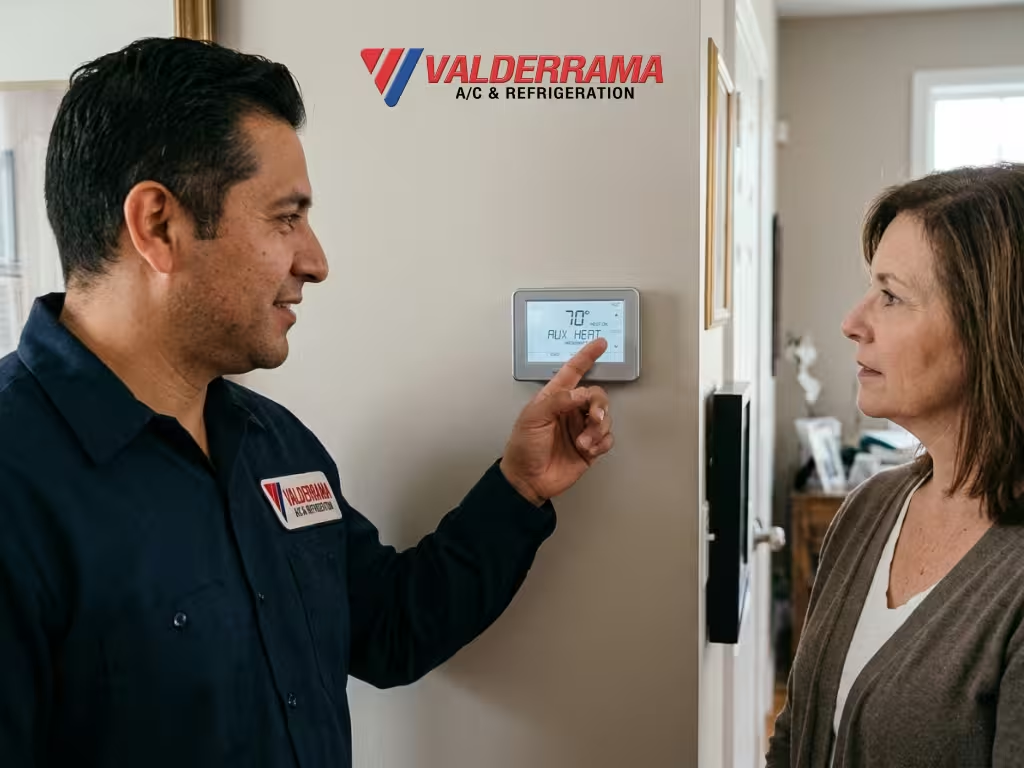
How Auxiliary Heat Works in Houston, TX
To understand auxiliary heat, it helps to understand how your heat pump works. During standard operation, a heat pump absorbs ambient heat from the outside air and moves it indoors. This process uses very little electricity and works exceptionally well during mild southern winters.
However, when outdoor temperatures drop below approximately 35°F to 40°F, or when there is a large gap between indoor temperature and your thermostat setting, the heat pump needs help.
The Role of Electric Heat Strips
When your heat pump cannot pull enough warmth from cold outside air quickly enough, your system automatically triggers auxiliary heat. Auxiliary heat relies on electric resistance coils (heat strips) located inside your indoor air handler.
- Standard Heat Pump Mode: Uses minimal electricity by pulling heat from outdoor air.
- Auxiliary Heat Mode: Uses high-wattage electric resistance heat (similar to a giant hair dryer or toaster) to rapidly warm incoming air.
Because electric resistance heat consumes significantly more power than standard heat pump operation, AUX heat is designed to serve only as a temporary backup—not a primary heat source.
Auxiliary Heat vs. Emergency Heat: What’s the Difference?
Homeowners often confuse Auxiliary Heat with Emergency Heat (EM Heat) because both use electric heat strips. However, they function differently:
| Feature | Auxiliary Heat (AUX) | Emergency Heat (EM) |
|---|---|---|
| Activation | Turns on automatically as needed by system controls. | Turned on manually by the homeowner on thermostat. |
| Heat Pump Status | Runs alongside the primary heat pump compressor. | Locks out the outdoor heat pump compressor completely. |
| Purpose | Boosts indoor warmth during temporary cold snaps. | Manually bypasses a broken outdoor heat pump unit. |
| Energy Impact | Moderate increase in electricity usage while active. | Extremely high electricity usage while engaged. |
Why Is Your Auxiliary Heat Running Constantly?
If your thermostat displays “AUX Heat” for 15 to 30 minutes during a cold morning, your system is working normally. However, if AUX heat stays on for hours or runs during mild 50°F weather, your heat pump is struggling.
Common reasons for continuous auxiliary heat include:
- Thermostat Set Too High: Bumping your thermostat up by 3°F or more all at once triggers AUX heat to warm the home faster.
- Clogged Air Filters: Restricted airflow prevents your heat pump from transferring heat efficiently, forcing backup heat strips to turn on.
- Low Refrigerant Charge: A leak in your refrigerant lines reduces heat absorption, forcing the system to rely on electric coils.
- Frozen Outdoor Coils: Cold, humid weather can frost over the outdoor unit. The system enters a “defrost cycle” and uses AUX heat so cold air doesn’t blow into your home.
- Faulty Thermostat or Defrost Control Board: Miscalibrated sensors or broken relays can keep AUX heat stuck on continuously.
How Houston’s Climate Affects Heat Pump Performance
Houston weather presents a unique environment for heat pumps. While severe freezing weather is rare, local weather patterns create specific heating challenges:
- High Coastal Humidity: Damp air carries more moisture, which easily freezes onto outdoor heat pump coils when temperatures hover near 35°F to 40°F. This triggers frequent defrost cycles and temporary AUX heat activation.
- Rapid Temperature Swings: Houston can go from 75°F to 35°F in under 24 hours. These dramatic drops prompt homeowners to turn up the heat quickly, triggering auxiliary heat automatically.
Managing heat pump operation through these shifts requires equipment that is properly sized and calibrated for Southeast Texas.
5 Signs You Need Professional Heating Service
If you suspect your auxiliary heat is running more than it should, watch for these five warning signs that indicate your heat pump needs professional attention:
- AUX Heat Runs in Mild Weather: Your thermostat displays AUX heat when outdoor temperatures are above 45°F.
- Surge in Winter Utility Bills: A sudden, unexplained spike in your electric bill indicates heat strips are running continuously.
- Cold or Lukewarm Air From Vents: The system runs nonstop, but your home never reaches the set temperature.
- Outdoor Unit Covered in Thick Ice: While light frost during a defrost cycle is normal, heavy ice accumulation signals a defrost control failure.
- Thermostat Stuck on AUX or EM Heat: Your thermostat stays locked in backup mode and fails to return to normal heat pump operation.
When your heating system exhibits these issues, protect your energy budget with our expert heating services in Houston, TX.
Why Choose Valderrama A/C & Refrigeration?
Understanding what auxiliary heat means is key to controlling winter energy expenses, but fixing a heat pump that relies too heavily on backup heat requires experienced technicians. When you choose Valderrama A/C & Refrigeration, our certified specialists diagnose heat pump issues, repair refrigerant leaks, and calibrate controls so your system runs at peak efficiency. We deliver straightforward pricing, thorough inspections, and reliable heating solutions tailored specifically for Houston homeowners.
Frequently Asked Questions
Is it bad if auxiliary heat comes on?
No, it is normal for auxiliary heat to turn on during severe cold or when you raise the thermostat temperature by several degrees. However, it should turn off once your home reaches the target temperature.
How do I turn off auxiliary heat on my thermostat?
You cannot directly turn off AUX heat while keeping standard heat active, as the system controls it automatically. To reduce AUX heat activation, adjust your thermostat setting in small increments (1°F to 2°F at a time).
Why does my AUX heat run when it is 50 degrees outside?
If AUX heat turns on when outdoor temperatures are above 45°F, your heat pump may have a dirty filter, low refrigerant, or a faulty sensor requiring professional inspection.
Does auxiliary heat use a lot of electricity?
Yes. Auxiliary heat uses electric resistance heat strips, which consume significantly more electricity than a standard heat pump compressor.
Can running auxiliary heat damage my HVAC system?
Running AUX heat does not damage the system directly, but continuous operation indicates an underlying heat pump issue that accelerates equipment wear and leads to high electric bills.
Ready to optimize your indoor climate and lower your energy costs?
Schedule Your Precision HVAC System Inspection Now!
Call our team today at (281) 974 – 4599 to speak with an experienced specialist and confirm your service visit