
The fundamental answer to what is heating ventilation and air conditioning (HVAC) is an interconnected mechanical network engineered to regulate indoor temperature, control relative humidity, filter airborne contaminants, and exchange stale indoor air with fresh, conditioned airflow to maintain a healthy, comfortable indoor living environment year-round.
The Hidden Climate Network Behind Your Walls
It is 2:30 PM on a sweltering Tuesday afternoon. Outside, ambient temperatures are pushing past 97°F with a heat index that feels like 109°F. You step inside your home, adjust your wall thermostat to 72°F, and within moments, a gentle rush of crisp, cool air pours from the ceiling vents.
A few months later, an Arctic cold front sweeps down, dropping the outdoor temperature to near freezing. You flip that same thermostat over to heat, and within minutes, warm air flows through the rooms, keeping your family safe and comfortable.
Most property owners experience this seamless transition every year without realizing what makes it happen. We treat our thermostats like basic on-off switches, rarely thinking about the mechanical components operating in our attics, closets, and backyards until a strange rattling sound echoes through the returns, an electric bill doubles, or the vents begin blowing lukewarm, humid air.
Understanding what is heating ventilation and air conditioning gives you the knowledge to look behind the drywall and understand the hardest-working mechanical investment in your building. When you see how heating units, air handlers, ventilation paths, and cooling loops interact, you can spot early signs of wear, communicate clearly with licensed technicians, and avoid premature system replacements. At Valderrama A/C & Refrigeration, we treat whole-home comfort as an integrated science. Here is how these three essential subsystems work together.
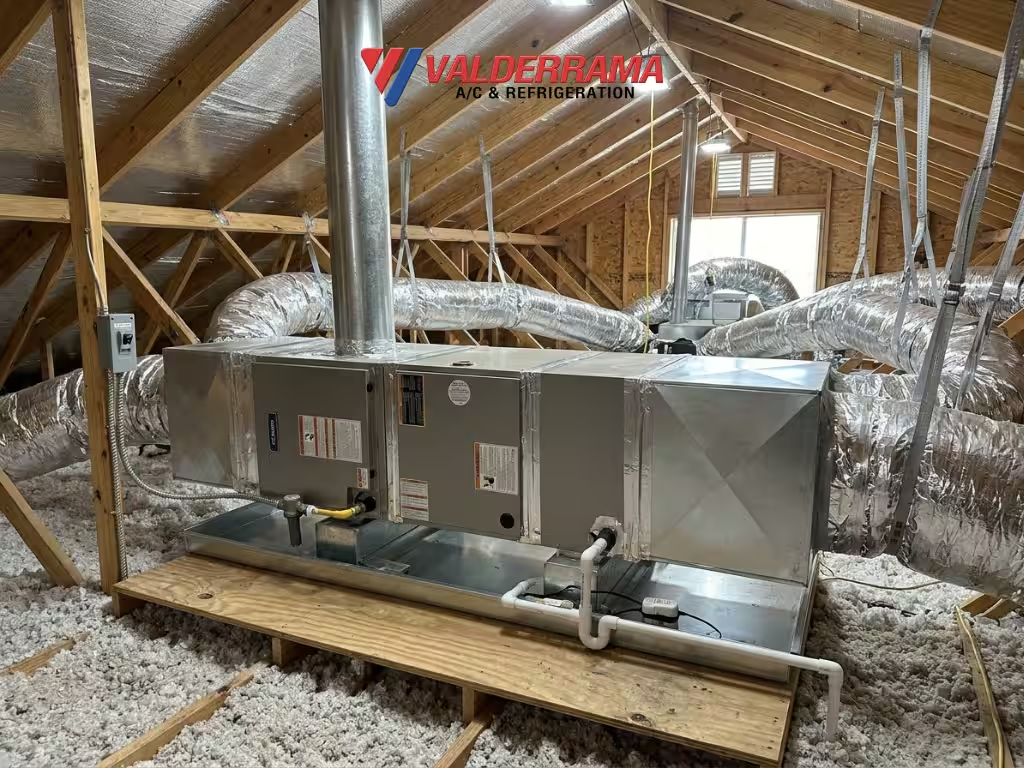
Deconstructing the Three Pillars of Home Climate Control
An HVAC installation is not a single appliance you plug into an outlet. It is a carefully engineered closed loop where three distinct mechanical functions coordinate to maintain an optimal indoor climate.
| THE THREE PILLARS OF HVAC | ||
| HEATING | VENTILATION | AIR CONDITIONING |
| Furnace or Heat Pump adds thermal energy during winter freezes | Ducts, Filtration, Exchangers & Fans Circulates/cleans air | Evaporator, Line Sets & Condenser Extracts heat/moist |
1. Heating: Controlled Thermal Energy Generation
The heating subsystem keeps your living spaces warm, safe, and livable during cold snaps and seasonal freezes. In residential structures, heating is typically handled by one of two methods:
- Combustion Furnaces: Fueled by natural gas or propane, a furnace burns fuel inside a sealed metal heat exchanger. The indoor blower fan pushes room air over the hot exterior of the metal chamber, warming the air before distributing it through supply ducts, while combustion fumes vent safely outside via a flue pipe.
- Electric Heat Pumps: Rather than burning fuel, an electric heat pump uses a reversing valve to flip the refrigeration cycle. It absorbs ambient heat energy from cold outdoor air and transfers that warmth inside, using up to 50% less electricity than traditional electric resistance heat strips.
2. Ventilation: Air Circulation, Exchange, and Purification
Ventilation is often misunderstood as simply “blowing air,” but it is arguably the most vital pillar for human health and indoor air quality. Modern homes are tightly sealed to prevent energy loss, which inadvertently traps chemical fumes, cooking odors, dust mites, pet dander, and excess moisture indoors.
The ventilation subsystem manages air health through two continuous processes:
- Air Circulation and Filtration: As indoor air returns through intake grilles, high-efficiency media filters capture floating debris, pollen, and microscopic particles before the air reaches sensitive mechanical coils or recirculates through your living areas.
- Fresh Air Exchange: Specialized mechanical dampers, energy recovery ventilators (ERVs), or heat recovery ventilators (HRVs) exhaust stale indoor air and bring in filtered, outdoor air to prevent carbon dioxide buildup and maintain balanced indoor humidity.
3. Air Conditioning: Thermodynamic Heat and Moisture Extraction
A common misconception is that an air conditioner manufactures cold air. In reality, cooling is an extraction process based on thermodynamics: an air conditioner absorbs heat from indoor air and pumps it outdoors.
This process relies on chemical refrigerant circulating through a closed loop:
- Warm indoor air blows across an indoor evaporator coil.
- Cold liquid refrigerant inside the coil absorbs the heat energy from the passing air, transforming the refrigerant into a low-pressure gas while cooling the air that flows back into your home.
- The heated refrigerant gas travels outside to the compressor, which squeezes the gas into a high-pressure, high-temperature state.
- The outdoor condenser coil and fan release the absorbed heat into the outdoor air, condensing the refrigerant back into a liquid to repeat the cycle.
The Houston Factor: How Coastal Weather Strains Every Pillar
Where your home is located has a direct impact on the workload, design life, and efficiency of your heating, ventilation, and air conditioning components. Southeast Texas presents one of the most demanding operating environments in the country.
Houston’s heat and humidity place extreme strain on AC systems. Because our local cooling season routinely stretches from March through November, air conditioning equipment here logs double or triple the annual run-hours of identical systems in northern states.
Furthermore, our coastal climate carries an exceptionally heavy “latent heat load.” Your system cannot focus merely on dropping the temperature reading on your thermostat; it must simultaneously act as an industrial-grade dehumidifier, wringing hundreds of gallons of raw liquid water vapor out of your indoor air every week.
When high humidity mixes with intense summer heat, your entire HVAC ecosystem is tested:
- If your ventilation (ductwork) has minor air leaks in a 135°F attic, your return lines pull in superheated, moisture-laden air, destroying system efficiency.
- If your indoor evaporator coil is starved of airflow due to a dirty filter, the moisture it pulls from the air freezes into a solid block of ice.
- If your heating elements or furnace burners sit dormant inside humid, unconditioned attics for nine months, surface rust and dust buildup can cause immediate safety lockouts during the first winter freeze.
Causes of System Breakdown: Why Equipment Fails Early
When heating, ventilation, and cooling components break down, the failure can usually be traced back to a few common root causes:
- Restricted Airflow and High Static Pressure: A neglected, dust-clogged air filter acts like a mechanical choke point. Starved of adequate airflow across the evaporator coil, the refrigerant cannot absorb enough heat, which causes coil temperatures to plunge below freezing and encases the system in ice.
- Degraded Electrical Capacitors and Contactors: Sustained summer heat causes capacitors and contactor switches inside the outdoor condenser to run under high internal temperatures. Over time, their electrical storage capacity degrades, leading to hard starts, tripped breakers, and eventual motor burnout.
- Blocked Condensate Drain Lines: Because an AC system pulls massive volumes of water from humid air, the primary drain pan stays constantly wet. Dust, skin cells, and biological algae collect in the standing water, forming a thick gelatinous clog that trips safety float switches and floods surrounding ceilings.
- Corroded Heating Ignition Components: High summertime attic humidity causes oxidation on furnace flame sensors and ignition assemblies, preventing the burners from lighting when winter weather arrives.
Symptoms: 5 Signs You Need Heating and Air Conditioning Service
Watch for these five clear mechanical and environmental warning signs that your heating and cooling equipment needs professional attention:
- Supply Air Temperature Inversion: The blower fan runs continuously, but the air coming out of your ceiling registers feels lukewarm when cooling, or cool and drafty when heating.
- Unexplained Utility Bill Surges: Your electric or gas statements show a sharp, unexplained increase in energy consumption compared to the same month last year under similar weather conditions.
- Loud Mechanical Rattles, Squeals, or Grinding: Unusual noises echoing from the outdoor condenser or indoor air handler, indicating failing motor bearings, loose fan blades, or a worn electrical contactor.
- Persistent Clamminess and High Indoor Humidity: The thermostat displays your target setpoint (like 72°F), but indoor air feels heavy, sticky, and stuffy due to poor dehumidification cycles.
- Water Pooling Around the Indoor Air Handler: Condensate drain lines clogged with algae and dirt, which causes overflow pans to spill and risks ceiling drywall damage.
If your cooling loops are blowing warm air or struggling to manage indoor humidity, explore our comprehensive air conditioning diagnostics to schedule a precision system check before minor wear leads to total equipment failure.
Practical DIY Checks to Safeguard Your System
Before calling for technical service, perform these four safe, straightforward homeowner checks to rule out simple operational issues:
- Examine the Air Filter: Slide your return filter out of its slot and hold it up to a light source. If light cannot easily pass through the pleated material, the filter is fully saturated and must be replaced immediately.
- Verify Thermostat Mode and Battery Power: Confirm the thermostat is set to the correct mode (“Cool” or “Heat”), check that the target temperature is set at least three degrees past the room’s current temperature, and ensure the screen does not display a low-battery alert.
- Inspect the Main Electrical Breaker: Go to your home’s breaker panel and look for switches labeled “A/C,” “Furnace,” or “Air Handler.” If a breaker has tripped, it will rest in the middle position between “On” and “Off.” Flip it firmly to “Off,” then back to “On.” If it trips again immediately, leave it off and call a professional.
- Clear the Exterior Unit Clearance: Clear away tall grass, fallen leaves, loose brush, and outdoor storage from the outdoor unit. Maintain at least 24 inches of open clearance on all sides so the condenser fan can pull air freely through the fins.
When to Call a Licensed HVAC Professional
While changing filters and clearing outdoor debris are easy DIY tasks, sealed refrigerant lines, gas combustion assemblies, and high-voltage electrical circuits require certified diagnostic tools and safety training.
Call an authorized HVAC technician immediately if you encounter:
- A suspected refrigerant leak (indicated by bubbling sounds, ice on copper lines, or air blowing warm in cooling mode).
- An acrid, burning electrical smell or the rotten-egg odor of natural gas coming from your registers or furnace cabinet.
- A circuit breaker that trips instantly every time the heating or cooling equipment kicks on.
- Water pooling around the indoor furnace platform or dripping through drywall ceilings.
If cold weather has arrived and your furnace or heat pump is blowing cold air, check out our heating repair to restore safe, dependable warmth.
Prevention Tips: Maximizing System Longevity and Efficiency
A central HVAC system is a major capital asset, and routine preventative care is the best way to safeguard that investment over its operational lifespan:
- Stick to a Strict Filter Schedule: Replace basic 1-inch pleated filters every 30 to 60 days. If your home has thick 4- or 5-inch media cartridges, inspect them quarterly and replace them every 6 to 12 months.
- Keep Internal Supply Registers Unobstructed: Never close off more than 10% of the supply vents in your home. Closing registers does not save energy; it increases duct static pressure, strains the blower motor, and disrupts airflow balance.
- Flush the Condensate Drain Line: Pour a cup of distilled white vinegar into the primary condensate drain line access T-pipe every two to three months to dissolve algae and prevent standing drain clogs.
- Schedule Biannual Professional Maintenance: Have an experienced technician inspect the system twice a year—performing an AC tune-up in the spring and a heating safety check in the fall to test capacitors, wash coils, inspect heat exchangers, and measure motor amp draws.
Why Choose Valderrama A/C & Refrigeration?
Keeping your property comfortable, safe, and efficient requires a dedicated mechanical partner who understands the unique engineering challenges of local architecture and climate. Choosing our family-owned company gives you access to:
- Clear, Upfront Flat-Rate Pricing: We deliver itemized written quotes before starting any mechanical work—eliminating hidden trip charges, unexpected add-ons, or surprise emergency fees.
- Licensed Texas Mechanical Specialists: Our technicians are background-checked, insured, and thoroughly trained in building science, dynamic airflow balancing, and the latest SEER2 efficiency guidelines.
- Complete System Care: From minor electrical switch repairs to complete multi-zone heat pump and duct installations, we deliver durable, code-compliant solutions built to last.
Frequently Asked Questions About HVAC Systems
Q: What is the main difference between AC and HVAC?
A: Air conditioning (AC) is simply one component of an HVAC system. While air conditioning handles cooling and dehumidification, a full HVAC system incorporates heating equipment (such as a furnace or heat pump), air filtration, and ventilation into a single unified setup.
Q: How long does an HVAC system typically last in Texas?
A: Due to long, demanding cooling seasons and heavy regional humidity, central HVAC systems in our region generally last between 10 and 15 years. In milder, drier parts of the country, systems can sometimes reach 15 to 20 years with proper maintenance.
Q: What does a SEER2 rating mean?
A: SEER2 stands for Seasonal Energy Efficiency Ratio 2. It measures how efficiently a cooling system converts electricity into cooling output under updated, real-world static duct pressure testing. Higher SEER2 ratings indicate better energy efficiency and lower monthly electric bills.
Q: Can a poorly maintained ventilation system affect my health?
A: Yes. Without proper air filtration and fresh air exchange, ductwork can circulate accumulated dust mites, pollen, pet dander, and biological mold spores throughout your home, aggravating allergies, asthma, and upper respiratory conditions.
Q: Should I leave my thermostat fan setting on “Auto” or “On”?
A: In hot, humid climates, you should almost always set the fan to “Auto.” Leaving the fan set to “On” keeps the blower motor running even when the system is not actively cooling, which can evaporate moisture off the wet evaporator coil and blow it right back into your living areas before it can drain outside.
Take Control of Your Property’s Climate and Efficiency Today
You do not have to settle for uneven room temperatures, humid indoor air, or surprise mechanical failures in the peak of summer or dead of winter. Knowing what is heating ventilation and air conditioning helps you make informed maintenance choices, protect your home’s air quality, and keep your mechanical infrastructure operating at peak efficiency year after year.
At Valderrama A/C & Refrigeration, we provide honest technical evaluations, skilled mechanical craftsmanship, and dependable service across the region.
Ready to optimize your indoor climate and lower your energy costs?
Schedule Your Precision HVAC System Inspection Now!
Call our team today at (281) 974 – 4599 to speak with an experienced specialist and confirm your service visit