
You should upgrade your electrical panel if your home is over 25 years old, you are installing a new HVAC system, or you notice frequently tripping breakers. Other critical triggers include flickering lights, the use of multiple power strips, or if your current panel is rated for less than 200 amps.
The “August Blackout” Mystery
It’s a sweltering Tuesday afternoon in the Greater Houston area. Your high-efficiency AC is humming, the kids are gaming, and you just started a load of laundry. Suddenly—click—the power dies in half the house. You head to the garage, flip the breaker, and everything seems fine… until it happens again two hours later.
In Texas, our homes don’t just use electricity; they devour it. Between our massive cooling demands and our modern gadgets, many older electrical panels simply can’t keep up. At Valderrama A/C & Refrigeration, we often find that when a client’s AC “fails,” the real culprit isn’t the cooling unit—it’s an obsolete electrical panel gasping for breath. Knowing when to upgrade electrical panel systems is the first step in protecting your home from fire hazards and ensuring your family stays cool.
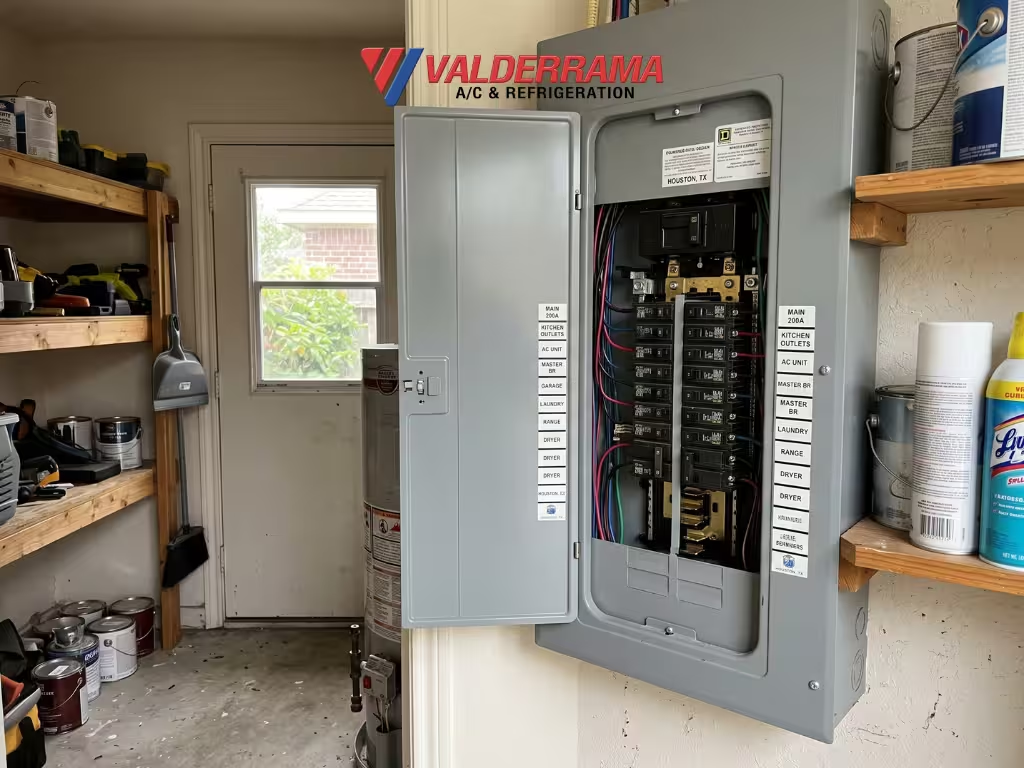
5 Signs You Need an Electrical Panel Upgrade
If you notice these red flags, your home is likely underpowered for 2026 standards:
- Breakers Trip Constantly: Your panel is performing its safety “stop” because the demand exceeds its capacity.
- Flickering Lights: Especially noticeable when a large appliance, like the refrigerator or AC, kicks on.
- Use of Extension Cords: If you’ve “daisy-chained” power strips because you lack enough outlets, your system is overtaxed.
- Physical Damage: Rust, corrosion, or water stains inside or around the gray service box.
- Warmth or Odors: The panel feels hot to the touch or emits a faint “burning plastic” scent.
Why the Texas Climate Forces the Issue
Our local environment is uniquely brutal on electrical infrastructure. In the Lone Star State, we deal with:
The 100-Degree Load: During a Texas summer, your HVAC system can run for 12 to 18 hours a day. This creates a “continuous load” that generates heat within your breakers. If your panel is old or undersized, this thermal stress can cause the internal components to degrade, leading to “nuisance tripping” or, worse, electrical fires.
High Humidity and Corrosion: In Southeast Texas, the moisture in the air is a constant threat. Humidity leads to oxidation on the copper or aluminum bus bars inside your panel. This oxidation increases electrical resistance, which creates even more heat. If you live near the coast, salt air acts as an accelerant, eating through the metal components of your service entrance.
Critical Triggers: When to Upgrade Electrical Panel Units
1. You Are Upgrading Your HVAC System
Modern high-efficiency AC units (SEER2 compliant) often require different electrical profiles than units built 15 years ago. If you are moving to a high-performance heat pump, your existing 100-amp or 125-amp panel may not have the “headroom” to handle the startup surge.
2. The Panel Brand is Obsolete
If your home features a Federal Pacific (FPE), Zinsco, or Sylvania panel, you are sitting on a documented fire hazard. These older brands were found to have high failure rates where breakers refuse to trip during a surge, leading to wires melting behind your walls.
3. You are Adding an EV Charger
Electric vehicle chargers are essentially “industrial” appliances. Adding a Level 2 charger to a standard home panel is often the “straw that breaks the camel’s back,” requiring a jump to a 200-amp service.
4. You Have a “Fuse Box”
If your home still uses screw-in glass fuses, you are at least 40 years behind current safety standards. Fuses aren’t inherently dangerous, but they were never designed for the 2026 “connected home” lifestyle.
5. You are Remodeling or Adding a Suite
Adding square footage means adding circuits. If your current panel is full (no “blanks” left for new breakers), you shouldn’t use “tandem” breakers to squeeze more in—you should upgrade the panel.
DIY Checks: Evaluating Your Panel’s Health
While you should never remove the “dead front” (the inner cover) of your panel, you can perform these safe visual checks:
- [ ] Check the Main Breaker: Look for the largest switch, usually at the top. Does it say “100”, “125”, or “200”? If it’s less than 200, you are likely underpowered for a modern Texas home.
- [ ] The “Sniff” Test: Lean in near the breakers. Do you smell ozone or burnt plastic?
- [ ] The “Touch” Test: Gently place your hand on the panel door. It should be room temperature. If it’s significantly warmer than the surrounding wall, call us immediately.
- [ ] Look for “Double Tapping”: Look for two wires going into a single breaker switch. This is a common code violation in older homes.
Why Professional Electrical Service Matters
Electrical work is not a “weekend warrior” project. In Texas, a panel upgrade involves coordinating with your local utility provider (like CenterPoint or Entergy) to disconnect and reconnect the main service lines.
- Code Compliance: We ensure your new panel meets the 2026 National Electrical Code (NEC) requirements, including GFCI and AFCI protection.
- Home Insurance: Many insurance providers now require an updated electrical panel to maintain coverage on older homes.
- HVAC Synergy: Because we understand both AC and electrical, we ensure your new panel is perfectly balanced to support your cooling system’s needs.
To ensure your home’s foundation is ready for the next heatwave, we recommend booking a comprehensive electrical safety audit to see if your panel is a candidate for an upgrade.
FAQ: Electrical Panel Upgrades in Texas
Q: How much does a 200-amp panel upgrade cost in Texas?
A: Costs vary based on the complexity of the wiring and the distance to the utility pole, but most homeowners can expect an investment between $2,500 and $4,500.
Q: How long does a panel upgrade take?
A: Usually, the actual work takes 4 to 8 hours. However, the power will be off during this time, so we recommend planning for a full day of “offline” living.
Q: Can I just add a sub-panel instead of upgrading the main one?
A: A sub-panel adds more space for breakers, but it does not add more capacity. If your main feed is only 100 amps, a sub-panel won’t stop the main breaker from tripping.
Q: Does a new panel increase home value?
A: Absolutely. In the Texas real estate market, a 200-amp panel is a major selling point and often a requirement for buyers during the inspection phase.
Q: Is “surge protection” included in a new panel?
A: While not always standard, we highly recommend adding whole-home surge protection during a panel upgrade to protect your expensive HVAC and electronics from Texas lightning.
Power Your Life Safely
Don’t wait for a spark or a total blackout to address your home’s electrical heart. Understanding when to upgrade electrical panel systems is about more than just convenience—it’s about the peace of mind that comes with knowing your home is safe, efficient, and ready for whatever the Texas weather throws at it.
At Valderrama A/C & Refrigeration, we are your local experts in the critical intersection of electrical safety and home comfort.
Is your home struggling to keep the lights on?
Schedule your Professional Electrical Safety Inspection today!
Call us at (281) 974 – 4599 for immediate priority service in Texas!