
The primary difference between an air purifier vs HVAC filter comes down to their design purpose and coverage. A standard HVAC filter sits inside your return plenum and is designed strictly to protect your system’s blower motor from heavy dust. An air purifier—whether a standalone portable HEPA unit or an integrated whole-home active system—is engineered specifically to sanitize your breathing air by neutralizing ultra-fine particles, biological pathogens, and chemical volatile organic compounds (VOCs).
The Million-Particle Trap Behind Your Sheetrock
It is a heavy, blinding Tuesday afternoon in Southeast Texas. You look across your living room or workspace layout as bright sunlight streams through the window glass, and you can clearly see millions of tiny dust particles, skin flakes, and fine lint threads floating suspended in the breathing space. Your throat feels dry, your eyes are constantly gritty, and someone in the room is suffering from another persistent coughing fit.
You walk over to your primary return grille, slide out your brand-new, expensive pleated filter, and stare at it in frustration. It looks perfectly clean. If the filter is doing its job, why does your indoor air still feel so heavy, stuffy, and triggering?
This frustrating gap is one of the most common misunderstandings in modern residential and commercial property management. Many owners view their basic furnace or air conditioner filter as a comprehensive health shield, assuming it sanitizes every cubic foot of breathing air automatically. In reality, a standard filter is a defensive component built to safeguard machinery, not human lungs.
When you find yourself evaluating an air purifier vs HVAC filter setup, you are looking to understand how these technologies differ, how they impact your heating and cooling hardware, and how to construct a reliable, layered system that permanently removes fine allergens and microscopic chemical vapors from your real estate. At Valderrama A/C & Refrigeration, we treat indoor air quality as a precise mechanical science. Let’s break down the underlying mechanics so you can invest in your property’s environment cleanly.
The Houston Factor: How Intense Coastal Moisture Turns Filters Into Breeding Grounds
Managing safe breathing channels in Southeast Texas introduces environmental challenges that structures in drier northern states never have to navigate.
Houston’s heat and humidity place extreme strain on AC systems. Because our local cooling season routinely runs for up to ten months out of the year, your central air handler moves massive volumes of warm, water-laden air into dark sheet-metal tracks every single hour. Your indoor evaporator coils continuously squeeze hundreds of gallons of raw liquid water vapor out of the air stream, leaving internal drip pans damp and humid.
When fine outdoor ragweed pollen, mold spores, and heavy industrial highway soot seep indoors through microscopic window gaps, they get pulled directly to your central HVAC filter. If you utilize a dense, high-efficiency filter without a dedicated purification system, that trapped organic dust absorbs the surrounding ambient moisture. Within 48 hours, your dirty filter frame can transform into a biological breeding ground for mold and bacteria, broadcasting sour, musty odors and micro-toxins back through your supply vents every time the system cycles online.
Side-by-Side Breakdown: Air Purifier vs HVAC Filter Mechanics
To build an efficient clean-air layout, it helps to examine how these systems compare across core technical categories:
| Operational Feature | Standard HVAC Air Filter | Whole-Home or Portable Air Purifier |
| Primary Design Purpose | Captures large debris (hair, lint) to protect blower motors from mechanical failure. | Actively sanitizes air by removing ultra-fine particles, chemical gases, and viral pathogens. |
| Air Filtration Metric | Rated by MERV (Minimum Efficiency Reporting Value) ranging from 1 to 16. | Rated by CADR (Clean Air Delivery Rate) or absolute HEPA standard efficiency lines. |
| Airflow Resistance Impact | High MERV variants create severe static pressure drops that strain blower fans. | Minimal to zero resistance because many use open electronic ionization or UV fields. |
| Targeted Pollutants | Large dust clumps, carpet fibers, and pet hair tracks. | Smoke, fine pollen, biological mold spores, cooking odors, and chemical VOCs. |
| Operational Dependency | Only filters air when your heating or cooling system is actively running. | Provides continuous, round-the-clock air sanitization independently. |
5 Signs Your Property Needs a Dedicated Purification Upgrade
Your central climate grid will show clear mechanical and physical red flags when a basic return air filter is failing to protect your indoor spaces:
- Persistent Allergy and Respiratory Triggers: Occupants experience regular congestion, asthma flare-ups, and dry coughing fits strictly while spending time inside the property.
- Rapid Dust Accumulation Across Rooms: A thick layer of fine gray particles settles over your electronics, tables, and desks within 48 hours of a deep structural cleaning.
- Lingering, Trapped Building Odors: Cooking scents, pet odors, or musty attic smells hang in your rooms for days without ever fully clearing out.
- Visible Dark Streaks on Ceiling Grilles: Fine black soot lines or fuzzy gray spots forming along the outer edges of your supply air registers.
- A Clammy, Lukewarm Thermal Environment: If your system leaves rooms feeling stuffy and damp, your internal cooling coils may be completely blanketed in fine dust. This layer chokes off vital heat transfer and drops your system’s cooling efficiency.
To see how our certified technicians track down these airflow bottlenecks and isolate harmful indoor pollutants before they can spread, browse our primary indoor air quality service to customize your home defense plan.
Why Buying an Overly Dense 1-Inch Filter Can Ruin Your HVAC Hardware
When property owners notice high dust levels, their immediate reaction is often to run to a big-box retail store and buy the densest 1-inch pleated filter available, usually labeled as an “Allergen Shield” with a high MERV 13 rating. While this comes from a good intention, sliding a highly restrictive filter into a standard residential slot can cause severe technical issues.
High-efficiency 1-inch filters act exactly like a tight mechanical stranglehold over your system’s return lines. This intense resistance raises your system’s static pressure, forcing your variable-speed blower motor to work twice as hard and pull excessive electrical amperage to draw air.
Over time, this restricted airflow causes the temperature of your indoor evaporator coils to plummet below freezing. Your air handler will transform into a solid block of ice, causing liquid refrigerant to travel backward down your suction lines. This liquid flood directly destroys your outdoor compressor pump’s internal valves, hitting your business or family budget with a sudden, multi-thousand-dollar equipment replacement crisis.
The Modern Solution: Whole-Home In-Duct Purification Systems
If you want comprehensive protection without endangering your mechanical hardware, the industry standard is migrating toward an integrated, whole-home air purification layout. Instead of forcing air through a single restrictive sheet of fabric, our licensed team installs active, low-resistance hardware directly inside your existing ductwork:
1. High-Capacity 4-to-5-Inch Media Cleaners
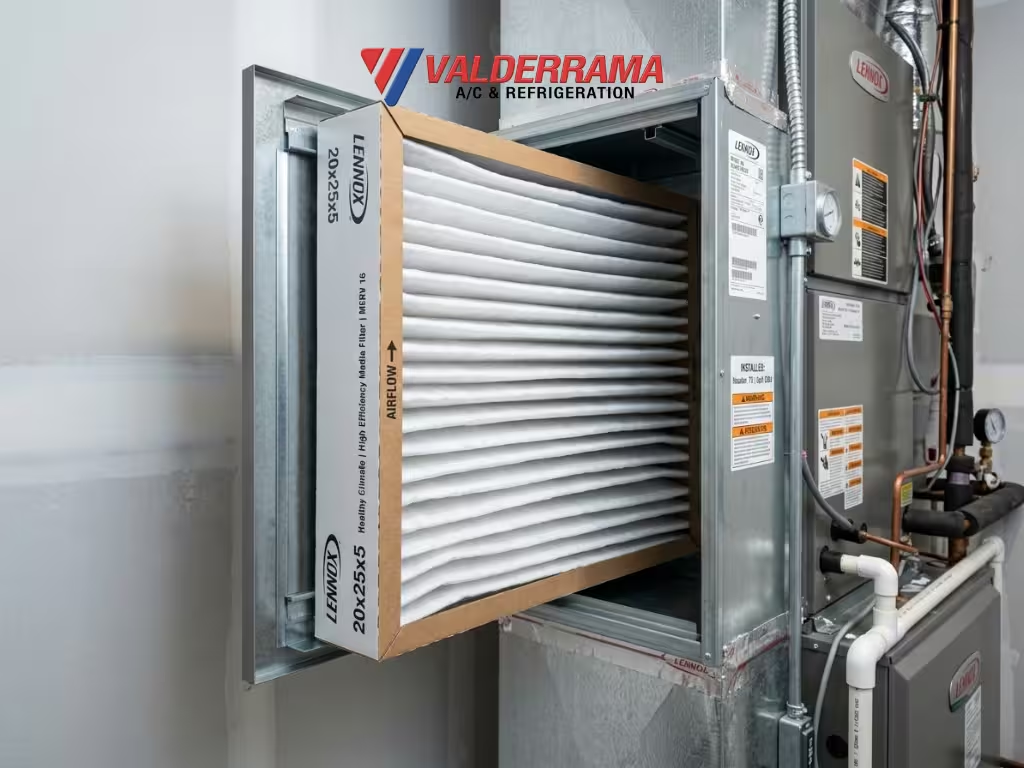
We replace your narrow 1-inch return slot with a dedicated media cabinet housing a thick, deeply pleated 4-inch or 5-inch media filter cartridge. Because these advanced cartridges feature up to ten times the physical surface area of a standard filter, they capture ultra-fine particles (including pollen and fine dust) with exceptional efficiency, while allowing your blower fan to breathe completely free of static pressure strain.
2. Photocatalytic Oxidation (PCO) and UV Germicidal Arrays
We mount active purification devices (such as premium UV-C light fields or REME HALO ionizers) directly inside your supply plenums. These systems project specialized hydro-peroxide plasmas and ultraviolet fields throughout your entire duct network, actively altering the DNA of passing biological contaminants. This destroys floating viral strands, bacteria, and mold spores while neutralizing chemical gas VOCs safely without producing ozone.
Why Choose Valderrama A/C & Refrigeration?
We don’t believe in low-value visual walkthroughs, hidden diagnostic fees, or high-pressure product sales pitches. When you partner with our local Texas division to optimize your building infrastructure, you secure:
- Upfront, Fixed Flat-Rate Invoicing: The detailed, line-item written estimate we deliver before any physical work begins is the exact price you pay—no sudden markups or surprise fees.
- Fully Certified Climate Experts: Background-checked, insured Texas field technicians systematically trained in advanced building science, airflow dynamics, and environmental code lines.
- Turnkey Comfort Management: From initial technical particulate testing to final in-duct purifier commissioning, we keep your property safe, dry, and highly efficient through any season.
FAQ: Navigating Air Purifier vs HVAC Filter Realities
Q: Can I completely eliminate my standard HVAC filter if I buy a portable air purifier?
A: No. You must always maintain a clean filter inside your central return tracks. Even if you run multiple portable purifiers, your central blower fan still requires a baseline filter to trap large carpet lint and hair tracks, preventing those materials from matting over your indoor evaporator fins and causing mechanical failure.
Q: What is a safe MERV rating that won’t strain a standard home HVAC system?
A: For most standard residential properties, a MERV 8 to MERV 11 pleated filter is the absolute sweet spot. It provides ample filtration to protect your cooling machinery and trap large dust clusters without introducing high static pressure resistance that could burn out your blower motor.
Q: Do portable plug-in air purifiers remove toxic cooking smells and chemical VOC gases?
A: Portable units will only remove odors and gases if they feature a dedicated, heavy-duty activated carbon stage. Standard mechanical HEPA sheets are built strictly to capture solid particles like dust and dander; they allow chemical gas vapors to pass straight through completely unrestricted.
Q: How long do whole-home in-duct UV lamps and active purifier cells last?
A: While standard 1-inch filters must be thrown away every 30 to 60 days, premium whole-home germicidal UV bulbs and active ionization cells run continuously for 2 to 3 years before requiring a technical replacement visit to maintain their sterilization output.
Q: Will running my HVAC fan continuously in the “On” position improve my home’s air quality?
A: Shifting your thermostat fan switch from “Auto” to “On” provides continuous filtration through your duct lines, even when the system isn’t actively heating or cooling. However, in high-humidity markets like Houston, running the fan non-stop can evaporate the moisture sitting on your indoor coils and blow it right back into your rooms, driving up indoor humidity levels.
Reclaim Complete Control Over Your Property’s Purity and Safety Today
You do not have to live with sluggish vent airflow, persistent seasonal congestion, or guess whether your building’s mechanical systems are secretly harboring biological threats. Securing an engineered balance between an air purifier vs HVAC filter layout gives your household or business enterprise the ultimate edge: the absolute peace of mind that comes with a perfectly calibrated, safe, and clean comfort network built to perform flawlessly for decades to come.
At Valderrama A/C & Refrigeration, we are your local corporate and residential comfort advocates. We provide honest upfront pricing, high-caliber technical diagnostics, and a total commitment to keeping your property safe, dry, and highly efficient.
Ready to eliminate floating dust and optimize your property’s air quality safely?
Schedule Your Precision Indoor Environmental Assessment Now!
Call our support group right now at (281) 974 – 4599 to speak with a licensed indoor air quality specialist today!