
When homeowners ask how cold do heat pumps work, the answer depends on the system type. Standard units operate efficiently down to 25°F to 30°F, while modern cold-climate inverter heat pumps extract thermal energy down to -10°F to -22°F, maintaining reliable home warmth even through unexpected winter freezes.
When the Forecast Drops and the Doubts Creep In
It is 5:30 AM on a bitter January morning. An unexpected Arctic front has swept across the Gulf Coast overnight, dropping outdoor temperatures from a mild 65°F down into the low 20s. You wake up to a drafty hallway, walk over to your central thermostat, and see the system running in heating mode.
You hold your hand up to the ceiling register. The air feels warm, but you remember an old myth your neighbor once repeated: “Heat pumps don’t work when it actually freezes outside.”
Suddenly, doubts set in. Is your heat pump truly drawing heat out of that freezing air, or are expensive backup electric coils quietly running in the background and driving up your utility bill? What happens if the mercury drops even further?
Understanding how cold do heat pumps work clears away decades of outdated HVAC assumptions. Modern heat pump engineering has transformed these systems from mild-weather units into dependable, year-round comfort systems. At Valderrama A/C & Refrigeration, we believe in giving property owners clear, verifiable facts about their climate equipment. Here is the operational breakdown of low-ambient heat pump performance, winter thermodynamic limits, and what you need to keep your home warm when the temperature drops.
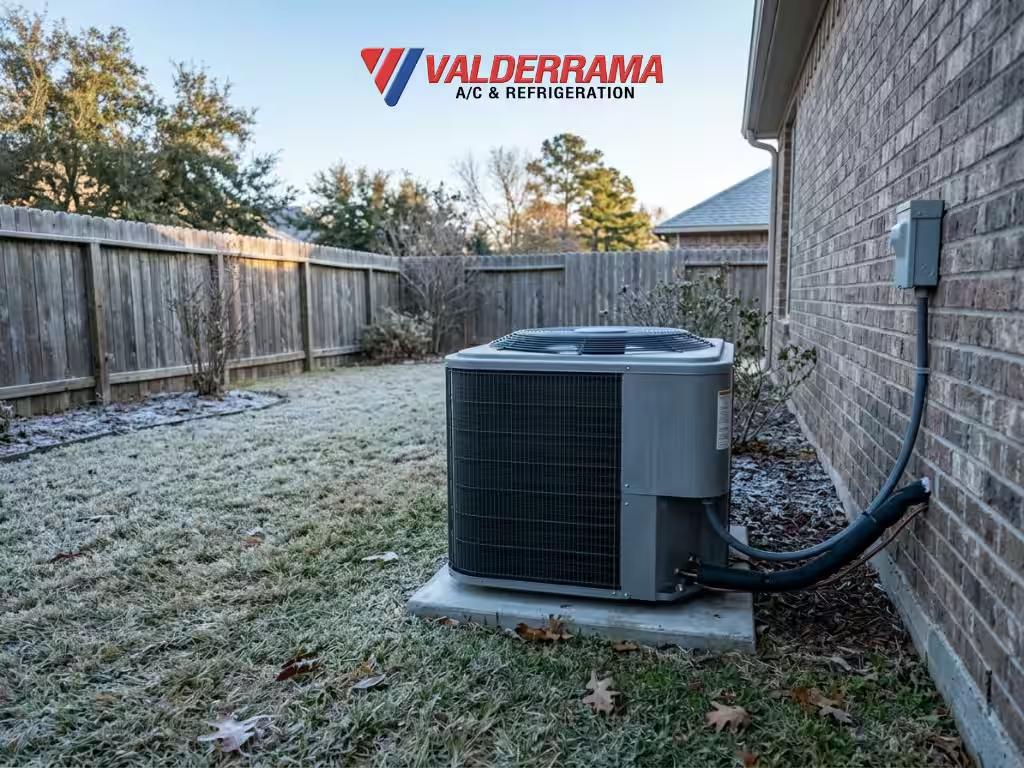
The Physics of Cold-Air Heat Extraction
The idea that outdoor air loses all usable heat once it drops below freezing is a common misconception. In physical reality, thermal energy exists in the atmosphere all the way down to absolute zero (-459.67°F).
A heat pump does not burn fuel to create fire; it uses closed-loop chemical refrigerants to move heat:
- Sub-Zero Boiling Points: Modern eco-friendly refrigerants have boiling points well below -40°F. Even when outdoor air drops to 15°F, it is still much warmer than the chilled liquid refrigerant circulating through the outdoor coil.
- The Evaporation Phase: As freezing outdoor air blows across the exterior coil, the colder refrigerant absorbs the ambient heat energy and boils into a low-pressure gas.
- Compressor Multiplication: The compressor compresses this gas into a dense, high-pressure state, raising its temperature past 105°F to 120°F.
- Indoor Heat Release: The indoor blower fan pushes household air across the indoor coil, absorbing that concentrated warmth and distributing it through your supply ductwork.
Performance Thresholds: Standard Units vs. Cold-Climate Inverters
A heat pump’s ability to heat in cold weather depends largely on its compressor technology:
- Standard Single-Stage Heat Pumps (The 30°F Threshold): Traditional units use single-speed compressors. They run efficiently down to roughly 30°F to 35°F. Below this range, heat extraction slows down, requiring integrated electric resistance auxiliary heat strips to supplement the load.
- Two-Stage Heat Pumps (The 20°F Threshold): Operating at low capacity for mild weather and shifting to high capacity during freezing snaps, these systems maintain steady efficiency down to approximately 20°F before relying on backup heat.
- Variable-Speed Inverter Systems (The Sub-Zero Threshold): Modern cold-climate heat pumps use variable-speed inverter compressors. These systems adjust motor speeds in small increments, maintaining up to 100% heating capacity down to 5°F and continuing to produce usable heat down to -15°F or lower.
The Houston Factor: Why Heat Pumps Excel in Coastal Texas Winters
Operating a central climate control system in Southeast Texas comes with specific seasonal demands that make modern heat pump engineering especially practical.
Houston’s heat and humidity place extreme strain on AC systems. Because our primary cooling season routinely stretches across nine to ten months of the year, equipment here logs thousands of running hours. Homeowners need an air conditioner that delivers high SEER2 efficiency and continuous humidity removal through long, muggy summers.
A modern heat pump handles both seasons with a single system:
- Summer Cooling: It operates identically to a high-efficiency central air conditioner, extracting indoor heat and moisture to keep living spaces dry and comfortable.
- Winter Heating: Because our winter freezes are typically short and rarely stay below 20°F for extended periods, a heat pump operates in its peak efficiency range. It eliminates the need for an expensive gas furnace that sits idle for most of the year while delivering steady warmth at a fraction of the cost of traditional electric resistance heat.
Causes of Poor Cold-Weather Heat Pump Performance
When a heat pump struggles to warm a home during a winter cold snap, the problem is rarely the outdoor temperature itself. The issue usually points to an underlying mechanical or airflow problem:
- A Failed Defrost Cycle: During cold, humid mornings, frost naturally forms on the outdoor coil. The system initiates an automated defrost cycle every 30 to 90 minutes to melt the frost. If a defrost sensor, control board, or reversing valve solenoid fails, the coil will encase itself in thick ice, blocking airflow and preventing heat transfer.
- Clogged Air Filters and High Static Pressure: A dirty air filter restricts return airflow across the indoor coil. Without enough air to absorb the heat, internal refrigerant pressures climb too high, causing the compressor to shut down on high-pressure safety switches.
- Low Refrigerant Charge: Heat pumps require a precise refrigerant charge to maintain balanced operating pressures in heating mode. Even a minor leak lowers system capacity, preventing the unit from pulling sufficient heat out of cold outdoor air.
- Ductwork Air Leaks in Unconditioned Attics: If flexible ductwork in a cold attic has disconnected joints or damaged insulation, conditioned air escapes while freezing attic air is pulled into the return line, canceling out heating output.
Symptoms: 5 Signs You Need Heat Pump Service
Watch for these five clear mechanical warning signs that your heat pump needs professional inspection:
- Registers Blowing Cold Air in Heating Mode: The system runs continuously, but the air coming from your vents feels cold or room-temperature instead of warm.
- Outdoor Unit Encased in Heavy, Solid Ice: A light frost that clears during defrost mode is normal, but a solid block of thick ice encasing the outdoor cabinet indicates a failed defrost control board or sensor.
- The “Auxiliary Heat” Light Stays on Constantly: The secondary electric resistance heat strips run non-stop, signaling that the primary compressor loop cannot extract enough heat on its own.
- Sudden Spikes in Winter Electric Bills: Your monthly power bills double or triple during mild winter weather, indicating the system is relying entirely on backup heat strips instead of the efficient compressor.
- Loud Mechanical Rattling, Grinding, or Squealing: Unusual noises from the outdoor cabinet or indoor blower, pointing to failing motor bearings, a struggling compressor, or fan blade interference.
If your heat pump is blowing cold air, icing up, or driving up your energy bills, explore our comprehensive heat pump installation and repair to schedule a precision diagnostic check before minor issues cause lasting component damage.
Practical DIY Checks to Safeguard Your Heat Pump in Cold Weather
Before calling for technical service during a freeze, perform these four simple, safe homeowner checks:
- Inspect the Return Air Filter: Pull your return filter out and hold it up toward a light source. If light cannot easily pass through the pleats, the filter is clogged with dust and choking airflow. Replace it immediately to prevent high-pressure system shutdowns.
- Verify Thermostat Settings and Balance Points: Confirm your thermostat is set to “Heat” rather than “Cool” or “Fan Only.” Ensure the setpoint is at least two to three degrees above the current room temperature, and avoid raising the temperature by more than two degrees at a time to prevent unnecessary auxiliary heat use.
- Clear the Outdoor Unit Perimeter: Walk around the outdoor unit and clear away fallen leaves, brush, and garden debris. Ensure there is at least 24 inches of clear space on all sides so the outdoor fan can draw ambient air freely across the coil.
- Check the Main Electrical Panel: Locate the breakers labeled “Heat Pump,” “Condenser,” and “Air Handler.” If a breaker has tripped to the middle position, flip it firmly to “Off” and then back to “On.” If it trips again immediately, leave it off and call a professional.
When to Call a Licensed HVAC Professional
While changing filters and clearing outdoor debris are easy DIY tasks, sealed refrigerant circuits, reversing valves, and high-voltage electrical connections require certified diagnostic tools and safety training.
Call an authorized HVAC technician immediately if you encounter:
- A refrigerant leak, indicated by hissing or bubbling noises along copper lines or oily residue around fittings.
- An acrid, burning electrical odor coming from your vents or air handler cabinet.
- A circuit breaker that trips every time the outdoor heat pump kicks on.
- An outdoor unit encased in solid ice that fails to clear after 30 minutes of operation.
Prevention Tips: Maximizing Cold-Weather Efficiency
Because heat pumps operate through every season, consistent preventative care is essential to protecting your equipment and keeping energy costs low:
- Stick to a Strict Filter Schedule: Replace basic 1-inch pleated filters every 30 to 60 days, and inspect 4- to 5-inch media cartridges every 6 to 12 months.
- Adjust Thermostat Settings Gradually: Raising the temperature setting by five or more degrees at once can force the system to engage expensive auxiliary heat strips. Adjust the temperature gradually by one or two degrees at a time to keep the system running in high-efficiency heat pump mode.
- Keep Supply and Return Registers Unobstructed: Never close off more than 10% of the vents in your home, and ensure furniture and rugs are not blocking return grilles. Choking airflow raises static pressure and strains the blower motor.
- Schedule Biannual Professional Maintenance: Have a licensed technician inspect the system twice a year—performing a cooling tune-up in the spring and a heating safety check in the fall to test capacitors, wash coils, and verify defrost cycle timing.
Why Choose Valderrama A/C & Refrigeration?
Keeping your property comfortable and energy-efficient through every season requires a mechanical partner who understands the unique engineering challenges of local architecture and climate. Choosing our family-owned company gives you access to:
- Clear, Upfront Flat-Rate Pricing: We provide detailed, itemized quotes before starting any repair or installation—eliminating hidden trip charges, unexpected add-ons, or surprise emergency fees.
- Licensed Texas Mechanical Specialists: Our technicians hold active TDLR credentials, carry full commercial insurance, and receive regular training on modern variable-speed inverter heat pumps, airflow balancing, and SEER2 building codes.
- Complete System Care: From minor reversing valve diagnostics to complete high-efficiency system replacements, we deliver durable, code-compliant comfort solutions built to last.
Frequently Asked Questions About Heat Pump Cold-Weather Performance
Q: Do heat pumps stop working when it drops below freezing?
A: No. Modern heat pumps continue to extract heat from outdoor air well below 32°F. While standard models lose some capacity below 25°F and rely on backup auxiliary heat strips, modern cold-climate variable-speed inverter systems can maintain full heating output down to 5°F and operate down to -15°F or lower.
Q: What is the thermal balance point on a heat pump?
A: The balance point is the outdoor temperature at which your heat pump’s heating capacity matches the exact heat loss of your home. Above this temperature, the heat pump handles all heating needs on its own. Below this point, the system needs supplemental heat (such as electric heat strips or a gas furnace) to keep indoor temperatures steady.
Q: Is it normal for an outdoor heat pump to steam in the winter?
A: Yes. When your heat pump enters its defrost cycle, it temporarily switches into cooling mode to send hot refrigerant into the outdoor coil, melting accumulated frost. As the frost melts off the warm coil, it creates a visible cloud of water vapor or steam, which is a normal sign that the defrost system is working properly.
Q: What is auxiliary heat, and why is it expensive to run?
A: Auxiliary heat refers to backup electric resistance heat strips built into your indoor air handler. They function like coils in a large toaster, drawing high electrical amperage to create warmth when outdoor temperatures drop below the heat pump’s balance point. Relying solely on auxiliary heat strips can significantly increase winter electric bills.
Q: Can a heat pump replace a gas furnace in Texas?
A: Yes. Because Texas winters are relatively mild with short cold snaps, modern heat pumps provide ample heating capacity throughout the year without requiring natural gas lines, while also handling summer cooling in a single high-efficiency system.
Ensure Reliable Winter Warmth for Your Home Today
You do not have to worry about cold drafts, high electric bills, or whether your heating equipment can handle the next sudden cold front. Knowing how cold do heat pumps work gives you the confidence that a properly sized, well-maintained system will keep your home comfortable through every season.
At Valderrama A/C & Refrigeration, we take pride in delivering honest technical evaluations, skilled mechanical craftsmanship, and dependable service across our local communities.
Ready to ensure your heat pump is calibrated and ready for cold weather?
Schedule Your Precision Heat Pump Performance Inspection Today!
Call our team directly at (281) 974 – 4599 to speak with an experienced specialist and confirm your service visit!