
In 2026, a standard residential central heat pump installation in Houston typically ranges from $6,800 to $14,500. A budget-friendly, single-stage system costs $5,500 to $8,000, while premium high-efficiency variable-speed inverter networks paired with zoned dampers or updated ducted paths range from $15,000 to $22,000+ before factoring in tax credits.
The Unexpected Sticker Shock of a Dead Compressor
It is a heavy, blinding Tuesday afternoon in the middle of a brutal Southeast Texas summer wave, and the indoor air in your home is turning completely stagnant. You walk over to your central digital thermostat and notice the ambient room temperature has climbed past 82°F. You cycle the system down, head out to your backyard utility pad, and are met with an ominous silence or a loud, metallic grinding noise from your outdoor unit. A professional technician inspects the lines and delivers the tough diagnostic news: your aging air conditioner compressor has permanently grounded out, your indoor coils are severely corroded, and your traditional cooling split is finished.
Facing an unexpected climate infrastructure blowout brings a wave of immediate financial anxiety. You call three different local contractors. One quotes you $7,000 for a basic system swap. Another hands you an estimate for $12,500. A third details an advanced all-electric heat pump configuration for $18,500.
Suddenly, you are left scratching your head. Why are these numbers so wildly inconsistent? What is a normal price, and what is an inflated emergency markup?
When you look up how much does a heat pump cost options across our market, you need a transparent, data-driven financial breakdown to make an informed decision. At Valderrama A/C & Refrigeration, we believe in absolute cost clarity. Let’s dive straight into the real line-item market factors, efficiency metrics, and technical requirements that dictate your total mechanical project investment.
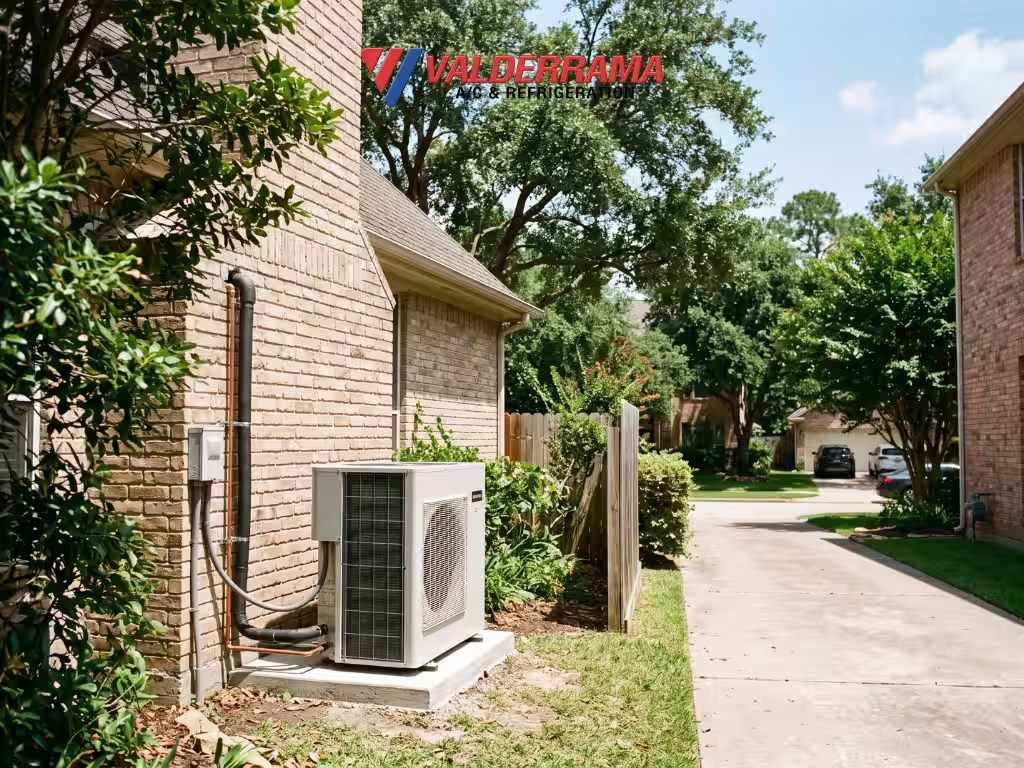
The Houston Factor: How Environmental Strain Dictates Your Equipment Selection
Specifying and deploying a central split network in our region requires managing severe environmental stresses that properties in milder states never have to factor into their budgets.
Houston’s heat and humidity place extreme strain on AC systems. Because our local climate demands near-continuous cooling for up to ten months out of the year, a typical home comfort system here logs double or triple the annual operational hours of an identical system in the Midwest.
Our thick relative humidity places a massive “latent load” on your equipment. This means your system cannot simply focus on dropping the actual temperature reading on your wall; it must continuously squeeze hundreds of gallons of raw liquid water vapor from your indoor air stream every single week.
This is exactly where a modern heat pump excels. Instead of relying on an old-school gas furnace that sits dormant and collects rust for most of the year, an electric heat pump uses a specialized reversing valve to handle both blistering summer cooling and brief winter freezes out of a single piece of machinery. However, if a contractor puts in an improperly sized unit without calculating your property’s specific thermodynamic footprint, the new system will short-cycle constantly or run indefinitely. This leaves your indoor rooms feeling sticky, cold, and clammy while accelerating mechanical component wear and driving your monthly utility bills to astronomical levels.
2026 Project Cost Breakdown: System Tiers and Expectations
Every property features a unique structural configuration—such as attic access constraints, explicit vertical platform layouts, or existing duct sizes. Below is a realistic, field-validated look at true, complete central heat pump replacement investments across the Greater Houston area:
| Equipment Category & Efficiency Level | Average Installed Price Range | Best Suited For |
| Standard Efficiency (14.3 – 15.2 SEER2 Single-Stage) | $5,500 – $8,000 | Rental real estate assets, budget-conscious household updates, or mild-use layouts. |
| High Efficiency (16 – 18.5 SEER2 Two-Stage Setup) | $8,500 – $13,500 | Average local family properties seeking a strong balance of lower power bills and robust humidity removal. |
| Ultimate Efficiency (19 – 24+ SEER2 Variable-Speed) | $14,000 – $21,000+ | Large multi-story properties, high-end custom residential builds, or maximum long-term utility reduction. |
| Multi-Zone Ductless Mini-Split Configuration | $3,500 – $14,500 | Homes lacking traditional ducted paths, modern home offices, or room-by-room zoned extensions. |
Core Mechanical Cost Drivers
- System Sizing and Tonnage: Sizing is measured in tons (cooling capacity). Installing a larger 5-ton system requires a greater upfront equipment investment, larger copper line sets, and higher circuit capacities than a smaller 2-ton or 3-ton system.
- Ductwork Remediation and Seals: If your home’s existing flexible air ducts are sagging, torn, uninsulated, or leaking conditioned air into a blistering 130-degree attic space, repairing or completely replacing those lines typically adds $2,100 to $4,500 to your primary project scope.
- Electrical Panel Upgrades: Because heat pumps rely entirely on electricity for heating, older homes with obsolete electrical boxes may require a service panel upgrade to 200 amps, which typically adds $2,000 to $3,500 to the initial installation profile.
5 Signs You Need to Upgrade to a Modern Heat Pump System
Don’t wait for your system to fail permanently during a dangerous triple-digit heatwave or a sudden winter freeze. Monitor your utility infrastructure for these five clear red flags that replacement is your most financially sound path:
- Skyrocketing Monthly Power Bills: Your monthly electricity statements show a steep, unexplained upward trend compared to previous years under identical weather patterns.
- Frequent and Repetitive Technical Breakdowns: You find yourself trapped in a loop of paying premium emergency diagnostic fees to patch failing starting capacitors, fan motors, or contactor switches.
- The System Relies on Obsolete R-22 Freon: If your hardware was manufactured before 2010, the global chemical production ban on Freon makes simple leak repairs incredibly expensive and cost-prohibitive.
- A Severely Cracked or Corroded Heat Exchanger: In gas furnace configurations, a rusted or cracked heat exchanger introduces immediate risks of toxic carbon monoxide leaks, requiring an instant equipment shutdown for family safety.
- An Inability to Manage Indoor Relative Humidity: Your rooms feel persistently stuffy, damp, and muggy, signaling that your equipment’s internal pressure balance has degraded past the point of economical repair.
When your cooling lines are leaking or completely shorted out, trying to patch up old hardware can quickly become a financial sinkhole. If your outdoor condenser or indoor air handler is displaying these exact failure symptoms right now, click over to our heat pump services to schedule a high-accuracy, upfront diagnostic review of your asset line.
Causes of System Failures & Prevention Tips
Most premature equipment lifecycles are not caused by factory engineering defects—they stem directly from chronic operational stress, deferred maintenance, and installation shortcuts.
Why Systems Fail Early
- High Static Pressure Strain: Using overly restrictive retail filters without calibrating your blower fan speeds chokes off your return air lines. This forces your fan motor to work twice as hard, leading to early blower failure or frozen evaporator coils.
- Improper Refrigerant Charge Execution: Modern variable-speed networks run on incredibly tight tolerances. If an installer introduces airborne moisture or fails to weigh in the refrigerant charge down to a fraction of an ounce, the internal lubrication oils break down, causing your compressor pump to lock up prematurely.
Proactive Prevention Tips
- Maintain a Balanced Filter Routine: Swap out standard 1-inch filters every 30 to 60 days to keep your system breathing entirely free of static pressure restrictions.
- Schedule Biennial Chemical Flushes: Ensure an authorized technician washes your outdoor coils annually to remove restrictive dust and grass clippings, allowing your system to reject heat freely.
Why Licensed Master-Level Engineering Safeguards Your Investment
A complete heating and cooling installation is a highly regulated mechanical task that requires professional, master-level execution.
Our fully licensed field crews handle the entire project lifecycle cleanly. We perform precise ACCA Manual J load calculations to size equipment exactly to your building’s thermal envelope, evaluate duct static pressures using digital manometers, vacuum copper lines down to a deep sub-500-micron level to protect against internal system moisture, and verify that all safety float switches are perfectly tuned.
Bypassing this professional oversight by hiring an uncertified general handyman from an online marketplace to save a few dollars upfront can introduce severe financial and physical liabilities. If an unpermitted installation triggers a structural electrical short or an undetected gas line leak, your property insurance provider can legally deny your entire damage claim. Furthermore, top-tier global equipment brands strictly mandate that all machinery must be put in by an authorized contractor, or your 10-year factory parts warranty will be instantly voided.
Why Choose Valderrama A/C & Refrigeration?
We understand that an HVAC investment represents a major commitment of capital. When you select our family-owned team to engineer your property’s comfort systems, you secure:
- Upfront, Fixed Project Invoicing: The itemized written estimate we deliver before physical work begins is the exact price your family pays—with zero hidden surcharges or sudden administrative markups.
- Flexible Funding and Financing Arrays: We provide direct access to multiple competitive consumer and corporate lending networks, featuring $0 down incentives, low monthly payments, and promotional interest windows to protect your cash reserves.
- Fully Certified Local Specialists: Background-checked, insured Texas technicians systematically trained in advanced building science, airflow metrics, and municipal code lines.
FAQ: Navigating Houston Heat Pump Installation Costs
Q: Do modern heat pumps completely stop working when outdoor temperatures drop below freezing?
A: No, not anymore. While legacy models from decades ago struggled in extreme cold, modern cold-climate heat pumps utilize advanced variable-speed inverter compressors and enhanced vapor injection technology that allow them to pull efficient heat from outdoor air even when temperatures plunge well below zero.
Q: How much will a modern high-efficiency heat pump drop my monthly energy costs?
A: Upgrading an outdated, ten-year-old 13 or 14 SEER central split unit to a modern, code-compliant 18 SEER2 or variable-speed inverter heat pump can lower your cooling electrical consumption by up to 30% to 50%. These consistent monthly savings directly offset the cost of your project over time.
Q: Are there any immediate tax write-offs or credits available for a new heat pump installation?
A: Yes. Under current federal frameworks, installing an eco-safe, high-efficiency SEER2 heat pump allows qualifying residential homeowners to claim up to $2,000 in federal tax credits, alongside immediate cash-back rebates from local Texas electric utility providers.
Q: How long does it take for a field crew to complete a standard central heat pump installation?
A: For a standard change-out where existing ducted lines are structurally intact and reusable, our expert field crews can typically finish the entire physical tear-out, complete the copper tracking, pull a deep system vacuum, and commission the new network within 6 to 10 hours.
Q: Why are unusually low, unpermitted HVAC installation quotes dangerous?
A: Strikingly low quotes typically indicate that the installer is using gray-market or stolen equipment, skipping vital municipal safety permits, skipping electrical load tests, or employing uncertified, uninsured laborers. This inevitably leads to premature component failure and completely voids your manufacturer warranty protections.
Take Complete Control Over Your Property’s Safety and Budget Today
You do not have to put your household comfort, tenant relationships, or property equity at risk by managing your property’s mechanical heating and cooling networks through guesswork. Securing a clear, engineered roadmap of exactly how much does a heat pump cost options give you the ultimate competitive edge: the absolute peace of mind that comes with a perfectly balanced, code-compliant comfort network built to perform flawlessly for decades to come.
At Valderrama A/C & Refrigeration, we are your local corporate and residential comfort advocates. We provide honest upfront pricing, exceptional technical diagnostics, and a total commitment to keeping your property safe, dry, and highly efficient.
Ready to maximize your property’s energy efficiency and lower your operational risk?
Request Your Transparent, Line-Item Heat Pump System Replacement Estimate Now!
Call our local support team right now at (281) 974 – 4599 to speak with a licensed system performance engineer today!