
Yes, a heat pump can be an excellent choice for the Texas climate, particularly in Greater Houston. Houston’s long cooling season and relatively mild winters create conditions where a heat pump can provide both heating and cooling from one system. Modern heat pumps can also operate effectively during periods of below-freezing weather, although proper sizing, installation, insulation, ductwork, and equipment selection are important for reliable performance.
If you’re wondering is a heat pump good for Texas climate, the short answer is that it can be—especially for homeowners looking for an all-electric HVAC system that provides both heating and cooling.
Unlike a conventional air conditioner paired with a separate furnace, a heat pump uses a refrigeration cycle to move heat in either direction. In summer, it moves heat from inside your home to the outdoors. In winter, it reverses the process and moves available heat from outdoor air into your home.
That makes a heat pump particularly interesting for Houston homeowners because the system can provide cooling for most of the year and heating when occasional cold fronts arrive.
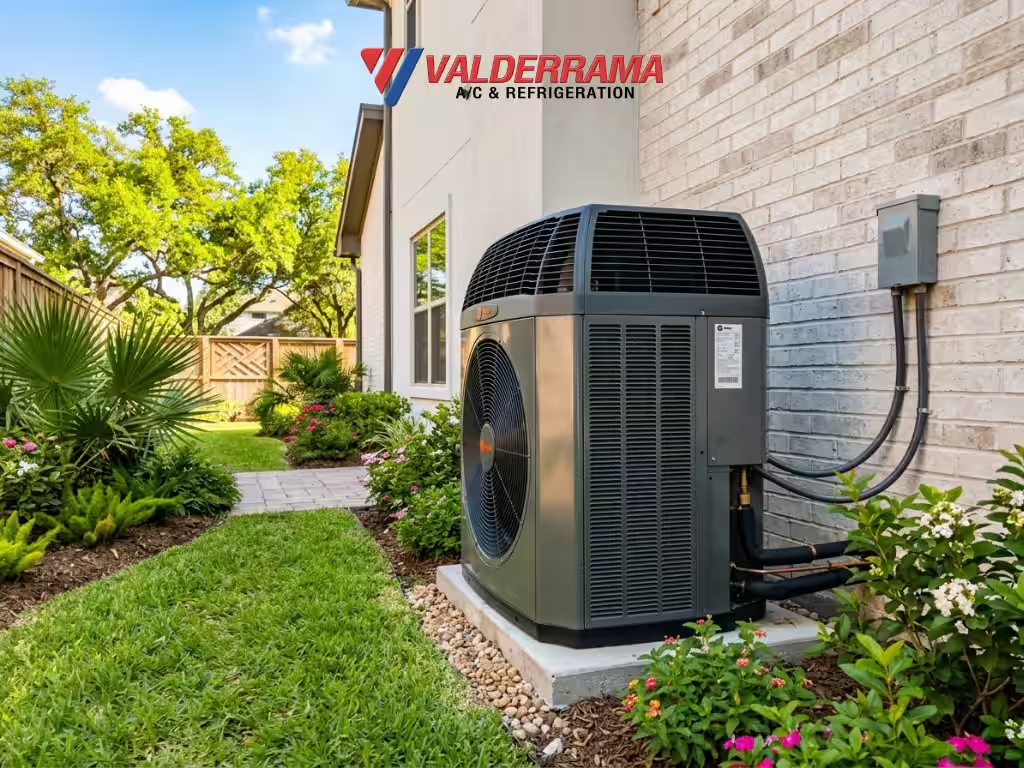
The “Texas Two-Step” Weather Challenge
In Greater Houston, we don’t just have weather; we have mood swings.
You might wake up to a damp, 45°F morning that feels surprisingly cold, only for the afternoon to climb into the 80s with significant humidity. A few days later, another cold front can send temperatures down dramatically.
For decades, the traditional solution has been a split HVAC system with an air conditioner for cooling and either a gas or electric furnace for heating.
Today, homeowners have another option: a heat pump system that can provide both heating and cooling.
So if you’re asking is a heat pump good for Texas climate, the answer depends on your home, utility rates, existing HVAC system, insulation, ductwork, and how the equipment is selected and installed.
At Valderrama A/C & Refrigeration, we help Houston homeowners evaluate these factors before deciding whether a heat pump makes sense for their property.
Why Houston Is Different From Northern Climates
A heat pump’s heating performance is strongly influenced by outdoor temperature because the system extracts heat from outdoor air.
Houston’s winter climate generally provides more moderate outdoor temperatures than northern states. That means a properly selected air-source heat pump can spend much of the heating season operating without the extreme low-temperature conditions that create challenges in colder regions.
The U.S. Department of Energy notes that heat pumps work well in hot/dry and moderate climates, while cold climates may require specially designed equipment capable of maintaining performance at lower outdoor temperatures.
That makes Houston a climate where heat pump technology deserves serious consideration.
5 Signs a Heat Pump is Right for Your Houston Home
If you recognize these situations, a heat pump may be worth considering as part of your next HVAC upgrade:
1. Your Heating Costs Are Unpredictable
If your home uses a gas furnace, your heating costs depend partly on natural gas rates and how much you operate the furnace.
A heat pump uses electricity to move heat rather than generating heat through combustion.
Whether that translates into lower operating costs depends on your local electricity and gas rates, equipment efficiency, thermostat settings, weather, and household usage. A professional comparison using your actual utility rates can provide a more meaningful estimate than a generic savings claim.
2. Indoor Humidity Is High
Houston homeowners know that temperature isn’t the only measure of comfort.
A home can have a reasonable thermostat setting and still feel uncomfortable when indoor humidity is elevated.
A properly sized, variable-speed heat pump can provide longer, steadier cooling operation under suitable conditions. Longer cooling cycles can provide opportunities for moisture removal, although actual dehumidification depends on system design, indoor humidity, equipment capacity, airflow, and controls.
If your home feels sticky even when the air conditioner is running, the issue may not be the HVAC equipment alone. Oversizing, duct leakage, infiltration, drainage, and other factors can all affect indoor humidity.
3. Your Existing HVAC System Is Aging
If your air conditioner or furnace is approaching the end of its expected service life, this may be an appropriate time to compare different replacement options.
Instead of automatically replacing an aging AC with another conventional AC and furnace combination, homeowners can compare:
- Traditional AC + furnace
- Heat pump
- Dual-fuel heat pump + furnace
- High-efficiency variable-speed systems
The right choice depends on the property and homeowner’s priorities.
4. You Have Solar Panels
If your home already has solar panels, an all-electric HVAC system may be worth evaluating.
A heat pump can use electricity for both heating and cooling, potentially allowing a homeowner to use more of the electricity generated by a residential solar system.
However, solar production and HVAC demand don’t always occur at the same time. Your utility plan, battery storage, solar production, and household consumption should all be considered before assuming that a heat pump will automatically reduce your overall energy costs.
5. You Want One System for Heating and Cooling
One of the biggest practical advantages of a heat pump is that the same system provides both heating and cooling.
Instead of maintaining a separate cooling-only air conditioner and heating-only furnace, a heat pump uses a reversing valve to change the direction of refrigerant flow.
For homeowners interested in simplifying their HVAC equipment while maintaining year-round comfort, this can be an attractive option.
Why the Texas Climate is the “Perfect Match” for Heat Pumps
1. Effective Cooling and Humidity Management
In Houston, cooling performance is only part of the comfort equation.
A good HVAC system must also manage moisture.
Heat pumps operate as air conditioners when they are in cooling mode. Variable-speed models can adjust their capacity and operate for longer periods under partial loads, which may help with humidity management when the system is properly sized and configured.
However, it is important not to assume that every heat pump automatically provides better humidity control than every traditional AC.
Sizing matters.
An oversized system can satisfy the thermostat quickly without running long enough to remove as much moisture as the home requires.
For Houston homes, a properly performed load calculation and appropriate equipment selection can therefore be just as important as the equipment’s efficiency rating.
2. Efficiency in Mild Winters
One reason homeowners ask is a heat pump good for Texas climate is the way heat pumps produce heating.
A conventional electric resistance heater converts electricity directly into heat. A heat pump instead uses electricity to move heat from one location to another.
That means the amount of heat delivered can be greater than the electrical energy consumed by the compressor and other components.
Heat-pump efficiency is commonly described using measurements such as COP, HSPF2, and seasonal performance ratings rather than simply saying that a unit is “300% efficient.”
Actual performance varies based on outdoor temperature, equipment design, indoor conditions, defrost cycles, airflow, and other factors.
For Houston’s relatively moderate winter conditions, these characteristics can make heat pumps an efficient heating option.
3. The “Blue Norther” Safety Net
One of the biggest concerns Houston homeowners have about heat pumps is what happens during an unusually severe freeze.
Modern heat pumps have improved significantly, and cold-climate models are designed to maintain useful heating capacity at lower outdoor temperatures. DOE notes that newer cold-climate heat pumps can operate with greater capacity and efficiency below 32°F.
However, homeowners should still consider backup heating when selecting equipment.
Depending on the system, backup heat may include:
- Electric resistance heat
- A gas furnace
- Another auxiliary heating source
A dual-fuel system combines a heat pump with a gas furnace. Under appropriate controls, the heat pump can handle milder conditions while the furnace provides supplemental or backup heat when outdoor temperatures and operating economics make that appropriate.
For Houston, whether dual fuel is worthwhile depends on the home, existing gas service, equipment cost, utility rates, and homeowner preferences.
Local Relevance: Houston’s Unique Strain on HVAC
Houston’s environment creates several challenges for HVAC equipment.
The region experiences long cooling seasons, high humidity, heavy system usage during summer, and periodic cold weather.
Homes closer to the Gulf Coast can also experience conditions that contribute to corrosion of outdoor HVAC components.
Areas such as Pearland, Friendswood, League City, and other communities south and southeast of Houston may experience additional exposure to coastal environmental conditions.
This doesn’t mean every heat pump installed in these areas requires special equipment, but homeowners should discuss corrosion protection and equipment placement with their HVAC contractor when appropriate.
Year-Round Operation Changes the Maintenance Schedule
One important difference between a heat pump and a furnace is how frequently the equipment operates.
A furnace may sit idle during much of Houston’s long cooling season.
A heat pump, by contrast, may operate in cooling mode for much of the year and switch to heating during colder weather.
That means maintenance becomes particularly important.
A system that operates year-round benefits from regular inspection of:
- Refrigerant performance
- Electrical connections
- Coils
- Condensate drainage
- Airflow
- Filters
- Outdoor coil condition
- Blower operation
- Defrost controls
- Thermostat operation
For many Houston homeowners, seasonal inspections in spring and fall can be a practical approach.
DIY Check: Is Your Home “Heat Pump Ready”?
Before making the switch, there are several things you can evaluate around your home.
Insulation Levels
Heat pumps work most effectively when the building envelope isn’t allowing excessive heat transfer.
Check your attic insulation and look for obvious areas where insulation is missing or uneven.
If your attic has inadequate insulation, improving it can help reduce heating and cooling demand regardless of which HVAC system you choose.
Windows
Older single-pane windows can contribute to substantial heat transfer.
You don’t necessarily need to replace every window to install a heat pump, but addressing significant air leaks and improving inefficient windows can help reduce the overall heating and cooling load.
Ductwork
Ductwork is particularly important.
A highly efficient heat pump cannot compensate for severely leaking or poorly designed ducts.
Look for:
- Damaged flexible ducts
- Disconnected sections
- Poorly sealed joints
- Crushed ductwork
- Inadequate insulation
- Restricted returns
Professional duct testing can provide a more accurate assessment than a visual inspection.
Thermostat Compatibility
Heat pumps use different control sequences from conventional furnace systems.
The thermostat needs to be compatible with the specific heat pump configuration, including the reversing valve and any auxiliary or emergency heat.
If you’re replacing an existing HVAC system, don’t assume that your current thermostat can simply be reused without checking compatibility.
When to Call a Professional
Deciding if a heat pump is good for your specific Texas home requires more than a generic online recommendation.
A professional HVAC evaluation is especially useful if:
- You’re replacing an aging AC and furnace.
- You’re considering a full electric conversion.
- You’re comparing a heat pump with a conventional furnace.
- You’re considering a dual-fuel system.
- You want to calculate operating costs using your actual utility rates.
- Your home has uneven temperatures.
- Your ductwork has known leakage problems.
- You need a heating and cooling load calculation.
- You’re concerned about indoor humidity.
- You want to determine whether your electrical system can support the selected equipment.
Ask About a Manual J Load Calculation
One of the most important parts of a new HVAC installation is determining the appropriate equipment size.
A Manual J load calculation estimates the heating and cooling requirements of the home using factors such as:
- Home size
- Insulation
- Windows
- Building orientation
- Air leakage
- Local climate
- Occupancy
- Other building characteristics
This helps prevent the common mistake of simply installing the same size system that was already there.
For Houston homes, proper sizing is particularly important because oversized cooling equipment can contribute to short run times and inadequate moisture removal.
If you’re ready to see how modern equipment could improve your home’s comfort and efficiency, you can explore our heat pump services.
FAQ: Heat Pumps in the Lone Star State
Q: Is a heat pump good for Texas climate?
A: Yes. Heat pumps can be well suited to many parts of Texas, including Greater Houston. Houston’s long cooling season and generally moderate winters provide favorable conditions for air-source heat pump operation. The best system depends on the home’s heating and cooling load, insulation, ductwork, utility rates, and equipment selection.
Q: Are heat pumps more expensive to maintain?
A: Not necessarily, but they deserve consistent maintenance because they provide both heating and cooling and may operate throughout much of the year. Regular inspections can help identify airflow, refrigerant, electrical, drainage, coil, and control problems before they develop into larger issues.
Q: Can a heat pump replace my air conditioner and furnace?
A: In many homes, yes. A heat pump can provide both cooling and heating. Depending on the property and homeowner’s preferences, a heat pump may be installed as an all-electric system or paired with a furnace as a dual-fuel system.
Q: Is a heat pump cheaper to operate than a gas furnace?
A: There isn’t one answer for every home. Operating cost depends on electricity prices, natural gas prices, equipment efficiency, outdoor temperatures, thermostat settings, and system performance. Comparing your actual utility rates with the efficiency ratings of the proposed systems is the best way to estimate operating costs.
Q: Can I get a federal tax credit for installing a heat pump in 2026?
A: The federal Energy Efficient Home Improvement Credit that provided a credit of up to $2,000 for qualifying heat pumps was available for qualifying property placed in service through December 31, 2025. IRS guidance states that the credit is not available for property placed in service after December 31, 2025.
Upgrade to a Smarter Way to Stay Cool
For Houston homeowners, a heat pump can provide a practical way to combine heating and cooling into one system while taking advantage of the region’s long cooling season and relatively moderate winters.
At Valderrama A/C & Refrigeration, we understand the unique demands Houston’s climate places on HVAC equipment. Our team can help evaluate your existing system, discuss heat pump options, assess your home’s heating and cooling requirements, and explain whether an all-electric or dual-fuel system makes sense for your property.
Ready to find out whether a heat pump is right for your Houston home?
Schedule Your Heat Pump Consultation and Efficiency Evaluation
Call Valderrama A/C & Refrigeration at (281) 974-4599 to discuss your options, request an evaluation, and learn about available financing options.