
The fundamental principle of how do home heaters work depends on the system type. Gas furnaces burn fuel inside a sealed heat exchanger to warm circulating air, electric heaters pass current through high-resistance heating coils, and heat pumps extract ambient thermal energy from outdoor air and pump it indoors using chemical refrigerant.
When the First Cold Snap Hits and the Registers Blow Cold
It is 6:30 AM in mid-January. A sudden Arctic cold front pushed through overnight, sending outdoor temperatures plunging from 70°F down into the low 30s. You wake up shivering, walk over to your wall-mounted digital thermostat, switch the setting from “Cool” to “Heat,” and turn the dial up to 72°F.
You hear a quiet click inside the closet or attic, followed by the faint hum of a motor. Then, an unmistakable smell of burnt dust drifts into your bedroom, and the ceiling registers start blowing air that feels weak, tepid, or completely chilly.
After sitting idle through months of blistering summer heat, your heating equipment suddenly stumbles right when you need it most.
For most property owners, the heating system is an out-of-sight appliance tucked away behind sheetrock, in a dark attic crawl space, or inside a garage closet. We rarely give it a second thought until an unexpected freeze rolls in.
Learning how do home heaters work pulls back the curtain on this vital piece of mechanical infrastructure. Understanding how gas valves, electric elements, heat exchangers, and blower fans coordinate to heat your living areas helps you troubleshoot basic hiccups, avoid dangerous combustion hazards, and protect your home investment. At Valderrama A/C & Refrigeration, we treat home climate systems with engineering precision. Here is how your heater keeps your family safe and warm.
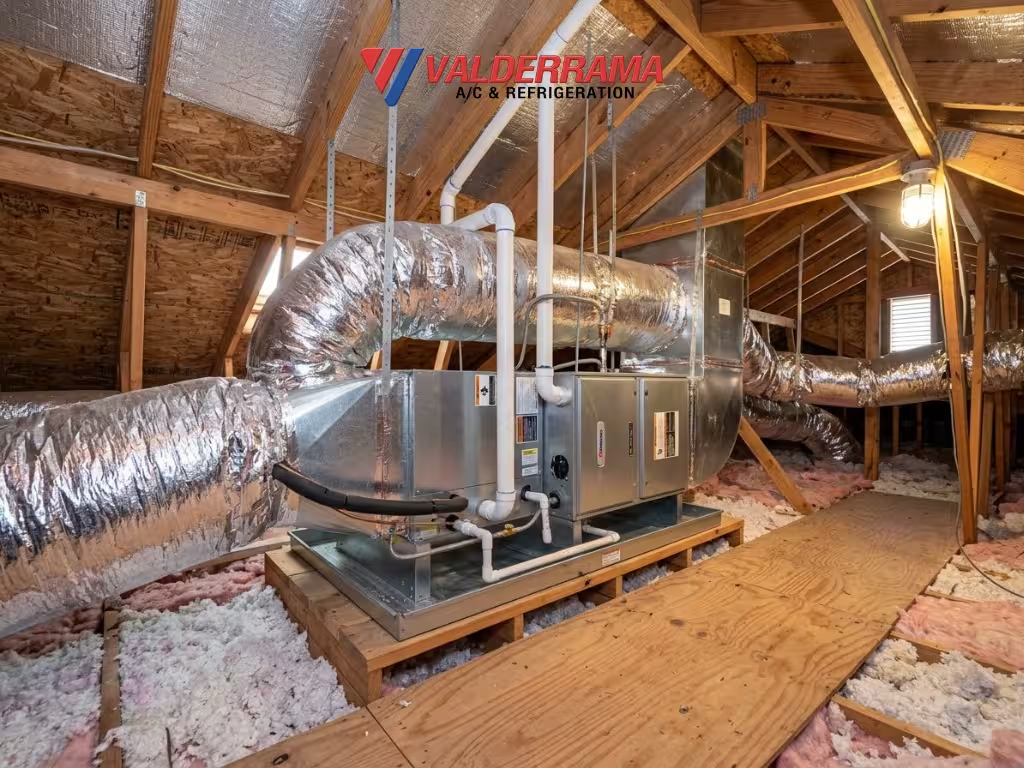
The Houston Factor: Why Mild Winters Create Unique Heating Problems
Heating a home in Southeast Texas presents a completely different set of mechanical challenges than running a furnace in the northern United States.
Houston’s heat and humidity place extreme strain on AC systems, which in turn impacts your heating equipment. Because our cooling season stretches across nine to ten months of the year, central air handlers and ductwork stay cold and wet from extracting hundreds of gallons of airborne moisture.
During those prolonged humid months, the heating elements or gas burner assemblies sit completely dormant inside dark, unconditioned attics where temperatures routinely top 130°F.
This environment creates hidden challenges:
- High summer humidity causes surface rust and corrosion on metal burner tubes, pilot brackets, and electrical contacts.
- Heavy layers of household dust, carpet fibers, and pet dander settle over the dormant heating coils and heat exchanger surfaces.
- When a winter freeze finally hits and the furnace turns on, this accumulated layer of debris bakes off instantly, creating foul odors and tripping sensitive flame rollout switches.
Because our cold snaps are brief but severe, heaters must jump from months of total inaction into full-throttle heating mode in a matter of seconds. Without proactive care, that sudden thermal shock often causes deferred component wear to turn into an immediate system lockout.
The 3 Main Types of Home Heaters and How They Function
Residential heating systems fall into three primary categories based on how they generate and transfer thermal energy:
| HOW DIFFERENT HEATERS CREATE WARMTH | |
| GAS FURNACE | Burns gas in heat exchanger; blower moves air across hot metal; fumes vent through flue. |
| HEAT PUMP | Reversing valve pulls outdoor heat via refrigerant and pumps it indoor cleanly. |
| ELECTRIC FURNACE | Electrical current flows through resistance coils (like a giant toaster) to warm air. |
1. Gas Furnaces (Combustion Heating)
Gas furnaces remain one of the most common heating configurations in ducted homes. They rely on controlled fuel combustion:
- The Ignition Sequence: When the thermostat calls for heat, a small draft inducer fan turns on to clear out leftover gases. A safety pressure switch verifies draft airflow, the gas valve opens, and an electronic hot-surface igniter glows white-hot to light the natural gas or propane burners.
- Heat Transfer: The flames shoot into a sealed metal chamber called a heat exchanger. As the metal gets red-hot, the indoor blower fan pushes return air across the outside of the chamber, absorbing the heat and distributing warm air through your supply ducts.
- Exhaust Venting: Toxic combustion byproducts—including carbon monoxide, water vapor, and nitrogen dioxide—remain safely sealed inside the heat exchanger tubes and are vented out through a metal or PVC flue pipe on the roof.
2. Electric Heat Pumps (Thermodynamic Heat Transfer)
Modern electric heat pumps do not generate heat through combustion or high-resistance coils; they simply move heat from one place to another.
- The Reversing Valve: A heat pump is essentially an air conditioner that can run backward. When you select heating mode, an internal reversing valve shifts the flow of chemical refrigerant.
- Extracting Ambient Heat: The outdoor coil acts as an evaporator, absorbing ambient thermal energy from the outside air (even in near-freezing temperatures).
- Warming the Home: The compressor pressurizes this warm refrigerant gas, boosting its temperature, and sends it to the indoor coil. The indoor blower fan pushes air across the hot coil, circulating clean, cozy warmth without burning fuel.
3. Electric Furnaces and Air Handler Heat Strips
Electric furnaces use pure electrical resistance to create heat:
- Resistance Coils: Electric current passes through dense nichrome wire coils (similar to the heating elements inside a kitchen toaster or hair dryer).
- Thermal Output: The resistance against the electrical flow makes the coils glow cherry-red with heat.
- Air Distribution: The blower motor forces return air directly across these hot elements, pushing warm air through the ductwork. While 100% electrically efficient, resistance heat draws high electrical amperage, making it more expensive to run during extended freezes than a heat pump.
Common Causes of Heater Malfunctions
When a home heating system struggles or shuts down prematurely, the root cause usually comes down to one of these common mechanical issues:
- Restricted Airflow from Clogged Filters: A dust-choked air filter blocks airflow across the heat exchanger or electric coils. Without sufficient air to carry away the heat, internal temperatures spike, causing the high-limit safety switch to shut off the burners to prevent a fire or metal meltdown.
- Oxidized Flame Sensors: In gas furnaces, a thin metal rod called a flame sensor confirms that a flame is present when the gas valve opens. If this rod becomes coated in carbon or corrosion from humid summer air, it cannot detect the flame, causing the control board to shut off the gas valve within seconds.
- Stuck Heat Pump Reversing Valves: If the electrical solenoid or sliding mechanism on a heat pump’s reversing valve wears out or loses power, the system will remain stuck in cooling mode, blowing cold air even when the thermostat demands heat.
Symptoms: 5 Signs You Need Heating Service
Watch for these five clear mechanical and environmental warning signs that your heating equipment needs professional attention:
- Supply Registers Blowing Tepid or Cool Air: The blower fan is running, but the air coming out of your vents feels room-temperature or cold instead of warm.
- Short-Cycling (Rapid On-and-Off Cycles): The heater ignites, runs for two to three minutes, shuts off abruptly, and restarts moments later without reaching the thermostat set point.
- Loud Clanking, Screeching, or Booming Sounds: Squealing blower motor bearings, loud metal popping in the ducts, or a sudden, alarming “boom” upon ignition (delayed ignition of gas buildup).
- Persistent Burning or Chemical Odors: A faint dust smell during the first run of the season is normal, but a strong smell of electrical burning, sulfur (rotten eggs), or plastic indicates an active hazard.
- A Yellow or Flickering Burner Flame: A healthy natural gas furnace burns with a steady, crisp blue flame. A yellow, dancing, or wavy flame indicates incomplete combustion and a heightened risk of carbon monoxide production.
If your home’s heating network is failing to warm your rooms or making unusual noises, explore our comprehensive heating service to ensure your equipment is safe, calibrated, and ready for sudden cold weather.
Practical DIY Checks to Safeguard Your Heater
Before calling for technical service, perform these four simple, safe checks to rule out common operational problems:
- Inspect the Return Air Filter: Pull out your 1-inch or 4-inch pleated filter. Hold it up to a light source; if you cannot see light passing through the pleats, replace it immediately to restore proper airflow and prevent high-limit lockouts.
- Verify Thermostat Settings and Power: Confirm the thermostat is set to “Heat,” set the target temperature at least three degrees above the current room temperature, and make sure fresh batteries are installed.
- Check the Furnace Power Switch and Breaker: Look for a standard toggle switch (often resembling a light switch) mounted on or near your indoor furnace cabinet and confirm it is switched “On.” Then check your main electrical panel for a tripped breaker.
- Inspect the External Exhaust Flue: Walk outside and ensure the furnace vent pipe on your roof or exterior wall is free of bird nests, leaves, or plastic bags that could block exhaust gases and trigger safety shutdowns.
When to Call a Licensed Heating Professional
While changing filters and checking thermostat batteries are great DIY habits, combustion chambers, high-voltage circuits, and gas lines require licensed tools, diagnostic gauges, and formal safety training.
Call an authorized HVAC technician immediately if you encounter:
- The smell of natural gas (a rotten-egg sulfur odor)—evacuate the home immediately and call your gas utility provider from a safe distance.
- Your carbon monoxide alarm sounding anywhere in the building.
- A furnace that repeatedly trips your circuit breaker or safety limit switches.
- Visible soot, scorched metal, or rust flakes collecting around the burner compartment.
Prevention Tips: Maximizing System Longevity and Heating Safety
Your heating equipment represents a major capital investment. A few proactive maintenance habits will keep it running safely and efficiently for years to come:
- Change Filters on Schedule: Replace standard 1-inch filters every 30 to 60 days, and inspect 4- to 5-inch deep media cartridges every 6 to 12 months.
- Keep the Furnace Perimeter Clear: Never store cardboard boxes, paint cans, cleaning chemicals, or lawn equipment within three feet of your indoor furnace cabinet.
- Install and Test Carbon Monoxide Detectors: Place dual-sensor smoke and carbon monoxide detectors on every level of your home, especially near sleeping areas, and test them monthly.
- Schedule an Annual Pre-Winter Tune-Up: Have a licensed technician inspect the system every fall to clean flame sensors, inspect the heat exchanger for cracks, test electrical amp draws, and verify safe gas pressure levels.
Why Choose Valderrama A/C & Refrigeration?
Keeping your property warm, safe, and energy-efficient requires a trusted mechanical partner who understands the unique engineering challenges of local architecture and climate. Choosing our family-owned company gives you access to:
- Clear, Upfront Flat-Rate Pricing: We deliver itemized written quotes before starting any mechanical work—eliminating hidden trip charges, unexpected add-ons, or surprise emergency fees.
- Licensed Texas Mechanical Specialists: Our technicians are background-checked, insured, and thoroughly trained in gas combustion safety, variable-speed heat pumps, and modern building codes.
- Complete System Care: From simple flame sensor cleanings to complete multi-zone heating replacements, we deliver durable, code-compliant solutions built to last.
Frequently Asked Questions About Home Heaters
Q: Why does my heater smell like burning dust when I turn it on for the first time?
A: Because heaters sit unused throughout long Texas summers, household dust settles on the furnace heat exchanger or electric heat strips. When the system turns on for the first cold snap, this dust burns off. The smell is usually harmless and should dissipate within 20 to 30 minutes. If the smell persists or resembles burning plastic or electrical wiring, shut the unit off immediately.
Q: What is the average lifespan of a home heating system?
A: Gas furnaces typically last 15 to 20 years because they run far fewer hours annually in our southern climate than air conditioners do. Heat pumps, which run year-round to provide both cooling and heating, typically last between 10 and 15 years with proper maintenance.
Q: What does AFUE mean on a heating system?
A: AFUE stands for Annual Fuel Utilization Efficiency. It measures how efficiently a gas furnace converts fuel into usable heat. An 80% AFUE furnace turns 80% of the gas it consumes into heat while venting 20% out the flue, whereas a high-efficiency 96% AFUE unit converts nearly all fuel into heat, wasting only 4%.
Q: Can a cracked heat exchanger really leak carbon monoxide?
A: Yes. The heat exchanger separates combustion gases from the breathable air circulating through your home. If the metal cracks from overheating or rust, dangerous combustion byproducts—including invisible, odorless carbon monoxide—can be drawn into your ductwork and pushed into your living areas.
Q: Is a heat pump better than a gas furnace for a Texas home?
A: In our regional climate, modern electric heat pumps are exceptionally well-suited because our winters are relatively mild. They deliver high energy efficiency without requiring natural gas lines. However, if your home already has gas connections, a dual-fuel system or traditional gas furnace provides fast, reliable heating during rare sub-freezing weather events.
Protect Your Home with Safe, Dependable Heating Today
You do not have to endure cold drafts, worry about unusual burning odors, or fear sudden heating failures during the next winter freeze. Knowing how do home heaters work gives you the insight needed to operate your system safely, spot early warning signs, and make informed maintenance decisions for your property.
At Valderrama A/C & Refrigeration, we take pride in delivering honest technical evaluations, skilled mechanical craftsmanship, and dependable service across our local communities.
Ready to ensure your heating system is safe, clean, and ready for winter?
Schedule Your Complete Heating Safety Inspection Now!
Call our team today at (281) 974 – 4599 to speak with an experienced comfort specialist and confirm your service visit!