
In a business setting, commercial refrigerators typically last 10 to 15 years. However, in the demanding Texas climate, extreme heat and humidity heavily tax the system’s compressor, often compressing that operational lifespan down to 8 to 12 years without rigorous quarterly preventative maintenance.
When a Key Kitchen Asset Becomes a Ticking Clock
It is the height of a chaotic weekend dinner rush. Your front-of-house is packed, orders are flying, and a line cook opens the main line reach-in prep cooler only to realize the internal temperature is hovering at a dangerous 47°F. Within an hour, you’re shuffling inventory, panicking about health code violations, and staring down a massive emergency repair bill.
For a homeowner, a broken fridge is a major annoyance. For a commercial facility in Texas, it is a high-stakes bottleneck that directly impacts your revenue, your health permit, and your operational flow. Understanding how long do refrigerators last in a commercial footprint isn’t just about tracking machine age—it’s about smart capital planning and proactive risk management. At Valderrama A/C & Refrigeration, we treat cold storage systems as critical business assets that demand mechanical precision.
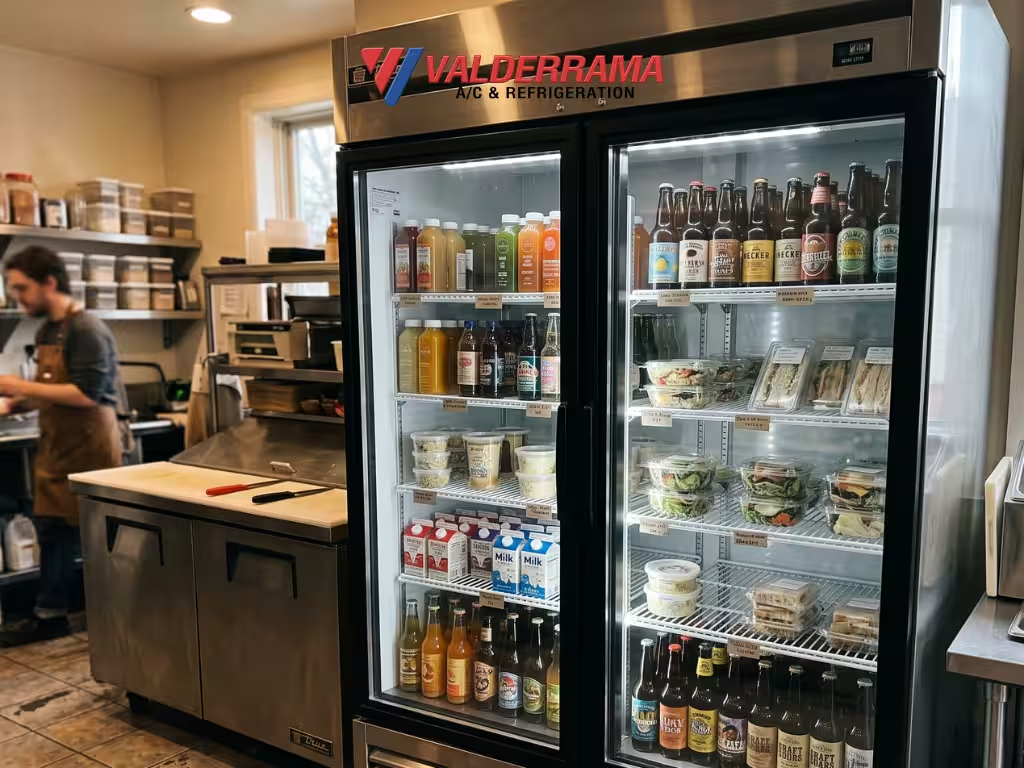
The Texas Factor: Why Local Climate Shifts the Lifecycle
A manufacturer’s baseline brochure might claim their reach-in or walk-in cooler will easily breeze past the 15-year mark. However, those estimates rarely account for the brutal environmental reality of Southeast and Central Texas.
Extreme Ambients and Head Pressures:
When outdoor temperatures smash through triple digits or commercial kitchens climb past 90°F, your system’s condenser coils must work exponentially harder to reject heat. This forces the compressor to run much longer duty cycles to keep your stock at safe food temperatures.
The Humidity Trap:
Our local humidity creates an aggressive condensation environment. Every single time your staff cracks open a walk-in or reach-in door, a wave of moisture-laden air floods the unit. This moisture rapidly settles on the cold evaporator coils, turning into thick ice that chokes off airflow. If the unit’s drainage and defrost parameters aren’t perfectly calibrated for our local weather, the compressor will continuously overheat, shortening its mechanical life by several years.
Breakdown of Commercial Lifespans by Equipment Type
Because commercial refrigeration isn’t a one-size-fits-all category, different configurations experience distinct mechanical wear patterns.
| Equipment Classification | Average Lifespan (Texas Baseline) | Primary Wear Accelerators |
| Reach-In Coolers & Prep Tables | 8 – 12 Years | High door-opening frequency, airborne kitchen grease, and lint-clogged condenser coils. |
| Walk-In Coolers & Freezers | 12 – 15 Years | Degraded magnetic door gaskets, worn structural hinges, and insulation breakdown. |
| Commercial Ice Machines | 7 – 10 Years | Heavy scale accumulation, poor local water filtration, and continuous harvest cycle fatigue. |
| Under-Counter Merchandisers | 8 – 11 Years | Minimal ventilation clearance and direct proximity to floor dust. |
Our Commercial Refrigeration Service Explained
When you partner with us, we don’t just patch up leaks as they happen. Our commercial refrigeration process is a holistic technical check. We balance refrigerant charges, clear chemical scale out of condensate loops, analyze compressor motor windings, and adjust electrical starter components. This proactive approach ensures that every cooling unit across your enterprise runs smoothly, safely, and efficiently.
5 Signs Your Commercial Refrigerator is Reaching Its End
If your commercial units are approaching or have passed the 8-year mark, monitor your kitchen closely for these critical failure indicators:
- Continuous Compressor Duty Cycles: The engine compartment runs non-stop for hours without ever reaching its target setpoint.
- Persistent Ice or Frost Formations: Solid blocks of ice continuously building up along your evaporator fan assemblies, even after running a manual defrost cycle.
- Loud, Rhythmic Mechanical Noises: Grinding bearings or rhythmic clicking sounds indicating the compressor’s internal valves or start relays are failing.
- Escalating Operational Energy Bills: A sudden, unexplained spike in your building’s baseline power consumption without any changes in occupancy or operations.
- Inconsistent Temperature Zoning: Perishable inventory spoiling prematurely or turning soft in specific corners of the unit.
Why Professional Service Matters for Asset Longevity
Commercial cooling machines are closed thermodynamic systems that run on high-amperage three-phase power and sophisticated modern refrigerants.
Attempting a basic DIY fix or letting an uncertified maintenance handyman tinker with thermal expansion valves (TXV) can permanently ruin your system’s copper lines, destroy control boards, and void manufacturer equipment warranties. Our fully licensed, EPA-certified technicians use specialized digital manifolds and thermal imaging tools to isolate minor mechanical issues before they spiral into a catastrophic compressor failure.
To protect your enterprise from sudden operational disruptions and maximize your asset lifespan, we highly recommend enrolling in our preventative commercial refrigeration service to ensure your systems remain calibrated for maximum efficiency.
Why Choose Valderrama A/C & Refrigeration?
We understand that commercial operators have absolutely zero margin for error when it comes to cold chain integrity. When you choose us to safeguard your cooling assets, you get:
- 24/7 Priority Emergency Dispatch: Commercial clients bypass standard waiting queues when dealing with active product loss risks.
- Transparent, Line-Item Estimates: Complete cost clarity with itemized material and labor quotes before any physical repair work begins.
- Deep Local B2B Experience: Years of trusted technical service across Texas restaurants, hotels, grocery centers, and cold storage warehouses.
FAQ: Commercial Equipment Longevity
Q: Is it better to repair an 8-year-old commercial fridge or replace it entirely?
A: We apply the “50% Rule”: If a single required repair cost multiplied by the age of the machine exceeds the cost of a brand-new, high-efficiency replacement unit, upgrading is generally the smarter financial move.
Q: Can a dirty air filter shorten how long do refrigerators last?
A: Yes. Many modern commercial coolers feature integrated mesh filters to protect their condenser coils from kitchen airborne grease. If this filter is choked, the compressor will rapidly overheat and trip its safety settings, burning out its insulation early.
Q: How often should our business clean our commercial refrigerator coils?
A: Given our regional humidity and high dust profiles, commercial condenser and evaporator coils should be professionally cleaned and cleared at least once every 3 months (quarterly).
Q: Do modern commercial units use different refrigerants than older ones?
A: Yes. Current environmental regulations require transitioning away from older greenhouse gases. Upgrading an aging machine to a modern unit future-proofs your business against the skyrocketing repair costs of phased-out refrigerants.
Q: Does a building’s ambient room temperature affect a refrigerator’s lifespan?
A: Absolutely. If your kitchen ventilation or building AC is struggling, and ambient air hovers above 85°F, it drastically raises the head pressures inside your refrigerator, causing the machine to wear out twice as fast.
Secure Your Business Continuity Today
Your cooling footprint is one of the largest capital investments in your facility. Understanding how long do refrigerators last equips your management team with the insight needed to transition from stressful emergency fixes to strategic, high-ROI lifecycle upgrades.
At Valderrama A/C & Refrigeration, we are your local Texas mechanical experts. We build, service, and calibrate high-performance commercial cooling networks designed to endure our climate’s toughest challenges.
Is your aging equipment beginning to show its age?
Schedule your Professional Commercial Refrigeration Lifecycle Audit today!
Call our corporate support team right now at (281) 974 – 4599 to learn about our 2026 preventative maintenance specials!