
On average, a well-maintained furnace lasts between 15 and 20 years. However, the actual lifespan depends on the furnace type, installation quality, operating conditions, maintenance history, and how frequently the system runs. In the Greater Houston area, relatively short winters mean furnaces generally operate less frequently than they do in colder states, but humidity, long periods of inactivity, and sudden temperature changes can still contribute to component wear. Systems that receive regular professional maintenance may reach or exceed the 15- to 20-year range, while poorly maintained or improperly installed units can require major repairs much sooner.
If you’re trying to determine how long does a furnace last, age is only one part of the equation. A 16-year-old furnace that has been professionally maintained and is operating safely may still have useful life remaining, while a 10-year-old furnace with repeated breakdowns could be approaching the point where replacement makes more financial sense.
For Houston homeowners, the best approach is to consider the furnace’s age together with its repair history, efficiency, reliability, safety, and overall condition.
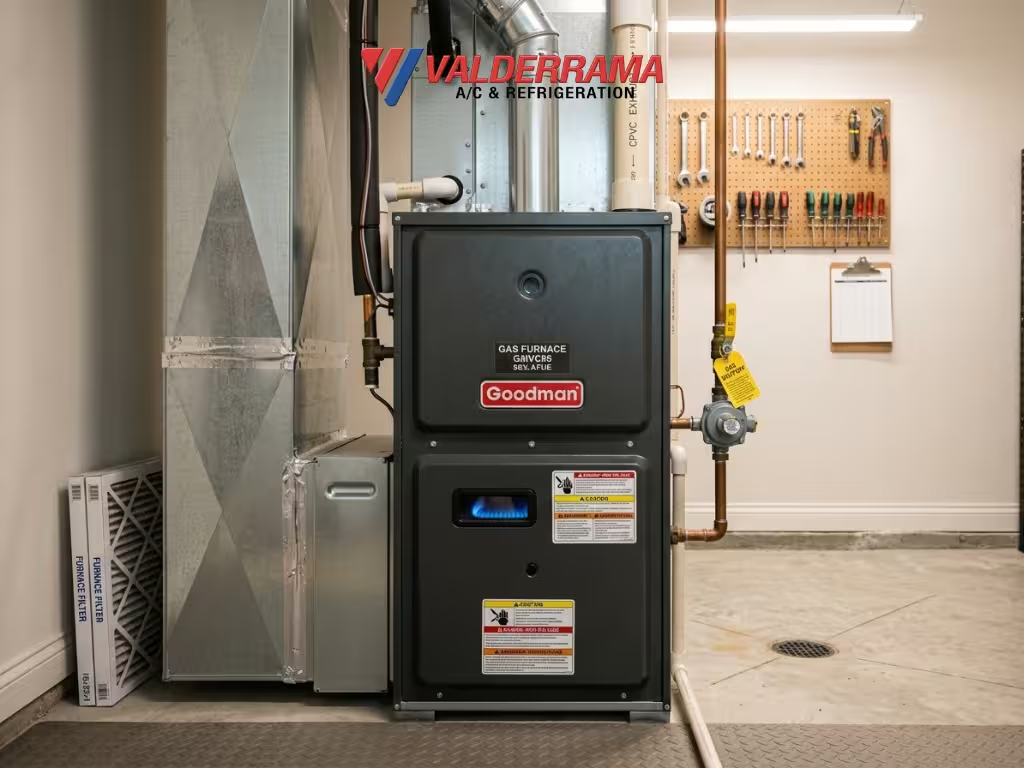
The “Will It Make It?” Winter Gamble
We’ve all been there. The first real cold front of the year is moving through Southeast Texas, and as you flip your thermostat to “Heat,” you find yourself holding your breath. You hear a groan, a click, and finally, the hum of the blower—but for how much longer?
If you’re asking how long does a furnace last, you’re likely standing at a crossroads: do you keep repairing your aging unit, or is it time to start planning for a replacement?
Houston’s heating season is very different from the heating season in northern states. Your furnace may sit unused for long stretches of the year before suddenly becoming essential when temperatures drop. That means a system can appear perfectly fine during the summer, only to reveal a failing igniter, worn blower motor, dirty burner, or electrical issue when you need heat.
At Valderrama A/C & Refrigeration, we know that while Houston is famous for its sweltering summers, our winter cold fronts make a reliable heating system an important part of year-round home comfort.
A furnace isn’t something most homeowners think about until it stops working. Understanding its expected lifespan can help you budget for future replacement, recognize warning signs earlier, and avoid being forced into a rushed decision during the middle of a cold snap.
The Houston Factor: Why Local Climate Matters
In a dry, stable climate, a furnace may experience fairly predictable operating conditions. But in the Greater Houston area, heating systems experience a combination of high humidity, long periods of inactivity, sudden cold weather, and frequent changes between heating and cooling.
These conditions don’t automatically mean your furnace will have a short lifespan. However, they can influence how individual components age and how frequently your system needs service.
1. The Humidity Trap
Houston’s high humidity affects more than indoor comfort. Moisture can contribute to corrosion and oxidation on certain metal components, particularly when equipment is installed in areas such as attics, garages, closets, or other spaces exposed to humid air.
A furnace may remain inactive for much of the year, allowing dust and moisture to accumulate. When the system finally starts during a winter cold front, components that have been sitting unused are suddenly put back into operation.
Rust around burners, cabinet components, or other accessible metal parts shouldn’t automatically be interpreted as a catastrophic problem, but significant corrosion deserves professional inspection.
The heat exchanger is particularly important because it separates combustion gases from the air circulated throughout the home. Damage to the heat exchanger can create a serious safety concern, which is why suspected heat-exchanger problems should always be evaluated by a qualified HVAC professional.
2. Erratic Cycling
Houston homeowners don’t typically run their furnaces continuously for months. Instead, heating demand can change dramatically from one day to the next.
One week may require very little heating, while a sudden cold front can cause the furnace to operate much more frequently.
Frequent starts and stops can increase wear on components such as:
- Igniters
- Blower motors
- Relays and electrical controls
- Limit switches
- Gas valves
- Thermostats
- Other moving and electrical components
If your furnace is turning on and off unusually often, don’t assume that’s simply normal Houston weather. Short cycling can indicate airflow problems, thermostat issues, an improperly sized furnace, overheating, or other mechanical problems.
5 Signs Your Furnace is Reaching the End of the Road
Even if your unit hasn’t hit the 15-year mark yet, certain symptoms suggest it may be approaching the later stages of its service life.
1. Rising Energy Bills
If your heating costs are increasing without a significant change in your thermostat settings, household usage, or utility rates, declining furnace efficiency could be one possible explanation.
Older furnaces may lose efficiency as components wear out. Dirty burners, restricted airflow, failing motors, duct problems, or other issues can also make the system work harder.
An increase in energy costs doesn’t automatically mean you need a new furnace. A professional inspection can help determine whether maintenance or repair could restore normal operation.
2. Frequent Repairs
One repair doesn’t necessarily mean your furnace is finished.
However, repeated service calls can change the economics of keeping an older system running. If you’re repairing one component this year and another component a few months later, the cumulative cost can become significant.
Pay attention to both the frequency and size of repairs. A minor repair on an older furnace may still be worthwhile, while a major repair on a system near the end of its expected lifespan may justify comparing replacement options.
3. Strange Noises
Furnaces naturally make some operating sounds, but new or increasingly loud noises deserve attention.
Examples include:
- Banging or booming
- Screeching
- Grinding
- Rattling
- Clicking that continues without ignition
- Loud humming
- Excessive vibration
Different noises can point to different problems. For example, rattling may be associated with loose components, while grinding can indicate mechanical wear. A professional should diagnose the actual cause rather than assuming the furnace simply needs to be replaced.
4. Inconsistent Heat
Does one room feel comfortable while another remains noticeably cold?
Uneven heating can result from several problems, including:
- Poor airflow
- Blocked or closed vents
- Dirty filters
- Duct leaks
- Insufficient insulation
- Thermostat problems
- Furnace performance issues
In some cases, the furnace itself may still be in good condition. Before replacing an otherwise functional system, it’s worth determining whether the problem is actually related to the ductwork or airflow.
5. Visible Rust or Soot
Visible rust, corrosion, or soot around a furnace should not be ignored.
Soot can indicate an issue with combustion, while excessive corrosion may indicate moisture or equipment deterioration. Neither should be diagnosed simply by appearance.
If you notice unusual discoloration, soot, burning smells, or signs of corrosion, shut the system down if you believe there is an immediate safety concern and have it professionally inspected.
Repair vs. Replace: The 50% Rule
When homeowners ask us how long does a furnace last, what they’re usually asking is: “Is this repair worth it?”
A commonly used guideline is the 50% rule: if a major repair approaches roughly half the cost of replacing the system, homeowners may want to compare the repair with replacement.
However, this shouldn’t be treated as a strict mathematical rule.
The decision should also consider:
- The furnace’s age
- Overall system condition
- Previous repair costs
- Expected remaining lifespan
- Energy efficiency
- Availability of replacement parts
- Safety concerns
- Warranty coverage
- How reliable the system has been
- The cost of a new installation
For example, spending several hundred dollars on routine maintenance or a relatively minor component may make sense even on an older furnace.
On the other hand, if a 17-year-old furnace needs a major repair and has already experienced several breakdowns, replacement may be worth evaluating alongside the repair option.
What About the “15-Year Rule”?
Fifteen years isn’t an automatic expiration date.
Some furnaces continue operating beyond 15 years, while others develop significant problems earlier. Think of 15 years as a point where more frequent evaluation and replacement planning become increasingly important, rather than a deadline.
If your furnace is approaching 15–20 years old, having a professional assess its condition before the next major cold front can give you more time to make an informed decision.
How to Maximize Your Furnace’s Lifespan
You don’t have to simply wait for your furnace to fail. Proper maintenance and good operating practices can help reduce unnecessary wear and identify problems before they become major breakdowns.
DIY Maintenance Checks
Change Filters Every 30–90 Days
A dirty filter restricts airflow and can force the HVAC system to work harder.
How frequently you need to replace your filter depends on the filter type, household conditions, pets, allergies, occupancy, and system design.
As a general starting point:
- Basic 1-inch filters: often replaced about every 30 days
- Higher-efficiency pleated filters: often replaced around every 3 months
Always follow the filter manufacturer’s recommendations and check the filter regularly rather than relying exclusively on a calendar.
A severely clogged filter can contribute to overheating, poor airflow, reduced comfort, and unnecessary system stress.
Keep Vents Clear
Furniture, rugs, curtains, and other objects can block supply or return vents.
Keeping airflow pathways open helps your HVAC system distribute conditioned air more effectively.
Don’t close multiple vents simply because certain rooms aren’t being used. Your system was designed around a particular airflow balance, and significantly restricting airflow can create unnecessary strain.
Keep the Furnace Area Clean and Accessible
Avoid storing boxes, chemicals, clothing, or other items directly around your furnace.
Maintaining a clean, accessible area makes it easier to inspect the equipment and allows technicians to safely perform maintenance and repairs.
Never place combustible materials near equipment that uses combustion.
Pay Attention to Changes
Homeowners are often the first people to notice that something sounds, smells, or operates differently.
If you notice unusual noises, inconsistent heating, repeated ignition attempts, unexplained shutdowns, or other changes, don’t wait until the furnace completely fails before having it checked.
The Value of a Professional Tune-Up
In our humid climate, a professional inspection can help identify developing problems before they turn into an emergency.
Depending on the furnace and system configuration, professional maintenance may include checking and cleaning burners, inspecting electrical connections, checking airflow, examining safety controls, testing system operation, inspecting accessible components, and looking for signs of abnormal combustion or corrosion.
A technician can also identify issues that aren’t obvious during a basic homeowner inspection.
This is especially important for older furnaces. Preventive maintenance doesn’t guarantee that a furnace will reach 20 years, but it can help maintain performance, improve reliability, and identify potential safety or repair concerns earlier.
For homeowners who are also trying to keep their cooling system running efficiently, maintaining the entire HVAC system is equally important. You can learn more about our air conditioning services to keep your home’s heating and cooling equipment ready for Houston’s changing weather.
Furnace Lifespan by System and Usage
The answer to how long does a furnace last can vary depending on the type of system and how it is used.
Gas Furnaces
A properly installed and maintained gas furnace can commonly provide around 15–20 years of service, although actual lifespan varies significantly by equipment condition and maintenance.
Because gas furnaces involve combustion, regular safety inspections are especially important.
Electric Furnaces
Electric furnaces can also provide many years of service, and their lifespan depends heavily on installation quality, electrical components, airflow, usage, and maintenance.
Some components may eventually require replacement even when the furnace itself remains serviceable.
Heat Pumps
Heat pumps operate differently because they can provide both heating and cooling. Since they may operate throughout much more of the year, their components can experience more cumulative operating hours.
A heat pump’s lifespan is often around 10–15 years, although installation quality, maintenance, climate, operating conditions, and equipment quality can make a significant difference.
If you’re comparing a furnace with a heat pump, don’t look at lifespan alone. Consider the entire system, expected operating costs, home comfort requirements, and replacement cost.
What Can Shorten a Furnace’s Lifespan?
Several factors can cause a furnace to wear out earlier than expected.
Poor Installation
Even a high-quality furnace can experience problems if it isn’t installed correctly.
Incorrect sizing, inadequate airflow, improper venting, poor electrical connections, or installation mistakes can contribute to premature wear and performance problems.
Lack of Maintenance
Skipping maintenance allows dirt, dust, corrosion, and small mechanical problems to accumulate.
A problem that could have been corrected during a routine inspection may eventually become a more expensive repair.
Restricted Airflow
Dirty filters, blocked vents, dirty components, or ductwork problems can restrict airflow.
Your furnace depends on proper airflow to operate correctly, so persistent airflow issues should be investigated.
Oversized Equipment
An oversized furnace can heat the home too quickly and shut down before completing a normal heating cycle.
This can contribute to frequent cycling and unnecessary wear.
Proper equipment sizing during installation is therefore important for both comfort and equipment longevity.
Excessive Cycling
Frequent starts and stops place additional demand on ignition and mechanical components.
If your furnace is repeatedly cycling on and off, have the underlying cause diagnosed rather than simply continuing to operate it.
When Should You Start Planning for Furnace Replacement?
You don’t have to wait until your furnace stops working to start thinking about replacement.
If your furnace is around 12–15 years old, it’s reasonable to start researching your options, especially if you have already experienced several repairs.
Planning ahead gives you time to:
- Compare replacement options
- Research energy-efficiency ratings
- Obtain multiple estimates
- Budget for installation
- Consider financing options
- Schedule installation at a convenient time
- Avoid making a rushed decision during a cold-weather emergency
If your furnace is already 15–20 years old, a professional evaluation can help you determine whether continued repairs are reasonable or whether replacement planning makes more sense.
FAQ: Heating Lifespan in Houston
Q: How long does a furnace last in Houston?
A: A properly installed and maintained furnace commonly lasts around 15–20 years, although some systems may last longer and others may require replacement earlier. Houston’s humidity, operating patterns, maintenance history, installation quality, and equipment condition all influence actual lifespan.
Q: Does a heat pump last as long as a gas furnace?
A: Typically, heat pumps have a shorter expected service life of around 10–15 years, although this varies by system, installation, maintenance, and operating conditions. Heat pumps also provide both heating and cooling, so they may operate throughout much more of the year than a furnace.
Q: Does the brand of furnace affect how long it lasts?
A: Brand can influence equipment quality, available parts, warranty coverage, and design, but installation quality and maintenance are also major factors. A properly installed and maintained system can perform differently from a poorly installed system regardless of brand.
Q: Will a high-efficiency furnace last longer?
A: Not necessarily. Higher efficiency doesn’t automatically guarantee a longer lifespan. However, modern high-efficiency equipment can provide improved energy performance and updated controls. When replacing an older furnace, efficiency is one factor to consider alongside reliability, installation quality, operating costs, and warranty coverage.
Q: Does “short cycling” shorten the furnace’s life?
A: Frequent cycling can increase wear because the furnace repeatedly starts and stops. Possible causes include restricted airflow, thermostat problems, an oversized system, overheating, or other equipment issues. A technician should identify the cause rather than assuming the furnace itself needs replacement.
Get the Most Out of Your Home Heating
Understanding how long does a furnace last helps you plan for the future, but age alone shouldn’t determine whether you repair or replace your system.
If your furnace is approaching the 15–20-year range, planning ahead can help you avoid an unexpected breakdown during a Houston cold front.
At Valderrama A/C & Refrigeration, we pride ourselves on serving Greater Houston homeowners and businesses with dependable HVAC solutions. Our goal is to provide an honest assessment of your system’s condition and explain your options clearly—whether that means maintenance, repair, or replacement.
Schedule a Professional Furnace Safety & Longevity Inspection Today!
Call Valderrama A/C & Refrigeration at (281) 974-4599 to discuss your heating system, request a professional evaluation, or get a free estimate on a replacement system.