
If you need to know how much does a new furnace cost installed in the Houston area, the typical investment ranges from $3,200 to $8,400. An electric furnace or air handler setup averages $2,800 to $5,200, while a standard 80% to 96% AFUE gas furnace installation typically runs between $3,800 and $7,800+, depending on BTU capacity, venting requirements, and electrical updates.
The Sudden Freeze and the Red-Tagged Unit
It is 6:00 AM in mid-January. A sudden Arctic cold front pushed across Southeast Texas overnight, plunging outdoor temperatures from 68°F straight down to 28°F. You wake up to a freezing home, walk over to your thermostat, and discover the fan is blowing cold air while an unfamiliar burning smell drifts from your utility closet.
You call a local technician for an emergency look, only to receive alarming news: your 16-year-old gas furnace has a cracked heat exchanger. It has been red-tagged for safety due to carbon monoxide risks, and the system cannot legally or safely be turned back on.
Now you face an urgent decision: how much is a replacement going to cost, and how do you avoid paying thousands more than necessary?
Finding out how much does a new furnace cost shouldn’t involve high-pressure sales pitches or vague ballpark numbers. Furnace pricing is governed by clear mechanical parameters, including heating fuel type, thermal capacity (BTUs), energy efficiency ratings (AFUE), and physical installation complexity. At Valderrama A/C & Refrigeration, we believe in complete financial transparency. Here is your definitive pricing guide for heating replacements in our local market.
The Houston Factor: Why Local Climate Changes Heating Needs
Heating equipment in Southeast Texas operates under vastly different conditions than systems in the Midwest or Northeast.
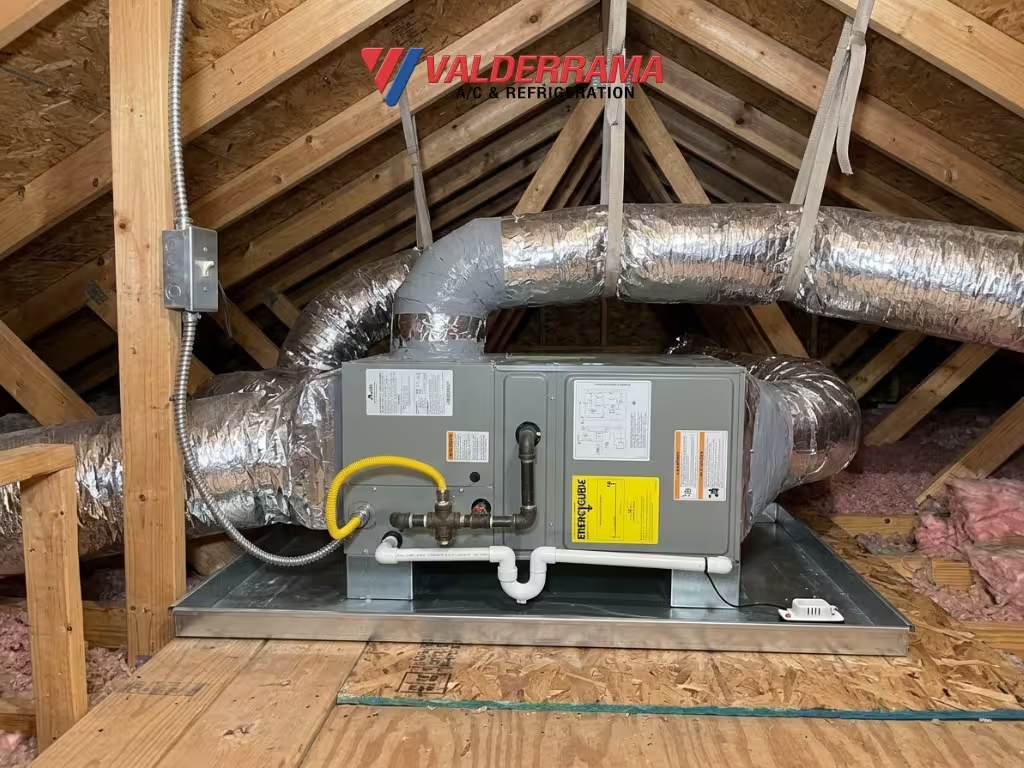
Houston’s heat and humidity place extreme strain on AC systems, and that directly impacts your heating equipment. Because our cooling season routinely stretches across nine to ten months of the year, heating components spend most of the year sitting completely dormant inside dark, unconditioned attics where ambient temperatures frequently top 130°F.
This extended downtime creates unique mechanical challenges:
- High summer humidity causes surface rust and oxidation on metal burner tubes, flame sensors, and gas valve connections.
- Heavy layers of airborne dust settle across heat exchangers, which bakes off suddenly during the first cold snap of the season.
- When a freeze hits, systems must switch instantly from months of total inaction to maximum heating output.
Because our cold snaps are intense but relatively brief, you do not necessarily need an ultra-expensive, sub-zero heating plant engineered for Minnesota winters. Choosing a unit calibrated to handle our specific heating loads saves you substantial upfront money while delivering reliable, safe comfort when freezes arrive.
5 Signs You Need [Heating] Replacement Right Now
Before cold weather leaves your home unheated, watch for these five common warning signs that your furnace needs replacement rather than another repair:
- The Unit Is Over 15 to 20 Years Old: Gas furnaces approaching two decades of service have reached the end of their design life and present elevated safety risks.
- A Cracked Heat Exchanger: Any physical crack in the combustion chamber allows lethal carbon monoxide to seep into your ductwork, requiring immediate equipment retirement.
- Frequent Burner Lockouts or Flame Failures: The furnace cycles on for a few seconds, shuts off abruptly, and displays blinking error codes on the internal control board.
- Repairs Exceed 50% of Replacement Cost: When repair quotes approach half the price of a brand-new heating installation, replacement is the more sensible financial decision.
- A Yellow or Flickering Burner Flame: A healthy natural gas burner produces a crisp, steady blue flame. A yellow or wavy flame signals incomplete combustion and dangerous soot buildup.
If your heating unit is exhibiting any of these safety issues, explore our comprehensive heating replacement and furnace services to evaluate modern, code-compliant equipment options.
What Determines the Real Cost of a New Furnace?
Furnace replacement costs break down into three primary equipment tiers and several installation factors:
1. Electric Furnaces and Air Handlers ($2,800 – $5,200 Installed)
Electric furnaces utilize heavy-duty resistance heating coils (often 5 kW to 20 kW arrays) to warm airflow. They carry the lowest upfront purchase cost because they require no gas piping, flue venting, or combustion chambers. They are an excellent option for homes without existing natural gas lines or properties paired with high-efficiency heat pumps.
2. Standard-Efficiency Gas Furnaces (80% AFUE: $3,600 – $5,800 Installed)
An 80% Annual Fuel Utilization Efficiency (AFUE) furnace converts 80% of consumed gas into usable indoor heat, while 20% vents out through a metal chimney flue. In our southern climate, where heating run-hours are limited, an 80% AFUE unit often delivers the best balance between affordable upfront cost and reliable performance.
3. High-Efficiency Condensing Gas Furnaces (90% to 96%+ AFUE: $5,200 – $8,400+ Installed)
These systems feature dual heat exchangers that extract thermal energy from exhaust gases, condensing moisture and venting cool exhaust through PVC pipe. While they carry higher purchase prices and require specialized condensate drainage lines, they provide maximum fuel efficiency, quieter operation, and lower monthly gas usage.
Key Installation Variables That Affect Pricing:
- BTU Capacity (Sizing): Residential heating capacities typically range from 40,000 to 100,000+ BTUs. Larger homes require heavier heating capacity, adding $400 to $1,200 to total equipment costs.
- Attic Accessibility: Installing equipment in tight, narrow attic crawl spaces requires additional labor hours and specialized safety rigging.
- Venting and Gas Line Upgrades: Bringing aging gas shutoff valves, sediment traps, or flue pipes up to modern building code standards adds modest labor and material costs.
Why Professional Service Matters: The Dangers of Cheap Installation
A furnace is a combustion appliance that burns fuel or draws high electrical amperage. Cutting corners with an unlicensed handyman to save a few dollars introduces serious hazards:
- Carbon Monoxide Protection: Gas furnaces must be properly vented and calibrated. Improper flue draft or misaligned burners can push odorless, invisible carbon monoxide directly into your home’s air supply.
- Preserving Factory Parts Warranties: Major heating equipment manufacturers require systems to be installed by a licensed HVAC contractor. Unlicensed labor automatically voids your standard 10-year parts warranty.
- Permitting and Code Compliance: Municipalities across our region require mechanical permits and official inspections for furnace replacements. Unpermitted work can complicate future home sales and violate homeowner insurance policies.
- Electrical Circuit Safety: Electric furnaces draw heavy electrical currents. Incorrect wire gauge sizing or poorly secured connections present active fire risks.
Why Choose Valderrama A/C & Refrigeration?
Upgrading your home’s heating system is an investment in your family’s safety and comfort. When you choose our team, you receive:
- Transparent, Flat-Rate Estimates: We provide detailed, itemized quotes before any work begins—no surprise dispatch fees, hidden extras, or high-pressure sales pitches.
- Licensed Texas Mechanical Specialists: Our technicians hold active TDLR credentials, carry full insurance, and receive regular training on gas combustion safety, airflow dynamics, and building codes.
- Proper Sizing via ACCA Manual J Calculations: We calculate your home’s exact heating requirements to ensure your new furnace is neither undersized nor oversized.
- Turnkey Installation Craftsmanship: From pulling municipal permits and testing gas pressures to hauling away your old equipment, we manage every step of the installation.
Frequently Asked Questions About Furnace Costs
Q: Is an 80% AFUE furnace good enough for a home in Texas?
A: Yes. Because our winters are relatively short and mild, an 80% AFUE furnace is often the most cost-effective choice for local homeowners. While a 96% AFUE unit saves more gas, the extended payback period in a warm southern climate means the higher upfront cost may take 10 to 15 years to break even.
Q: Can I replace my furnace without replacing my air conditioner?
A: Yes, in most cases you can replace just the furnace, provided the new unit matches the airflow specifications (CFM) of your existing indoor evaporator coil and outdoor air conditioner. However, if your cooling system is also more than 10 to 12 years old, replacing both at the same time often saves $1,000 to $2,500 in combined labor and permitting costs.
Q: How long does a furnace installation take?
A: A standard residential furnace replacement typically takes 4 to 8 hours. Our crews can usually remove the old unit, complete gas and electrical hookups, verify draft pressure, and test safety controls in a single visit.
Q: What size furnace does my home need?
A: Sizing depends on your home’s total square footage, ceiling heights, window efficiency, and insulation quality. Most homes in our area require between 40,000 and 80,000 BTUs. Sizing should always be determined by an ACCA Manual J load calculation rather than simple square-footage estimates.
Q: Are there financing options available for a new furnace?
A: Yes. We partner with reputable consumer lenders to provide flexible financing options, including low monthly payments and competitive interest rates, so you can replace failing equipment without straining your cash reserves.
Restore Safe, Dependable Warmth to Your Property Today
You do not have to endure freezing drafts, worry about carbon monoxide risks, or navigate confusing contractor quotes alone. Knowing how much does a new furnace cost gives you the clarity to select the right equipment, protect your budget, and keep your home safe and warm through every winter freeze.
At Valderrama A/C & Refrigeration, we take pride in delivering honest evaluations, skilled technical craftsmanship, and dependable heating care across our local communities.
Ready for an upfront, transparent estimate on a new heating system?
Schedule Your Free Furnace Replacement Consultation Today!
Call our local team directly at (281) 974 – 4599 to speak with an experienced specialist and book your in-home assessment!