
To effectively improve AC efficiency, start by replacing air filters monthly, sealing leaky ductwork, and installing a smart thermostat. Additionally, keep your outdoor condenser unit clean, use ceiling fans to circulate air, and schedule annual professional tune-ups to ensure your system isn’t working harder than necessary to fight the Houston humidity.
Knowing how to improve AC efficiency starts with a combination of simple maintenance, better airflow, thermostat adjustments, and professional HVAC service. Replacing dirty filters, keeping the outdoor condenser clean, sealing duct leaks, improving insulation, using ceiling fans, and scheduling regular tune-ups can all help your system cool your home more efficiently.
At Valderrama A/C & Refrigeration, we’ve helped Houston-area homeowners maintain comfortable indoor temperatures through some of the toughest Texas summers. Here are 10 practical ways to improve AC efficiency, reduce unnecessary energy use, and help extend the life of your cooling system.
Why AC Efficiency Matters in Houston
Air conditioning isn’t an occasional luxury in Houston. For much of the year, it is an essential part of keeping your home comfortable and healthy.
The combination of high temperatures and Gulf Coast humidity creates a particularly demanding environment for HVAC equipment. Your AC doesn’t just have to lower the indoor temperature—it also has to remove moisture from the air.
When an air conditioner is inefficient, it may run longer to achieve the same results. That can lead to:
- Higher monthly electricity bills
- Longer cooling cycles
- Increased wear on components
- Poor indoor humidity control
- Uneven temperatures between rooms
- More frequent repairs
- A shorter equipment lifespan
Improving efficiency doesn’t necessarily mean keeping your house warmer than you’d like. Instead, the goal is to make sure your AC is transferring heat and removing humidity as effectively as possible without wasting energy.
The Houston Humidity Hurdle
Houston homeowners have an additional challenge that homeowners in drier climates may not experience to the same degree: humidity.
Your AC removes heat from your home while also removing moisture from the indoor air. When humidity levels are high, a room can feel uncomfortable even when the thermostat shows a relatively low temperature.
For example, 74°F with high indoor humidity can feel considerably less comfortable than the same temperature with properly controlled humidity.
An efficient HVAC system should provide both:
- Temperature control
- Humidity control
This is one reason simply lowering the thermostat isn’t always the best solution. If your AC is struggling to remove moisture, turning the thermostat down may cause longer operating cycles without addressing the underlying problem.
Proper airflow, clean coils, correct refrigerant charge, adequate system sizing, and regular maintenance can all contribute to better cooling and humidity control.
5 Signs Your AC Is Losing Efficiency
Before making major changes to your HVAC system, look for signs that it isn’t operating as efficiently as it should.
1. Your AC Runs for Long Periods
Longer cooling cycles aren’t automatically a problem during extremely hot Houston weather. However, if your system runs almost continuously and still struggles to reach the thermostat setting, something may be wrong.
Possible causes include:
- Dirty filters
- Low refrigerant
- Dirty evaporator or condenser coils
- Duct leaks
- Poor insulation
- An aging compressor
- Incorrect system sizing
A professional inspection can help determine the actual cause.
2. Different Rooms Have Different Temperatures
Is your living room comfortable while a bedroom upstairs feels like an oven?
Uneven cooling can indicate restricted airflow, duct problems, inadequate insulation, blocked registers, or an improperly balanced HVAC system.
Don’t automatically assume that the AC unit itself needs to be replaced.
3. Your Home Feels Humid
If the air feels sticky even though your thermostat shows a comfortable temperature, your AC may not be controlling humidity effectively.
Excessive indoor humidity can also contribute to musty odors and an environment where mold and dust mites can become more problematic.
4. Dust Builds Up Quickly
Excessive dust around vents or throughout the house can sometimes indicate airflow or filtration problems.
Check the filter first. If it becomes dirty unusually quickly, there may be an underlying issue worth investigating.
5. Your Electricity Costs Are Rising
If your usage habits haven’t changed significantly but your cooling costs continue increasing, your HVAC system may be losing efficiency.
Compare your energy consumption with previous summers rather than looking only at the dollar amount, since electricity rates can change.
10 Ways to Improve AC Efficiency
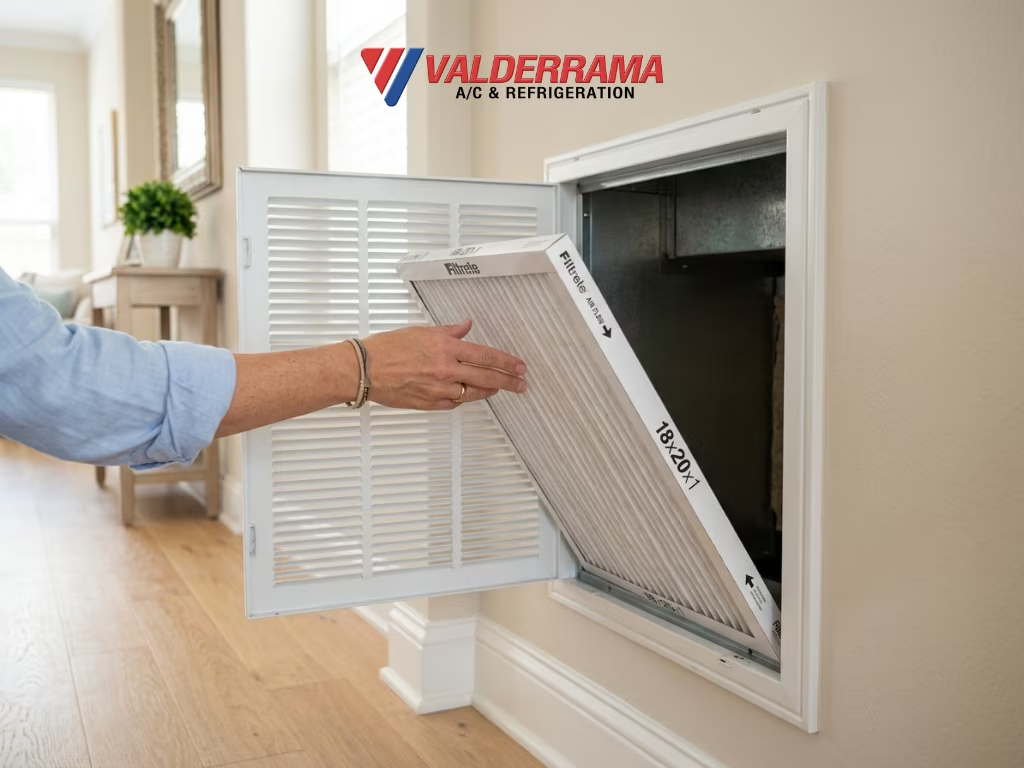
1. Replace Your Air Filter Regularly
One of the easiest ways to improve AC efficiency is also one of the most frequently overlooked: replace the air filter.
A clogged filter restricts the amount of air moving through your HVAC system. Your blower may have to work harder, while your AC may struggle to distribute conditioned air throughout the home.
For many Houston homes, checking the filter every 30 days is a good starting point. Homes with pets, multiple occupants, allergies, or higher dust levels may require more frequent attention.
Don’t wait until the filter is completely covered in dust.
Tip: Write the installation date on the filter or add a recurring reminder to your phone.
2. Keep Your Outdoor Condenser Clean
Your outdoor AC condenser releases the heat removed from your home. It needs adequate airflow to do this efficiently.
Grass clippings, leaves, dirt, weeds, and other debris can accumulate around the outdoor unit and restrict airflow.
Keep vegetation trimmed and maintain approximately 2 feet of clear space around the condenser whenever practical.
You can also visually inspect the unit periodically for debris.
However, don’t open electrical panels or attempt to repair components yourself. Turn the system off before performing basic exterior cleaning, and leave electrical or refrigerant work to a qualified HVAC professional.
3. Keep Blinds and Curtains Closed During Peak Sun
Houston’s summer sun can significantly heat your home.
Windows exposed to direct sunlight can allow substantial solar heat into rooms, forcing your AC to remove that additional heat.
During the hottest part of the day, close blinds, shades, or curtains on windows receiving direct sunlight.
Pay particular attention to west-facing windows because they receive strong afternoon sun.
For an even bigger improvement, homeowners can consider energy-efficient window treatments, solar screens, or improvements to window insulation.
4. Use Ceiling Fans Strategically
Ceiling fans don’t actually lower the temperature of the air in a room. Instead, they improve air movement across your skin, creating a cooling effect.
That means you may be able to raise your thermostat slightly while maintaining a similar level of comfort.
Remember to turn fans off in rooms that aren’t occupied. Fans cool people, not empty rooms.
This is a simple way to supplement your AC rather than forcing the air conditioner to do all the work.
5. Use a Programmable or Smart Thermostat
A smart thermostat can help prevent unnecessary cooling when you’re sleeping, working, or away from home.
Instead of maintaining the same temperature around the clock, you can create a schedule that matches your family’s routine.
For example, your thermostat might use a slightly higher temperature when everyone is away and return to a more comfortable setting shortly before you arrive home.
Avoid making dramatic temperature changes that force your system to operate excessively when you return. Gradual, scheduled adjustments are generally more practical.
If your current thermostat is old or inaccurate, upgrading it may also provide better control over your HVAC system.
6. Seal Leaky Ductwork
Your AC can be operating perfectly while conditioned air is being lost before it reaches your rooms.
Duct leaks can allow cooled air to escape into attics, crawlspaces, walls, or other unintended areas.
Signs of potential duct problems include:
- Rooms that never seem to cool properly
- Weak airflow from certain vents
- Excessive dust
- Higher-than-expected energy costs
- Hot or cold areas throughout the house
- Ductwork that is visibly disconnected or damaged
Professional duct inspection and sealing can help ensure more of the air produced by your AC actually reaches the rooms where you need it.
7. Improve Attic Insulation and Ventilation
Your attic can become extremely hot during a Houston summer.
If your home doesn’t have adequate insulation, heat from the attic can transfer into the living space. That increases the cooling load on your AC.
Improving attic insulation can help slow heat transfer and make it easier for your HVAC system to maintain indoor temperatures.
Proper attic ventilation can also help manage heat buildup.
If you’re experiencing unusually high cooling costs, an HVAC evaluation combined with an assessment of your home’s insulation can provide a better picture of where energy is being lost.
8. Keep Supply and Return Vents Unblocked
Your HVAC system depends on adequate airflow.
Furniture, curtains, rugs, boxes, and other objects can accidentally block supply registers or return-air grilles.
Walk through your home and make sure vents are open and unobstructed.
Don’t close numerous supply vents in an attempt to redirect cooling to other rooms. Your HVAC system is designed around a particular airflow balance, and restricting too many vents can create additional problems.
If one room consistently has poor airflow, investigate the cause instead of simply closing vents elsewhere.
9. Schedule Professional AC Maintenance
Routine maintenance is one of the best long-term ways to improve AC efficiency.
During professional service, an HVAC technician can inspect components that homeowners generally shouldn’t attempt to service themselves.
Depending on the system and service performed, an AC tune-up may include checking:
- Refrigerant-related performance
- Electrical connections
- Capacitors and other electrical components
- Blower operation
- Airflow
- Thermostat operation
- Condenser components
- Evaporator coil condition
- Drainage
- Overall system performance
Catching a developing problem early can also prevent a minor efficiency issue from becoming a major repair.
For Houston homeowners, scheduling AC maintenance before the peak summer cooling season can be particularly beneficial.
Schedule professional air conditioning service in Houston to have your system evaluated.
10. Know When AC Replacement Makes More Sense
Sometimes maintenance can only go so far.
If your AC is older, requires frequent repairs, struggles to cool your home, and consumes significantly more energy than a modern system, replacement may be worth considering.
A newer, properly sized and installed system can provide improvements in:
- Energy efficiency
- Temperature consistency
- Humidity control
- Reliability
- Comfort
- Operating costs
However, don’t replace a system solely because it is old.
Have a qualified HVAC professional evaluate the equipment and determine whether repair, maintenance, or replacement makes the most financial sense.
Professional Ways to Improve AC Efficiency
Some efficiency improvements require more than changing a filter or adjusting the thermostat.
Duct Sealing and Insulation
Ductwork should be inspected for disconnected sections, damaged insulation, gaps, and air leaks.
This is particularly important when ductwork runs through an attic or other hot, unconditioned space.
Sealing and insulating ducts can help conditioned air reach the rooms it was intended to cool rather than escaping along the way.
Coil Cleaning
Your AC relies on heat exchange to remove heat from your home.
When coils become covered with dirt and debris, heat transfer can become less effective. The system may then need to operate longer to achieve the same cooling result.
Professional coil cleaning can restore cleaner heat-transfer surfaces and help the system operate more effectively.
Because HVAC coils can be delicate and electrical components are nearby, professional cleaning is often preferable to aggressive DIY cleaning.
Refrigerant and System Performance Checks
Refrigerant is an important part of the cooling process.
If your system has a refrigerant leak or another refrigeration-related problem, simply adding refrigerant isn’t necessarily a permanent solution. The underlying issue should be diagnosed.
A qualified HVAC technician can evaluate system performance and determine whether a refrigerant-related problem exists.
How Humidity Affects AC Efficiency
Houston homeowners should pay close attention to indoor humidity because temperature isn’t the only factor affecting comfort.
Ideally, indoor relative humidity is often maintained around 30% to 50%.
When humidity remains excessively high, the home can feel warmer and less comfortable. You may be tempted to lower the thermostat, which can increase AC runtime and energy consumption.
If your home feels damp despite normal thermostat settings, consider having your HVAC system evaluated.
Possible causes include:
- Oversized AC equipment
- Poor airflow
- Dirty coils
- Drainage problems
- Insufficient system runtime
- Duct problems
- Excess moisture entering the home
An HVAC professional can determine whether the issue is related to the air conditioner or another source of moisture.
Should You Turn Your AC Off While You’re at Work?
This is one of the most common questions homeowners ask.
Turning the AC completely off for several hours may allow your home to become extremely hot and humid. When you return, the system has to remove both the accumulated heat and moisture.
For many Houston homes, it can be more practical to raise the thermostat while you’re away rather than shutting the system off completely.
The ideal setting depends on your home, insulation, equipment, outdoor conditions, and comfort preferences.
A programmable thermostat can make this process easier by automatically adjusting the temperature according to your schedule.
What Temperature Should You Set Your AC in Houston?
There isn’t one temperature that works perfectly for every household.
The U.S. Department of Energy commonly recommends around 78°F when you’re home and need cooling, but individual comfort preferences vary.
If 78°F feels too warm, consider combining a moderately higher thermostat setting with:
- Ceiling fans
- Better window shading
- Improved insulation
- Humidity control
- Proper airflow
The goal isn’t necessarily to choose the highest possible thermostat setting. It’s to achieve the comfort you want without unnecessarily overworking your AC.
When Is an AC Efficiency Problem Actually a Repair Problem?
Sometimes high energy consumption is a symptom of a mechanical problem.
Call an HVAC professional if you notice:
- Refrigerant leaks or suspected refrigerant problems
- Ice forming on the indoor or outdoor equipment
- Water leaking around the system
- Electrical breakers repeatedly tripping
- Unusual grinding, buzzing, or squealing
- Weak airflow
- Persistent short cycling
- The AC blowing warm air
- Severe humidity problems
- A system that cannot maintain the thermostat setting
Trying to solve these issues with thermostat adjustments or filter replacements won’t address the underlying problem.
Can a New AC Lower Your Energy Bills?
Potentially, yes.
If your existing system is very old or inefficient, a modern replacement may use less electricity to provide the same amount of cooling.
However, the actual savings depend on numerous factors, including:
- The efficiency of the old and new systems
- Equipment size
- Installation quality
- Home insulation
- Ductwork condition
- Thermostat settings
- Local weather
- Electricity rates
- How frequently the system operates
That’s why a professional load calculation and system evaluation are important before purchasing a replacement.
Installing an oversized AC simply because it has a larger capacity isn’t necessarily better. Proper sizing is essential for both efficiency and humidity control.
Houston-Specific AC Efficiency Checklist
Before calling an HVAC professional, work through this quick checklist:
Monthly:
- Check your air filter
- Replace the filter if dirty
- Check that supply vents aren’t blocked
- Make sure return-air grilles are unobstructed
- Inspect the outdoor unit for visible debris
During hot weather:
- Close blinds during intense afternoon sun
- Use ceiling fans in occupied rooms
- Keep doors and windows closed while AC is running
- Avoid unnecessary heat-producing appliances during peak afternoon hours
- Monitor indoor humidity
Professionally:
- Schedule regular AC maintenance
- Have ductwork inspected for leaks
- Check insulation when energy costs remain high
- Have unusual noises or cooling problems diagnosed
- Evaluate older systems for repair versus replacement
FAQ: How to Improve AC Efficiency
Does turning the AC off when I’m at work save money?
A. It can reduce runtime, but completely shutting the system off isn’t always the best strategy in Houston. Indoor temperatures and humidity can rise substantially while you’re away. A programmable or smart thermostat can allow you to raise the temperature while you’re gone and return it to a comfortable setting before you arrive home.
What is the best thermostat setting for AC efficiency?
A. A commonly recommended summer setting is around 78°F when you’re home, but comfort is personal. If you prefer a cooler setting, use other efficiency measures such as ceiling fans, window shading, improved insulation, and regular HVAC maintenance.
How often should I change my AC filter?
A. Check your filter approximately every 30 days. Depending on the filter type and conditions in your home, replacement may be necessary every month or every few months. Homes with pets, allergies, construction dust, or heavy occupancy may require more frequent filter changes.
How often should I have my AC professionally maintained?
A. A professional inspection and tune-up at least once a year is a reasonable starting point for many residential systems. Houston homeowners may benefit from scheduling service before the heavy cooling season begins. If your system is older or has a history of problems, your HVAC professional may recommend more frequent inspections.
Can replacing my old AC reduce my electricity bill?
A. A newer, properly sized and correctly installed system may consume less energy than an aging inefficient unit. However, the amount of savings varies significantly between homes. Have your current system evaluated before deciding whether replacement is the right investment.
Stop Overpaying for Comfort
You don’t have to accept high summer electricity bills as an unavoidable part of living in Houston.
Learning how to improve AC efficiency starts with simple habits: change your filters, keep outdoor equipment clear, use your thermostat strategically, manage sunlight, and keep vents unobstructed. From there, professional improvements such as duct sealing, coil cleaning, maintenance, insulation improvements, and system repairs can help your AC perform more effectively.
At Valderrama A/C & Refrigeration, we’ve been helping Houston-area homeowners and businesses stay comfortable since 1983. Our family-owned team provides air conditioning installation, repair, maintenance, and other HVAC services throughout Greater Houston.
Schedule AC service in Houston with Valderrama A/C & Refrigeration or call (281) 974-4599 to discuss your cooling needs.