
The short answer to is hvac air conditioning is: air conditioning is part of HVAC, but they are not identical. HVAC stands for Heating, Ventilation, and Air Conditioning. Air conditioning refers specifically to the cooling and dehumidification process, while HVAC encompasses the complete system—including the furnace, ductwork, blowers, and air filtration.
The Mystery Behind the Acronym on Your Invoice
It is 3:00 PM on a sweltering Tuesday afternoon. You walk over to your wall thermostat, adjust the setpoint down to 72°F, and hear the outdoor condenser fan kick into gear. Yet, an hour later, the room temperature has barely moved, the air feels sticky and humid, and you notice an unusual rattle coming from the return grille in your hallway.
You pull out your home inspection report or a previous repair invoice, and you see terms like “HVAC inspection,” “condenser replacement,” and “AC tune-up” used interchangeably.
This creates immediate confusion: Did you buy an air conditioner, or did you buy an HVAC system? Are you paying for two different setups, or are they just different names for the metal box sitting in your backyard?
Understanding is hvac air conditioning clears up this confusion immediately. Knowing the distinction helps you evaluate contractor estimates accurately, communicate clearly during a service call, and identify whether a comfort issue is coming from your cooling hardware, your ductwork, or your ventilation lines. At Valderrama A/C & Refrigeration, we believe transparent information helps property owners protect their comfort and their budget.
Breaking Down the Difference: The Whole vs. The Part
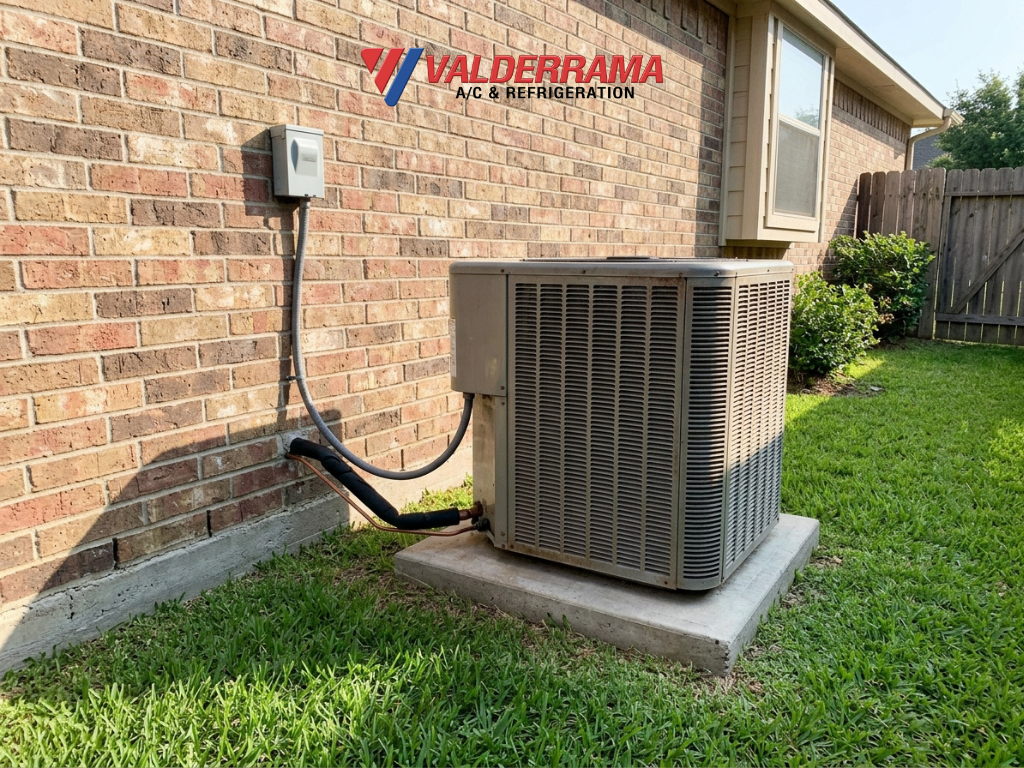
The easiest way to understand the relationship between HVAC and air conditioning is through an analogy: All air conditioners are part of an HVAC system, but not all HVAC components are air conditioners.
Think of “HVAC” as the vehicle and “air conditioning” as the engine. While the engine provides the core power, the vehicle also needs a transmission, exhaust system, and steering to operate properly.
| THE COMPLETE HVAC SYSTEM | ||
| HEATING | VENTILATION | AIR CONDITIONING |
| Furnace / Heat Pump. Provides thermal comfort in winter | Ductwork, Dampers, Air Filters, Fans Moves & cleans air | Compressor, Coils, Refrigerant Lines, Extracts heat / moist |
What Air Conditioning Does
Air conditioning handles two specific thermodynamic jobs: lowering sensible air temperature and extracting latent moisture (humidity). It achieves this by circulating chemical refrigerant between an indoor evaporator coil and an outdoor compressor unit. The indoor coil absorbs heat from your rooms, and the outdoor unit expels that heat into the outside atmosphere.
What the Rest of the HVAC System Handles
A dedicated air conditioner cannot condition your home by itself. It relies entirely on the rest of the HVAC network:
- The “H” (Heating): During seasonal cold snaps, your air conditioner sits idle while your gas furnace, electric heat strips, or the reversing valve on your heat pump take over to keep your living spaces warm.
- The “V” (Ventilation): The ventilation system is the circulatory network. It includes the sheet-metal or flexible ductwork, return grilles, supply registers, mechanical dampers, and air filters. It ensures that conditioned air reaches every room evenly while filtering out pollen, dust, and pet dander.
If you are experiencing cooling failures, hot spots, or airflow problems, explore our specialized air conditioning services to see how our licensed team pinpoints issues across every component of your cooling loop.
The Houston Factor: How Local Climate Puts Extreme Demands on HVAC Systems
Where you live dictates how hard your heating, ventilation, and cooling components have to work together. In Southeast Texas, mechanical equipment faces some of the most grueling environmental operating conditions in North America.
Houston’s heat and humidity place extreme strain on AC systems. Because our warm season often stretches from late March through November, air conditioning equipment runs double or triple the operating hours of systems in northern states.
Furthermore, our coastal climate carries an exceptionally heavy “latent heat load.” Your air conditioner cannot focus solely on dropping the temperature reading on your thermostat; it must simultaneously wring hundreds of gallons of moisture out of your indoor air every single week.
When high humidity mixes with intense heat, your entire HVAC ecosystem is tested:
- If your ventilation (ductwork) has minor air leaks in a 130°F attic, your cooling system draws in superheated, humid air, destroying efficiency.
- If your indoor evaporator coil is starved of airflow due to a dirty filter, the moisture it pulls from the air freezes instantly into a solid block of ice.
- If your drainage lines lack proper pitch, biological algae forms in the standing water, triggering safety float switches that shut down your entire system to prevent ceiling floods.
Causes of System Breakdown: Why “Just the AC” Fails
Many homeowners assume a cooling issue is always a broken air conditioner, when the root cause often lies in a different part of the broader HVAC network:
- Ductwork Static Pressure Imbalances (Ventilation Failure): Undersized or pinched flexible ducts restrict the volume of air returning to the air handler. This starves the cooling coil of heat, causing the refrigerant to stay too cold and sending liquid refrigerant back to the compressor, which destroys the pump valves.
- Electrical Contactor and Capacitor Degradation (AC Component Failure): The intense summer heat inside the outdoor condenser cabinet degrades the oil and dielectric material inside run capacitors. Weak capacitors force the compressor and fan motor to draw excessive amperage, causing hard starts and tripped breakers.
- Cracked Heat Exchanger Interference (Heating Component Failure): In dual-fuel or split gas furnace setups, a neglected or rusted heat exchanger can disrupt the airflow plenum, trigger high-limit safety switches, and prevent the blower fan from distributing cool air properly during the summer.
Symptoms: 5 Signs You Need Air Conditioning Service
Watch for these five common warning signs that indicate your cooling equipment or broader HVAC network requires professional attention:
- Warm or Lukewarm Vent Airflow: The indoor blower fan is running, but the air coming out of your registers is room-temperature or barely cool.
- Sudden Spikes in Monthly Energy Bills: Your electric statements show an unexplained, sharp increase in kilowatt-hour consumption compared to the same month last year.
- Loud Rattling, Buzzing, or Screeching Sounds: Mechanical noises echoing from the outdoor condenser or indoor air handler, signaling worn motor bearings, a loose fan blade, or a struggling compressor.
- Persistent Indoor Stickiness (High Humidity): The thermostat displays your target temperature (e.g., 72°F), but your skin feels clammy and rooms feel stuffy, indicating poor dehumidification cycles.
- Water Pooling Around the Indoor Air Handler: Condensate backing up in the drain pan or leaking through attic drywall, signaling a clogged drain line or an iced-over evaporator coil that has melted.
For commercial properties, office complexes, and retail facilities, these mechanical problems can quickly disrupt operations, impact tenant comfort, and risk inventory loss. Explore our dedicated commercial HVAC maintenance to see how precision system management keeps your facility running smoothly.
Practical DIY Checks to Safeguard Your System
Before calling for technical service, perform these four simple, safe checks to rule out common operational problems:
- Inspect the Air Filter: Slide your 1-inch or 4-inch pleated filter out of its frame and hold it toward a light source. If light cannot easily pass through the pleats, the filter is clogged and starving your system of air. Replace it immediately.
- Verify Thermostat Mode and Battery Power: Confirm your thermostat is set to “Cool” rather than “Fan Only” or “Off.” Ensure the setpoint is at least 3 degrees below the current room temperature, and check that fresh batteries are installed.
- Check the Circuit Breaker Panel: Head to your electrical panel and locate the switches labeled “AC,” “Condenser,” or “Furnace/Air Handler.” If a breaker has tripped, it will rest in the middle position. Flip it firmly to “Off,” then back to “On.” If it trips again immediately, leave it off and call a professional.
- Clear the Outdoor Condenser Perimeter: Walk around your outdoor unit and remove fallen leaves, grass clippings, weeds, and stored items. Ensure there is at least 24 inches of clear space on all sides so the fan can pull air freely across the coils.
When to Call a Licensed HVAC Professional
While filter changes and perimeter clearing are straightforward DIY tasks, the internal refrigeration circuits and high-voltage connections require certified diagnostic tools and safety training.
Contact an authorized HVAC contractor immediately if you notice:
- A refrigerant leak, indicated by bubbling or hissing sounds along copper lines, ice accumulation on the suction line, or warm air blowing during cooling mode.
- A persistent burning, acrid, or electrical smell coming from your registers or indoor cabinet.
- A breaker that trips repeatedly every time the outdoor condenser attempts to start.
- Standing water pooling beneath your indoor unit or dripping through ceiling drywall.
Prevention Tips: Maximizing System Longevity and Efficiency
Your heating, ventilation, and air conditioning network represents a significant investment. Proactive maintenance is the best way to keep it running smoothly and avoid costly repairs:
- Change Filters Consistently: Replace standard 1-inch filters every 30 to 60 days, and inspect 4- to 5-inch deep media cartridges every 6 to 12 months.
- Keep Supply and Return Vents Unobstructed: Never close off more than 10% of the registers in your home, and ensure furniture, rugs, or drapes are not blocking return grilles. Closing vents increases static pressure and strains the blower motor.
- Flush the Condensate Line Regularly: Pour a cup of distilled white vinegar down the primary condensate access pipe every two to three months to dissolve algae and prevent standing drain clogs.
- Schedule Biannual Professional Maintenance: Have a licensed technician perform a cooling tune-up in the spring and a heating safety check in the fall to test capacitors, measure motor amperage, clear coils, and verify safe operating pressures.
Why Choose Valderrama A/C & Refrigeration?
Keeping your property comfortable, safe, and energy-efficient requires a mechanical partner who understands the relationship between your air conditioner and the broader HVAC network. When you work with our family-owned team, you get:
- Upfront, Flat-Rate Pricing: We provide detailed, itemized estimates before starting any work—no surprise trip fees, hidden dispatch charges, or high-pressure sales tactics.
- Licensed Texas Mechanical Specialists: Our technicians are background-checked, insured, and thoroughly trained in modern variable-speed inverter systems, heat pumps, dynamic airflow balancing, and SEER2 efficiency guidelines.
- Comprehensive Turnkey Solutions: From minor capacitor replacements to complete multi-zone duct and equipment installations, we deliver durable, code-compliant solutions built to last.
Frequently Asked Questions About HVAC and Air Conditioning
Q: If I replace my air conditioner, do I have to replace the whole HVAC system?
A: Not always, but it is often strongly recommended. If your outdoor AC unit fails but your indoor furnace or air handler is relatively new and compatible, you may only need to replace the outdoor condenser and matching indoor evaporator coil. However, pairing a modern high-efficiency outdoor unit with an old, mismatched indoor blower can reduce efficiency, void manufacturer warranties, and cause premature component failure.
Q: Does an air conditioner provide ventilation on its own?
A: Standard residential central air conditioners recirculate the air already inside your home; they do not draw in fresh outdoor air. The “ventilation” part of your HVAC system relies on mechanical fresh-air dampers, energy recovery ventilators (ERVs), and filtration tracks to exchange stale indoor air with clean, filtered outside air.
Q: What is the average lifespan of an HVAC system compared to an AC unit in Houston?
A: In our demanding coastal climate, both central air conditioning condensers and heat pumps typically last between 10 and 15 years due to high operating hours and heavy humidity. Indoor gas furnaces, which run far less frequently in Texas winters, can sometimes last 15 to 20 years with proper maintenance.
Q: Can a dirty air filter break my air conditioner?
A: Yes. A clogged filter restricts airflow across the evaporator coil. Without sufficient warm air passing over the coil, the refrigerant cannot absorb heat, causing the coil to freeze into a block of ice. This can lead to liquid refrigerant flooding the compressor, which can cause permanent mechanical failure.
Q: What does a heat pump do in an HVAC system?
A: A heat pump is a two-in-one system that handles both air conditioning and heating. During the summer, it functions exactly like a standard air conditioner, pumping heat out of your home. In the winter, it reverses the process, extracting ambient heat from the outside air and moving it indoors.
Protect Your Comfort and Keep Your System Running Smoothly
You do not have to settle for uneven cooling, high electric bills, or confusion over your mechanical equipment. Understanding is hvac air conditioning gives you the knowledge to make smart maintenance choices, ask the right questions, and keep your property comfortable through every season.
At Valderrama A/C & Refrigeration, we take pride in delivering honest evaluations, skilled mechanical craftsmanship, and dependable service across the region.
Ready to optimize your comfort and lower your monthly energy costs?
Schedule Your Precision HVAC and AC Inspection Today!
Call our team directly at (281) 974 – 4599 to speak with an experienced specialist and confirm your service visit!