
The most common signs your AC needs replacement include frequent breakdowns, rising energy bills, uneven cooling, excessive indoor humidity, loud noises, and a system that’s more than 10–15 years old. If your air conditioner still uses R-22 refrigerant or major repairs cost more than half the value of a new system, replacing it is often the smarter long-term investment.
Your air conditioner rarely stops working without warning. In most cases, it gives homeowners several signs that it’s nearing the end of its lifespan. Unfortunately, many people ignore these warning signs until their AC fails during the hottest week of summer, leaving them scrambling for emergency repairs when HVAC companies are busiest.
For homeowners in Greater Houston, where summer temperatures regularly climb into the 90s with high humidity, a reliable air conditioner isn’t just about comfort—it’s essential for protecting your home and your family’s well-being.
Knowing the signs your AC needs replacement allows you to plan ahead, avoid unexpected breakdowns, and invest in a more energy-efficient cooling system before costly repairs begin piling up.
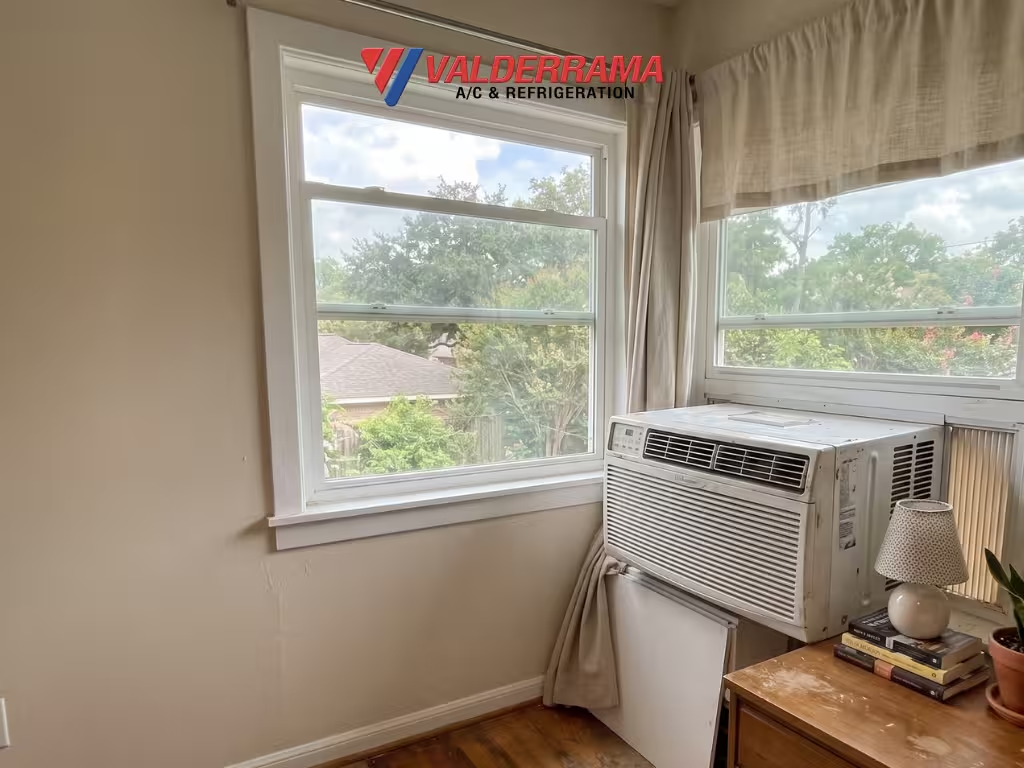
Why Air Conditioners Wear Out Faster in Houston
Houston’s climate is especially demanding on residential HVAC systems. Unlike areas with mild summers, air conditioners here often run for most of the day between late spring and early fall.
Several local factors shorten the lifespan of an AC system, including:
- Long periods of extreme heat
- High humidity that forces the system to remove excess moisture
- Heavy annual cooling demand
- Frequent summer storms and outdoor debris
- Corrosion caused by moisture and coastal air in surrounding areas
While some air conditioners can last close to 20 years in cooler climates, many Houston systems begin showing significant wear after 10 to 15 years due to the constant workload.
7 Signs Your AC Needs Replacement
1. Your Air Conditioner Is More Than 10–15 Years Old
Age alone doesn’t automatically mean your AC needs replacing, but it’s one of the strongest indicators.
Most modern central air conditioning systems have an average lifespan of 10 to 15 years with proper maintenance. As equipment ages, internal components naturally wear down, making the system less efficient and more prone to breakdowns.
If your unit is over a decade old and you’re noticing additional problems such as rising utility bills or frequent repairs, replacement is often more cost-effective than continuing to repair an aging system.
Newer HVAC systems are also significantly more energy-efficient, meaning you’ll likely recover part of the installation cost through lower monthly energy bills over time.
2. Your Energy Bills Keep Increasing
One of the earliest warning signs is a noticeable increase in your electricity bill without a change in your thermostat settings or daily routine.
Older air conditioners lose efficiency as components wear out. The compressor works harder, the blower motor runs longer, and refrigerant performance gradually declines. As a result, your system consumes more electricity to provide the same level of cooling.
Common causes include:
- Aging compressor
- Dirty evaporator coils
- Worn blower motors
- Refrigerant leaks
- Reduced airflow
- Failing electrical components
If your energy costs continue increasing every summer, your AC may be costing more to operate than it’s worth.
3. You’re Scheduling Repairs More Frequently
Every HVAC system eventually reaches a point where repairs become increasingly common.
If you’ve replaced a capacitor one year, repaired the blower motor the next, and now the compressor is failing, you’re likely spending money on a system that’s nearing the end of its life.
Many HVAC professionals recommend following the 50% Rule.
If the cost of repairing your air conditioner approaches or exceeds 50% of the price of a new system, replacement is usually the better financial decision.
Similarly, many homeowners use the $5,000 Rule, which multiplies the age of the system by the repair cost. If the result exceeds $5,000, replacement often provides better long-term value.
For example:
- 12-year-old system
- $500 repair
12 × $500 = $6,000
In this situation, replacing the unit may be the more economical option.
4. Your Air Conditioner Uses R-22 Refrigerant
If your air conditioner was manufactured before 2010, there’s a good chance it uses R-22 refrigerant, commonly known as Freon.
Because R-22 has been phased out for environmental reasons, it is no longer manufactured in the United States. This means refrigerant has become increasingly scarce and expensive.
If your older AC develops a refrigerant leak, repairing it can become extremely costly.
Rather than investing thousands of dollars into an outdated system, many homeowners choose to upgrade to modern equipment that uses environmentally friendly refrigerants and offers much higher efficiency.
5. Your Home Never Feels Comfortable
Does one room feel freezing while another remains warm?
Uneven temperatures often indicate that your air conditioner can no longer distribute conditioned air effectively.
While ductwork problems can also contribute, an aging system may struggle to maintain proper airflow throughout your home.
Other comfort issues include:
- Constant thermostat adjustments
- Long cooling cycles
- AC running almost continuously
- Hot and cold spots throughout the house
If your home never seems consistently comfortable despite regular maintenance, your system may simply be undersized or reaching the end of its service life.
6. Excess Humidity Inside Your Home
Your air conditioner doesn’t just cool the air—it also removes excess moisture.
When your AC begins losing efficiency, humidity often increases inside your home.
Signs include:
- Sticky indoor air
- Musty odors
- Condensation on windows
- Mold or mildew growth
- Damp feeling despite cool temperatures
Houston’s naturally humid climate makes proper dehumidification especially important. If your AC can no longer control indoor moisture, replacing the system may significantly improve comfort and indoor air quality.
7. Loud Noises or Strange Odors
Air conditioners typically produce a steady humming sound while operating.
Loud grinding, banging, squealing, rattling, or metal-on-metal noises usually indicate mechanical problems.
Likewise, unusual odors should never be ignored.
Common warning signs include:
- Burning smells from electrical components
- Musty odors caused by mold
- Chemical smells from refrigerant leaks
- Persistent unpleasant odors from deteriorating insulation
While some issues can be repaired, repeated mechanical failures often indicate that major components are wearing out.
Problems That Don’t Always Mean You Need a New AC
Not every AC issue requires complete replacement.
Many common problems are relatively inexpensive to repair, including:
- Dirty air filters
- Clogged condensate drains
- Faulty thermostats
- Bad capacitors
- Contactor failures
- Blown fuses
- Dirty condenser coils
A professional inspection can determine whether the issue is a simple repair or a sign that larger components—such as the compressor or evaporator coil—are nearing failure.
Repair or Replace? A Quick Comparison
| Situation | Repair | Replace |
|---|---|---|
| Dirty air filter | ✓ | |
| Thermostat malfunction | ✓ | |
| Capacitor replacement | ✓ | |
| Fan motor replacement | ✓ | |
| Compressor failure on a 15-year-old unit | ✓ | |
| R-22 refrigerant leak | ✓ | |
| Frequent annual breakdowns | ✓ | |
| Extremely high energy bills | ✓ |
If your system falls into several categories on the replacement side of the table, upgrading may save money over the long term.
How a New AC Can Benefit Your Home
Replacing an aging air conditioner isn’t just about avoiding future repairs. Modern HVAC systems provide several advantages, including:
- Lower monthly energy bills
- Improved indoor comfort
- Better humidity control
- Quieter operation
- More consistent temperatures
- Environmentally friendly refrigerants
- Smart thermostat compatibility
- Longer manufacturer warranties
Many homeowners are surprised by how much more comfortable their homes feel after upgrading to a properly sized, high-efficiency system.
Frequently Asked Questions
How long should an air conditioner last in Houston?
Most central air conditioning systems last 10 to 15 years in Houston due to the area’s extended cooling season, high humidity, and heavy system usage. Regular maintenance can help maximize your system’s lifespan.
Is it better to repair or replace my AC?
If your system is relatively new and the repair is minor, repairing it is usually the best option. However, if the unit is older, breaks down frequently, or requires expensive repairs, replacement often provides better long-term value.
Can I replace only the outdoor unit?
In most cases, replacing both the indoor and outdoor components together is recommended. Modern air conditioners are designed as matched systems, and mixing old and new equipment can reduce efficiency and potentially affect warranty coverage.
Will a new AC lower my electric bill?
Yes. Modern high-efficiency systems use significantly less electricity than older models, especially if you’re replacing equipment that’s more than 10 years old. Many homeowners notice meaningful reductions in their monthly cooling costs.
When is the best time to replace an AC in Houston?
Spring and fall are often ideal because demand is lower, scheduling is more flexible, and you can replace your system before peak summer temperatures arrive.
Don’t Wait Until Your AC Stops Working
The best time to replace an aging air conditioner is before it fails during the hottest days of summer. Planning your replacement ahead of time gives you the opportunity to compare systems, explore energy-efficient options, and schedule installation at your convenience instead of facing an emergency.
At Valderrama A/C & Refrigeration, we’ve helped Houston-area homeowners make informed cooling decisions for more than 40 years. Whether your system needs a simple repair or it’s time for a complete replacement, our experienced technicians can evaluate your equipment and provide honest recommendations based on your home’s needs—not unnecessary upselling.
If you’ve noticed several of the warning signs discussed in this guide, don’t wait until your air conditioner leaves you without cooling.
Schedule a professional AC evaluation today and call (281) 974 – 4599 to find out whether repairing or replacing your system is the best investment for your comfort, energy savings, and peace of mind.