
A heat pump is an all-in-one central climate system that provides both heating and cooling. Instead of burning fuel to create heat, it uses a reversing valve and chemical refrigerant to absorb heat from your indoor air and dump it outside during the summer, then reverses the process to pump ambient outdoor heat indoors during the winter.
The Two-in-One Mechanical Marvel Hidden in Plain Sight
It is a heavy, blinding Tuesday afternoon, and the outdoor temperature is soaring into the upper nineties. Inside your home, you are enjoying crisp, cool, and perfectly dry 72°F air. Fast forward a few months to a sudden winter cold snap: outdoor temperatures drop down to freezing, yet your living spaces remain perfectly warm and cozy.
For decades, property owners have assumed that achieving this year-round indoor comfort requires two entirely separate heavy appliances—a central air conditioner for the blazing summers and a gas-burning furnace for the winter months.
When you start researching modern HVAC technology, you constantly run into a phrase that sounds confusing, leaving you asking: what is heat pump technology, and how can a single piece of equipment handle both extreme weather extremes efficiently?
The truth is, heat pumps are the fastest-growing home comfort upgrade in the country. Let’s pull back the metal panels on this technology, see how it operates as a heavy-duty dehumidifier and heater, and look at how it slashes your monthly utility costs cleanly.
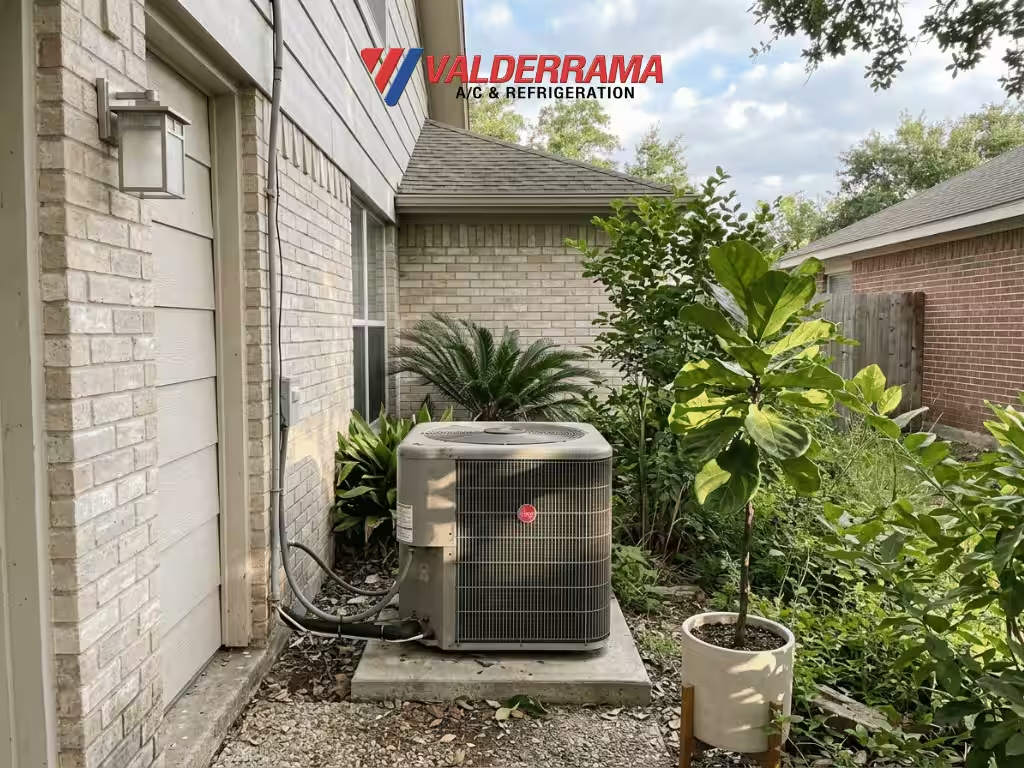
The Houston Factor: How Intense Coastal Humidity Alters Equipment Demands
Operating a central comfort network in Southeast Texas introduces severe environmental demands that traditional systems in drier states never encounter.
Houston’s heat and humidity place extreme strain on AC systems and heat pumps alike. Because our cooling season routinely stretches across nearly ten months of the year, your central climate system runs on massive, continuous operational duty cycles. Our thick relative humidity places a heavy “latent load” on your equipment, meaning your system must spend an immense amount of energy squeezing hundreds of gallons of raw liquid water vapor out of your indoor air streams every single week.
This is exactly where a modern heat pump excels. In cooling mode, a heat pump operates identically to a high-efficiency air conditioner, using dense evaporator coils to wring out ambient moisture before circulating clean, crisp air. Because our regional winters are brief and relatively mild, a heat pump is the ultimate match for our climate. It completely eliminates the need for an expensive, oversized gas furnace that sits dormant and rusts for most of the year, providing a streamlined mechanical solution built to handle our coastal weather variations perfectly.
How Does a Heat Pump Work? The Refrigeration Cycle Explained
To understand a heat pump, you have to discard the idea that the system “creates” thermal energy. A heat pump is simply a master-level heat mover.
The system relies on a basic law of physics: heat naturally moves toward colder environments. By using a compressor pump and a chemical compound called refrigerant, the system manipulates temperatures inside closed copper loops to transfer heat energy wherever you want it.
The Summer Cooling Cycle
When your home needs cooling, a heat pump acts exactly like a traditional air conditioner. The indoor blower fan pushes hot, humid air across a freezing evaporator coil. The liquid refrigerant inside the coil absorbs the heat energy from your rooms, causing the air to drop in temperature. The system then pumps this trapped heat outside to the condenser coil, where an outdoor fan rejects the heat into the outdoors before repeating the cycle.
The Winter Heating Cycle (The Reversing Valve Magic)
When you switch your thermostat from “Cool” to “Heat,” a specialized component called a reversing valve snaps into action inside the outdoor cabinet. This instantly reverses the flow of the chemical refrigerant.
The outdoor coil now becomes the freezing evaporator, extracting ambient thermal energy from the outdoor air (even when it feels freezing outside, there is still a massive amount of moving heat energy present). The system compresses this gas, which radically multiplies its temperature, and sends it straight into your home’s indoor coil. Your indoor fan blows air across these hot fins, circulating cozy warmth through your rooms without burning an ounce of natural gas.
Causes and Symptoms: Diagnosing Hidden Heat Pump Operational Failures
Because a heat pump runs year-round to provide both heating and cooling, its internal mechanical components experience double the annual runtime of a standard standalone furnace. Over time, certain factors can cause the system to drop out of calibration:
1. High Static Pressure Airflow Restrictions
- The Cause: Letting your air filters remain choked with dust or closing too many supply vents.
- The Symptoms: Weak vent airflow, loud whistling noises from return grilles, and your indoor evaporator coils quickly transforming into a solid block of ice.
2. Defrost Control Board Failures
- The Cause: During winter heating, the outdoor coil naturally accumulates frost. The system uses a smart defrost timer to periodically melt this ice. If the control board glitches, the ice will expand unchecked.
- The Symptoms: The outdoor unit gets completely encased in a heavy sheet of white ice, and the system stops blowing warm air inside your home.
5 Signs You Need Heat Pump Professional Attention
Your central system will show clear mechanical and operational red flags when its core internal components require technical intervention:
- The System Stays Stuck in One Operational Mode: Your thermostat calls for heating, but the system continues to blast out freezing cold air, signaling a stuck reversing valve.
- A Sudden Surge in Monthly Utility Bills: Your electric statements reveal a massive upward surge, indicating the system is relying on its expensive emergency electric heat strips instead of the efficient compressor loop.
- Frequent, Repetitive Shifting and Clicking Noises: The outdoor unit makes loud chattering or grinding sounds whenever it cycles online, pointing to a failing startup capacitor or compressor valve wear.
- Standing Water Leaking Near the Indoor Air Handler: Condensate backing up inside your primary drain pans, signaling a thick biological algae clog blocking your exit plumbing paths.
- An Inability to Balance Indoor Relative Humidity: Your rooms feel persistently stuffy, damp, and muggy, signaling that your equipment’s internal pressure balance has degraded.
When your cooling loops are restricted or your reversing circuits drop out of calibration, running the system can rapidly lead to a permanent mechanical breakdown. If your home’s central system is showing any of these operational issues right now, take a moment to look through our dedicated heat pump services to explore our diagnostic and optimization capabilities.
Sizing and Sensation DIY Checks: What Homeowners Should Know
Before you call a technician for a service visit, execute these two simple home checks to ensure your heat pump is running cleanly:
- The Temperature Split (Delta-T) Audit: Take a standard digital thermometer and measure the temperature of the air entering your return vent, then compare it to the air coming out of your closest supply vent. In cooling mode, a healthy system should maintain a clean split of 16 to 20 degrees. In heating mode, you should see a steady rise of 15 to 25 degrees.
- Understand the “Cool-to-the-Touch” Heating Sensation: If you are transitioning from an old gas furnace to a heat pump, you might initially think the system is broken because the air coming out of the vents doesn’t feel hot. Gas furnaces blast air out at an intense 120°F to 140°F, which dries out your skin. A heat pump delivers a continuous stream of air around 90°F to 100°F. This is warmer than your room temperature but cooler than your body temperature, meaning it keeps your home perfectly warm while using a fraction of the electricity.
Why Professional Mechanical Engineering and Installation Are Vital
A central heat pump installation is a highly technical, regulated assignment that requires professional, master-level execution to deliver on its energy-saving promises.
Our fully licensed field crews handle the entire project lifecycle cleanly—running precise ACCA Manual J load calculations to size equipment exactly to your building’s thermal footprint, evaluating duct static pressures using digital manometers, vacuuming copper lines down to a deep sub-500-micron level to protect against internal system moisture, and tuning the automated defrost logic matrices flawlessly.
Cutting corners with an uncertified general handyman from an online marketplace to save a few dollars upfront can introduce severe financial and physical liabilities. If an unpermitted installation triggers a structural electrical short or an undetected refrigerant leak, your property insurance provider can legally deny your entire damage claim. Furthermore, top-tier global equipment brands strictly mandate that all machinery must be put in by an authorized contractor, or your 10-year factory parts warranty will be instantly voided.
Why Choose Valderrama A/C & Refrigeration?
We understand that your home’s climate infrastructure represents a major commitment of capital. When you select our family-owned team to engineer your property’s comfort systems, you secure:
- Upfront, Fixed Project Invoicing: The itemized written estimate we deliver before physical work begins is the exact price your household pays—with zero hidden surcharges or sudden administrative markups.
- Flexible Funding and Financing Arrays: We provide direct access to multiple competitive lending networks, featuring $0 down incentives, low monthly payments, and promotional interest windows to protect your cash reserves.
- Fully Certified Local Specialists: Background-checked, insured Texas technicians systematically trained in advanced building science, airflow metrics, and current code compliance lines.
FAQ: Navigating Heat Pump Technologies
Q: Do heat pumps completely stop working when outdoor temperatures drop below freezing?
A: No, not anymore. While legacy models from decades ago struggled in extreme cold, modern 2026 cold-climate heat pumps utilize advanced variable-speed inverter compressors and enhanced vapor injection technology that allow them to pull efficient heat from outdoor air even when temperatures plunge well below zero.
Q: What is a hybrid or dual-fuel HVAC configuration?
A: A hybrid system pairs an electric heat pump with a standard natural gas furnace. The system utilizes smart controls to run the highly efficient electric heat pump during our typical mild Texas winter days, and automatically switches over to the gas furnace only during historic, sub-freezing weather events to optimize energy costs.
Q: Are there any immediate tax write-offs or credits available for a new heat pump installation?
A: Yes, absolutely. Under current federal guidelines, upgrading to an energy-efficient, qualified SEER2 heat pump allows residential homeowners to claim up to $2,000 in direct federal tax credits, alongside immediate cash-back rebates from local Texas electric utility providers.
Q: How often should I replace the air filters in my central heat pump system?
A: Because heat pumps operate year-round to manage both heating and cooling duties, you should inspect and replace standard 1-inch pleated air filters every 30 to 60 days to prevent dust blockages from choking your airflow.
Q: How long does a professional central heat pump installation take to complete?
A: For a standard change-out where existing ducted lines are structurally intact and reusable, our expert field crews can typically finish the entire physical tear-out, complete the copper tracking, pull a deep system vacuum, and commission the new network within 6 to 10 hours.
Take Complete Control Over Your Property’s Safety and Budget Today
You do not have to put your household comfort, indoor air quality, or property equity at risk by managing your property’s mechanical heating and cooling networks through guesswork. Securing a clear, engineered understanding of exactly what is heat pump technology and how it optimizes your home comfort gives you the ultimate competitive edge: the absolute peace of mind that comes with a perfectly balanced, code-compliant comfort network built to perform flawlessly for decades to come.
At Valderrama A/C & Refrigeration, we are your local corporate and residential comfort advocates. We provide honest upfront pricing, exceptional technical diagnostics, and a total commitment to keeping your property safe, dry, and highly efficient.
Ready to maximize your property’s energy efficiency and lower your operational risk?
Request Your Transparent, Line-Item Heat Pump System Consultation Now!
Call our local support team right now at (281) 974 – 4599 to speak with a licensed system performance engineer today!