
The fundamental answer to what is auxiliary heat is a secondary heating source—typically electric resistance coils built into the indoor air handler—that turns on automatically when outdoor temperatures drop too low for a heat pump compressor to satisfy your thermostat setpoint quickly on its own.
When the Glowing Thermostat Message Triggers Bill Anxiety
It is 6:15 AM on a chilly Tuesday in mid-January. An abrupt Gulf Coast cold front blew in overnight, pushing outdoor temperatures down into the mid-30s. You wake up, pull on a sweater, and walk over to your wall-mounted digital thermostat to see why the hallway feels drafty.
On the screen, right next to the current room temperature, you notice a glowing indicator you rarely see: “AUX Heat” or “Auxiliary Heat.”
You step toward the ceiling register, and the air coming through feels significantly warmer than usual, carrying a faint, burnt-dust odor.
Almost immediately, questions start racing through your mind: Is the heat pump broken? Is this normal winter operation? Am I about to open a $400 electricity bill at the end of the month?
Seeing this alert catches thousands of property owners off guard every winter. While heating equipment stays out of sight in an attic or closet during long summer months, understanding what is auxiliary heat gives you the knowledge to manage your system with confidence. When you know how backup heating activates, how it differs from emergency heat, and when its operation signals a mechanical fault, you can prevent expensive energy waste and keep your indoor comfort steady. At Valderrama A/C & Refrigeration, we believe in giving property owners clear, practical insight into their HVAC systems. Here is the operational guide to auxiliary heat.
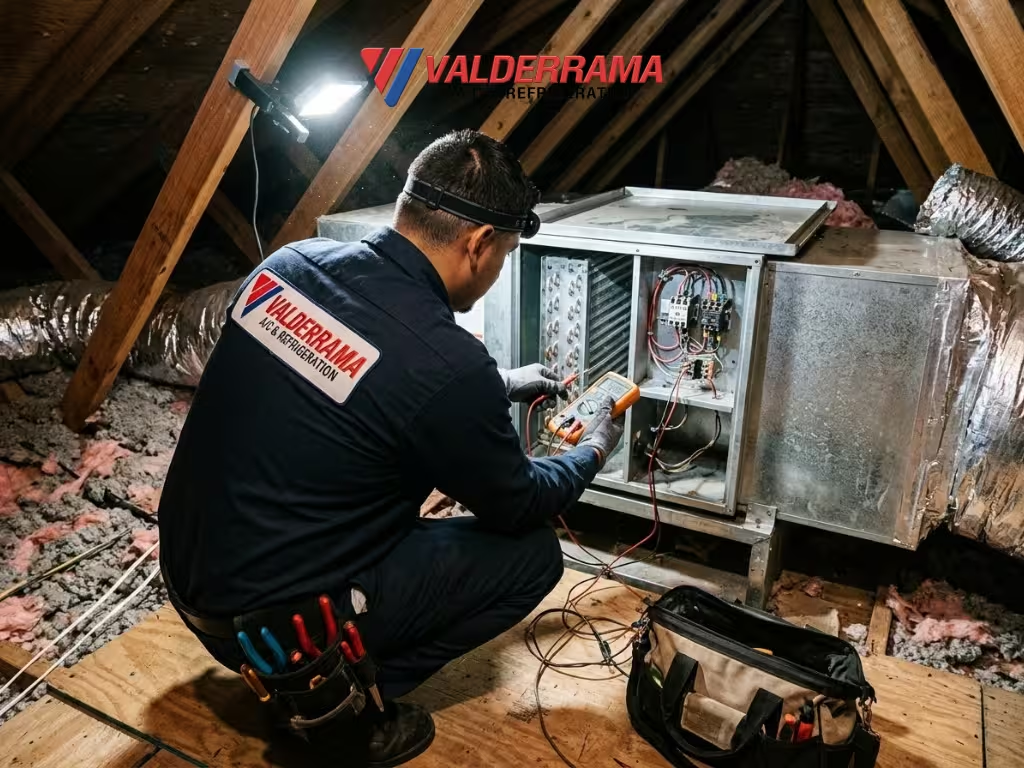
How Auxiliary Heat Operates Within a Heat Pump System
To grasp why auxiliary heat turns on, it helps to understand how a standard electric heat pump functions during cold weather.
In normal heating mode, an electric heat pump does not burn gas or use red-hot elements to create thermal energy; it absorbs ambient heat from the outdoor air using circulating chemical refrigerant and transfers that warmth into your rooms. This process is remarkably energy-efficient, delivering three to four times more heat energy than the electricity it consumes.
However, as outdoor temperatures drop, there is less ambient thermal energy readily available for the outdoor coil to absorb. At the same time, cold drafts cause your home to lose heat faster through windows, walls, and ceiling framing.
Eventually, the outdoor temperature reaches what HVAC engineers call the thermal balance point (usually between 30°F and 35°F for standard heat pumps). At this threshold, the heat pump’s heating capacity matches the exact heat loss of your building.
When outdoor temperatures dip below that balance point—or if you raise the thermostat setpoint by three or more degrees at once—the primary heat pump needs assistance. That is when the system automatically engages auxiliary heat:
- Electric current flows through dense nichrome wire coils (electric resistance heat strips) mounted inside your indoor air handler.
- These coils heat up like giant toaster elements.
- The indoor blower fan pushes return air across both the warm refrigerant coil and the glowing electric heat strips, delivering an extra boost of warmth to bridge the temperature gap.
- Once the thermostat reaches your desired temperature, the system shuts off the auxiliary strips and returns to standard heat pump operation.
The Houston Factor: Why Local Climate Makes Auxiliary Heat Costly
Operating heating equipment in Southeast Texas involves an entirely different dynamic than running a furnace in northern states.
Houston’s heat and humidity place extreme strain on AC systems. Because our local cooling season frequently stretches across nine to ten months of the year, equipment here logs thousands of running hours. Central systems must continually remove massive volumes of latent moisture through long, humid summers, making high cooling efficiency the primary design goal for local homes.
Because our winter freezes are relatively brief and intermittent, heat pumps are an ideal match for our climate. However, because property owners run heating so infrequently, auxiliary heat can catch them by surprise:
- During long summer stretches, dust settles across the dormant electric heat strips in hot, humid attics. When auxiliary heat kicks in during a freeze, that dust burns off instantly, creating a temporary burning smell that alarms many homeowners.
- Because electricity rates apply across the entire home, running 10 kW to 20 kW electric resistance heat strips for hours on end draws tremendous electrical current, resulting in a sudden, sharp spike on your winter utility statement.
- If summer humidity caused electrical contactors or relays to stick, your auxiliary heat strips might run continuously in the background without your knowledge, even during mild 55°F weather.
Causes of Excessive Auxiliary Heat Activation
While auxiliary heat should activate occasionally during sub-freezing mornings, frequent or constant activation points to an underlying equipment issue:
- Clogged Air Filters and High Static Pressure: A dust-choked air filter chokes off airflow across the indoor evaporator coil. Restricted airflow limits heat transfer from the refrigerant loop, preventing the heat pump from satisfying the thermostat and forcing the system into auxiliary mode.
- Low Refrigerant Charge from Microscopic Leaks: A heat pump requires an exact chemical refrigerant charge to transfer heat. If a pinhole leak develops along copper lines or coils, the system loses heating capacity, prompting the thermostat to engage auxiliary heat strips to make up the difference.
- Stuck or Faulty Defrost Controls: On freezing, humid mornings, frost forms on the outdoor coil. The unit engages a temporary defrost cycle to melt the frost. If a defrost control board or sensor fails, the outdoor coil encases itself in solid ice, stopping heat transfer and leaving the home running entirely on auxiliary heat.
- Thermostat User Habits (The “Cranking” Factor): Setting your thermostat to 68°F at night and suddenly pushing it up to 73°F in the morning signals a five-degree deficit. Modern digital thermostats interpret any gap larger than two or three degrees as an emergency, instantly turning on auxiliary heat strips to catch up.
Symptoms: 5 Signs You Need Heating Diagnostic Service
Do not ignore unusual heating behavior during winter cold snaps. Contact a licensed mechanical contractor if you notice any of these five warning signs:
- The “AUX Heat” Indicator Never Shuts Off: The backup heat icon stays lit on your thermostat screen for hours at a time, even when outdoor temperatures climb into the 50s.
- Sudden, Dramatic Spikes in Winter Electric Bills: Your monthly power statements double or triple during mild winter weather, indicating the system is relying on resistance strips instead of the efficient compressor.
- Vents Blowing Lukewarm Air in Heating Mode: The system runs continuously, but air coming from registers feels tepid, drafty, or room-temperature instead of warm.
- The Outdoor Unit Is Encased in Heavy, Solid Ice: A light frost that clears during defrost cycles is normal, but an outdoor cabinet covered in thick sheets of solid ice indicates a failed defrost control board or reversing valve.
- Frequent Circuit Breaker Trips: The high electrical current drawn by auxiliary heat strips trips the heating breaker at your main electrical panel, pointing to degraded wiring or a failing heating element.
If your system is stuck in backup mode or struggling to heat your home, visit our heating and repair service to have a licensed specialist evaluate your heat pump before high electric bills take a toll.
Practical DIY Checks to Safeguard Your System
Before calling for technical service during cold weather, perform these four simple, safe homeowner checks:
- Inspect and Replace the Air Filter: Slide your return filter out and examine it. If you cannot see light passing through the pleated material, replace it immediately to restore proper airflow across the indoor coils and prevent unnecessary auxiliary calls.
- Adjust the Thermostat in Gradual Steps: Avoid jumping your thermostat setpoint by more than two degrees at a time. If you want to raise the temperature from 68°F to 72°F, adjust it to 70°F first, let the heat pump satisfy that call, and then bump it to 72°F to keep auxiliary strips off.
- Clear Outdoor Coil Obstructions: Walk outside and ensure fallen leaves, landscape mulch, and garden debris leave at least 24 inches of clear space around the outdoor cabinet so the fan can pull ambient air freely across the coil.
- Inspect the Main Electrical Panel: Check your electrical panel for switches labeled “Air Handler,” “Heat Strip,” or “Heat Pump.” If a breaker has tripped to the center position, reset it firmly. If it trips again immediately, leave it off and call a professional.
When to Call a Licensed Heating Professional
While changing filters and making modest thermostat adjustments are great DIY habits, high-voltage circuits, sealed refrigerant lines, and electronic control boards require certified diagnostic instruments and safety training.
Call an authorized HVAC technician immediately if you encounter:
- A persistent burning, acrid electrical smell coming from your registers or indoor air handler cabinet that lasts longer than 30 minutes.
- An outdoor heat pump that remains completely silent while the auxiliary heat strips handle the entire load.
- Refrigerant leaks, indicated by hissing sounds along copper lines or oily residue around fittings.
- A thermostat that displays an equipment error code or refuses to cycle auxiliary heat off.
Prevention Tips: Keeping Auxiliary Heat Costs Down
Proactive maintenance is the most effective way to keep your heat pump running efficiently and prevent unnecessary auxiliary heat use:
- Maintain a Strict Filter Schedule: Replace basic 1-inch pleated filters every 30 to 60 days, and inspect 4- to 5-inch media cartridges every 6 to 12 months.
- Keep Supply and Return Registers Clear: Never close off more than 10% of the vents in your home, and ensure furniture and area rugs are not blocking return grilles. Restricting airflow strains the blower motor and triggers backup heat.
- Use a Smart, Heat-Pump-Compatible Thermostat: Install a smart thermostat programmed specifically for heat pumps. Modern algorithms manage temperature recovery gradually, bringing the home to temperature without activating energy-draining auxiliary coils.
- Schedule an Annual Fall Heating Tune-Up: Have a licensed technician inspect the system every fall to verify refrigerant pressures, clean coils, test the defrost cycle, and ensure the auxiliary heat relays open and close properly.
Why Choose Valderrama A/C & Refrigeration?
Keeping your property comfortable and energy-efficient through every season requires a mechanical partner who understands the unique engineering challenges of local architecture and climate. Choosing our family-owned company gives you access to:
- Clear, Upfront Flat-Rate Pricing: We deliver itemized written quotes before starting any mechanical work—eliminating hidden trip charges, unexpected add-ons, or surprise emergency fees.
- Licensed Texas Mechanical Specialists: Our technicians hold active TDLR credentials, carry full insurance, and receive regular training on modern variable-speed inverter heat pumps, dynamic airflow balancing, and SEER2 building codes.
- Complete System Care: From simple electric heat strip relay replacements to complete high-efficiency heat pump installations, we deliver durable, code-compliant comfort solutions built to last.
Frequently Asked Questions About Auxiliary Heat
Q: What is the difference between auxiliary heat and emergency heat?
A: Auxiliary heat turns on automatically to supplement the heat pump when outdoor temperatures drop too low for the compressor to handle the heating load alone. Emergency heat is a manual setting on your thermostat that shuts off the outdoor heat pump entirely, forcing your home to run 100% on expensive electric resistance heat strips or a backup gas furnace.
Q: Why does auxiliary heat smell like burning dust?
A: Because heat pumps handle cooling throughout our long, humid summers, the indoor electric resistance heat strips sit unused for months, collecting household dust. When auxiliary heat engages for the first cold snap of the season, that dust bakes off the elements. The odor is normal and should dissipate within 20 to 30 minutes.
Q: Can I run emergency heat to warm my house faster?
A: No. Switching to emergency heat does not warm your home any faster than normal heating. It simply locks out your energy-efficient outdoor compressor, running your indoor electric heat strips exclusively and causing your electric bill to increase dramatically.
Q: At what outdoor temperature should auxiliary heat turn on?
A: For most standard residential heat pumps, auxiliary heat begins assisting when outdoor temperatures drop below 30°F to 35°F. Modern variable-speed inverter cold-climate heat pumps can operate efficiently down to 5°F or lower before requiring auxiliary support.
Q: Why does my heat pump blow cool air when auxiliary heat turns off?
A: Heat pumps deliver warm air around 90°F to 100°F, whereas auxiliary heat strips can boost air temperatures to 115°F or higher. While 95°F air will warm a 70°F room efficiently, it is slightly below normal human skin temperature (98.6°F), making the airflow feel cooler to the touch compared to the intense heat of the auxiliary strips.
Take Control of Your Winter Heating Bills Today
You do not have to stress over glowing thermostat warnings, cold drafts, or surprise electric bills during sudden winter cold snaps. Knowing what is auxiliary heat gives you the insight needed to manage your thermostat efficiently, spot mechanical malfunctions early, and keep your property warm without wasting energy.
At Valderrama A/C & Refrigeration, we take pride in delivering honest technical evaluations, skilled mechanical craftsmanship, and dependable service across our local communities.
Ready to ensure your heat pump is operating at peak efficiency before the next freeze?
Schedule Your Precision Heating and Heat Pump Inspection Today!
Call our team directly at (281) 974 – 4599 to speak with an experienced comfort specialist and confirm your service visit!