
Yes, asking do hvac technicians need to be licensed in Texas has a strict legal answer. Anyone performing heating, air conditioning, or refrigeration work must hold a license or registration issued by the Texas Department of Licensing and Regulation (TDLR), maintain an EPA Section 608 certification, and operate under an active licensed ACR Contractor.
The Costly Gamble of the “Cheap Handyman”
It is 3:00 PM on a sweltering Tuesday afternoon. The ambient temperature outside has pushed past 98°F with a heat index nearing 110°F. Inside your living room or commercial building, the thermostat reads an alarming 84°F, and the air blowing from your vents feels completely warm.
Desperate for immediate relief, you look through online marketplaces or neighborhood classifieds and find someone advertising same-day air conditioning repair at half the rate of established companies. They arrive in an unmarked truck, carry minimal diagnostic equipment, and tell you that you simply need a “quick Freon top-off” and a bypassed safety switch.
A day later, your outdoor unit stops running completely, your circuit breaker trips, and you are left facing thousands of dollars in compressor damage with no way to reach the person who worked on it.
This costly scenario happens all too often. Heating and cooling equipment involves high-voltage electricity, flammable or high-pressure chemical refrigerants, and sensitive mechanical components. Wondering do hvac technicians need to be licensed is not just a legal question—it is about protecting your property, your family’s safety, and your financial investment. At Valderrama A/C & Refrigeration, we believe property owners deserve total transparency about technician qualifications, state regulations, and contractor standards.
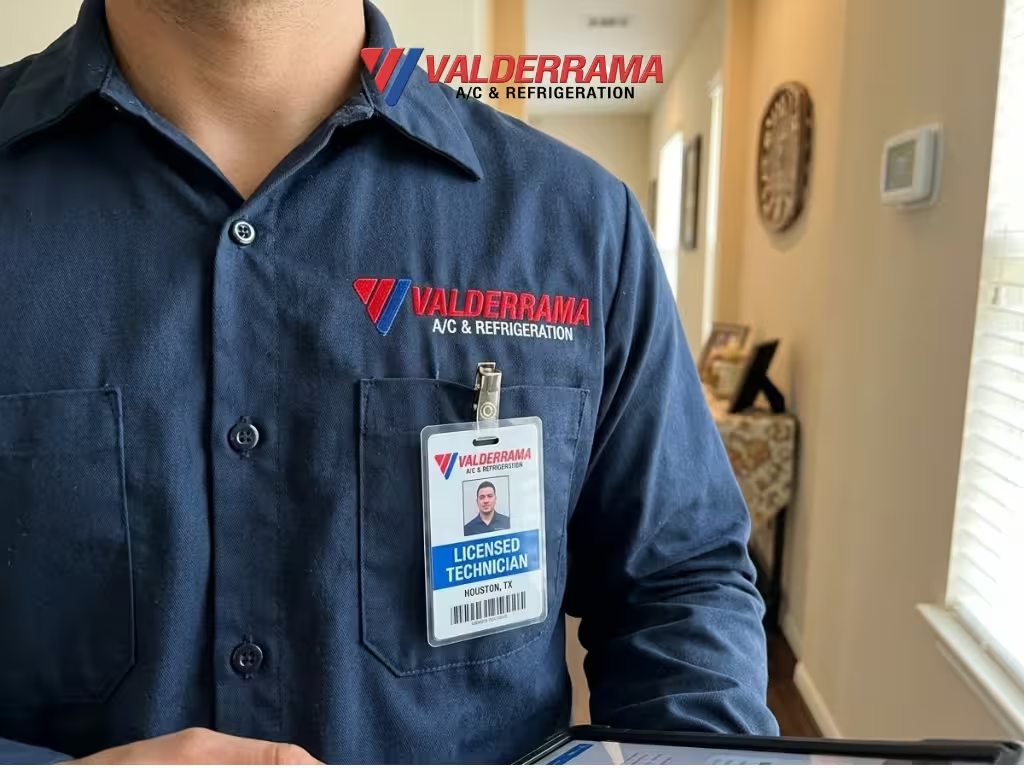
The Houston Factor: Why Local Climate Requires Legitimate Licensing
Servicing heating and cooling machinery in Southeast Texas demands advanced technical training that casual handymen simply do not possess.
Houston’s heat and humidity place extreme strain on AC systems. Because our local cooling season routinely stretches from March through November, air conditioning systems operate under prolonged, punishing duty cycles. Systems must simultaneously lower sensible heat (air temperature) and remove massive volumes of latent heat (airborne moisture).
Our thick relative humidity turns unmaintained coils into breeding grounds for biological slime, accelerates electrical capacitor wear, and pushes compressor pumps to their thermal limits. When an unlicensed worker guesses on a refrigerant charge, fails to calculate duct static pressure, or improperly wires a 240-volt contactor switch, the equipment will break down fast under our regional heat. In Texas, state licensing ensures that the person working on your equipment understands the thermodynamic and electrical science required to keep systems running safely in extreme weather.
5 Signs You Need HVAC Diagnostic Service Right Now
Do not wait for your comfort equipment to fail completely during a dangerous summer heatwave or a sudden winter freeze. Contact a licensed mechanical contractor if you notice any of these five common warning signs:
- Warm or Lukewarm Vent Airflow: The indoor blower fan is spinning, but the air coming out of your ceiling registers feels weak, sluggish, or warm.
- Unexplained Utility Bill Surges: Your monthly electricity statement shows a sharp, unexplained increase in energy consumption compared to the same month last year.
- Loud Rattling, Squealing, or Buzzing Sounds: Mechanical noises echoing from the outdoor condenser or indoor air handler, indicating failing motor bearings, loose fan blades, or a worn electrical contactor.
- Persistent Clamminess and High Indoor Humidity: The thermostat displays your target temperature, but your skin feels clammy and rooms feel stuffy, indicating improper cooling and dehumidification cycles.
- Water Pooling Around the Indoor Air Handler: Condensate drain lines backed up with algae and dirt, which causes overflow pans to spill and risks ceiling water damage.
If you manage an office building, retail property, or industrial space, system performance issues can disrupt your business operations and risk expensive inventory loss. Explore our dedicated commercial HVAC services to see how precision commercial engineering protects your business assets.
Texas Licensing Laws Explained: TDLR Credentials
In the state of Texas, the HVAC industry is strictly regulated by the Texas Department of Licensing and Regulation (TDLR). Understanding the hierarchy of licensing helps you know exactly who is working on your property:
- Licensed ACR Contractor (Class A or Class B): This is the master-level license required to operate an HVAC business, pull municipal permits, and contract directly with the public. A Class A license holder can work on units of any size, while a Class B license holder is limited to cooling systems under 25 tons and heating systems under 1.5 million BTUs. Obtaining this license requires passing rigorous exams and proving years of verified, full-time field experience under another licensed contractor.
- Certified ACR Technician: A technician who has completed a state-approved training program or accumulated verified field experience and passed the comprehensive TDLR technician certification exam.
- Registered ACR Technician: An individual registered with the state who has passed criminal background checks and is legally authorized to assist on installations and repairs under the direct supervision of a licensed contractor.
- EPA Section 608 Certification: Mandated by federal law, this certification is required for any technician who buys, handles, recovers, or charges chemical refrigerants.
Why Professional Service Matters: The Hidden Costs of Unlicensed Work
Hiring an unlicensed worker to save a few dollars on the upfront quote introduces serious financial and safety liabilities:
- Voided Manufacturer Warranties: Leading equipment brands explicitly require that maintenance and repairs be performed by a licensed HVAC contractor. If an unlicensed person works on your system, the manufacturer can immediately void your 10-year parts warranty.
- Insurance Claim Denials: If an unpermitted or unlicensed installation leads to an electrical fire, refrigerant explosion, or ceiling-destroying condensate leak, your homeowner or commercial property insurance policy can deny your damage claim.
- High-Voltage and Carbon Monoxide Hazards: Central air conditioning systems run on 240-volt electrical circuits and store dangerous electrical charges in starting capacitors even when the breaker is off. Gas furnaces produce deadly combustion byproducts. Licensed technicians have the training and specialized instruments required to handle these systems safely.
- Environmental Law Violations: Venting refrigerant into the atmosphere is illegal under federal law, carrying significant environmental fines.
How to Verify an HVAC License in Texas
Never take a contractor’s word for granted. You can verify any contractor’s operational standing in seconds:
- Check the Company’s Advertising: In Texas, licensed contractors are legally required to display their TDLR license number on all service vehicles, websites, invoices, and marketing materials (e.g., TACLA000000C).
- Search the TDLR Database: Visit the official Texas Department of Licensing and Regulation website and search by the contractor’s name, company name, or license number.
- Confirm Insurance Coverage: Verify that the contractor maintains commercial general liability insurance. In Texas, a Class A contractor must carry at least $300,000 per occurrence in liability coverage.
Why Choose Valderrama A/C & Refrigeration?
We understand that protecting your property requires a service partner you can trust without reservation. When you work with our family-owned team, you get:
- Fully Licensed Texas Master Contractors: We maintain active, clean TDLR licensing and comprehensive commercial general liability insurance, ensuring every job meets current municipal building codes.
- Clear, Upfront Flat-Rate Pricing: We provide itemized written quotes before starting any mechanical work—eliminating hidden trip charges, unexpected add-ons, or surprise emergency fees.
- Background-Checked, Certified Technicians: Our technicians are systematically trained in modern variable-speed inverter systems, heat pumps, dynamic airflow balancing, and the latest SEER2 efficiency guidelines.
Frequently Asked Questions About HVAC Licensing
Q: Can a general handyman legally repair an air conditioner in Texas?
A: No. In Texas, it is illegal for anyone to diagnose, repair, or install air conditioning, heating, or refrigeration equipment without a TDLR contractor license or registration working under a licensed contractor. Handymen are legally limited to basic tasks like replacing standard air filters or clearing leaves around an outdoor unit.
Q: What is the difference between a Class A and Class B HVAC license in Texas?
A: A Class A license allows the contractor to engineer, install, and service heating and cooling equipment of any size or tonnage. A Class B license restricts the contractor to cooling systems of 25 tons and under and heating systems of 1.5 million BTUs/hour and under.
Q: Does a technician need a special license to add refrigerant to my AC?
A: Yes. Technicians must hold an EPA Section 608 Certification to purchase or handle chemical refrigerants, as well as a TDLR technician registration or contractor license to work on the system.
Q: How do I know if an HVAC contractor is properly insured?
A: You can request a Certificate of Insurance (COI) directly from the contractor. Additionally, the TDLR will not issue or renew an active contractor license without verified proof of active commercial general liability insurance on file.
Q: Do I need a licensed contractor to pull a permit for an AC replacement in Houston?
A: Yes. The City of Houston and surrounding municipalities require mechanical permits for complete HVAC replacements, and these permits can only be pulled by a licensed TDLR Air Conditioning and Refrigeration Contractor.
Protect Your Investment with Licensed, Professional Service
You do not have to put your comfort, property safety, or equipment warranties at risk by working with uncertified workers. Knowing that hvac technicians need to be licensed gives you the confidence to demand verified credentials, professional craftsmanship, and code-compliant installations every single time.
At Valderrama A/C & Refrigeration, we take pride in delivering honest, dependable heating, cooling, and air quality care backed by master-level Texas licensing and transparent pricing.
Ready to schedule service with a fully licensed and insured HVAC team?
Schedule Your Licensed HVAC Diagnostic Inspection Today!
Call our local office directly at (281) 974 – 4599 to speak with an experienced specialist and confirm your service visit!