
A comprehensive answer to what does an hvac service include covers a multi-point mechanical, electrical, and thermodynamic audit. This includes chemical condenser coil washouts, electrical capacitor and contactor testing, refrigerant subcooling analysis, condensate line flushing, blower motor calibration, and safety control verifications to ensure optimal performance.
Beyond the Quick Filter Check
It is 1:00 PM on a sweltering Tuesday afternoon. You open your front door to greet an HVAC technician you hired for a seasonal maintenance visit. They walk in with a clipboard, glance at your thermostat, swap out a standard 1-inch return air filter, shine a flashlight into the furnace cabinet for three minutes, and hand you an invoice for $150 before heading back to their truck.
You are left standing in your hallway wondering: Is that really all there is to it?
This frustrating experience happens far too often across our industry. When property owners book a preventative maintenance visit, they expect an in-depth mechanical tune-up that protects their investment, not a superficial visual inspection. A modern heating, ventilation, and air conditioning network is a complex system involving high-voltage electrical circuits, pressurized chemical lines, and balanced airflow dynamics.
Knowing what does an hvac service include helps you hold contractors accountable, spot cut corners, and ensure your system receives the technical care required to run reliably through demanding weather. At Valderrama A/C & Refrigeration, we believe in complete operational transparency. Here is the full scope of what a professional, code-compliant HVAC service must deliver.
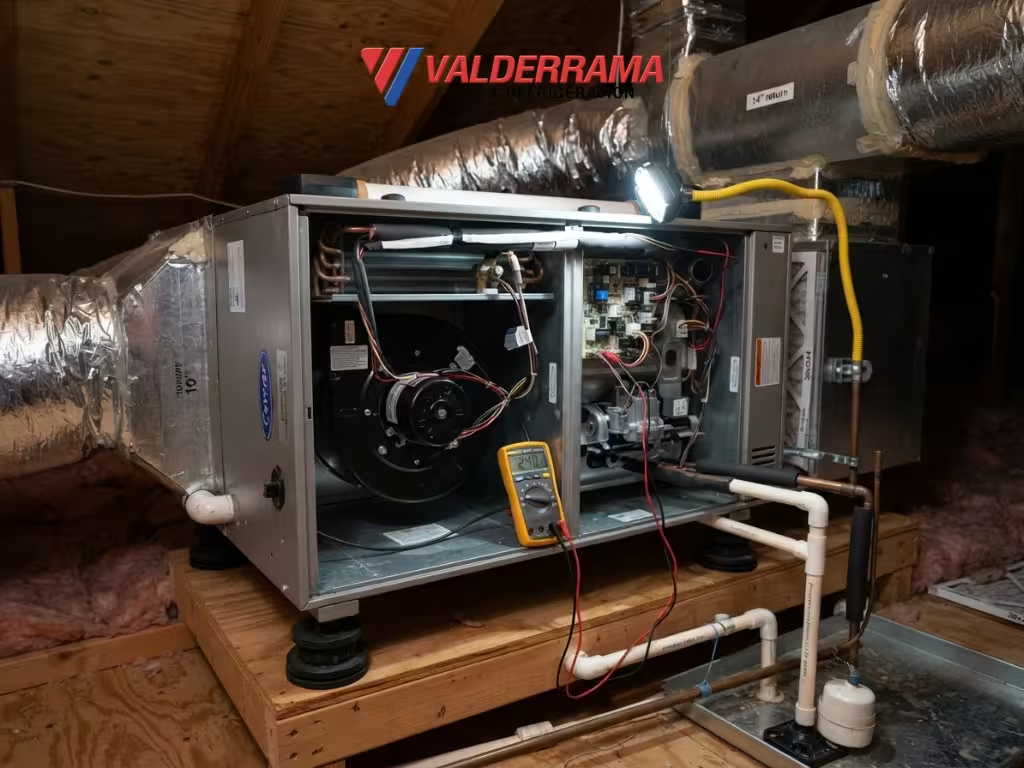
The Houston Factor: Why Local Climate Requires a Rigorous Service Scope
Servicing a heating and cooling setup in a mild, dry climate is relatively straightforward; maintaining an HVAC system in Southeast Texas demands a much more comprehensive engineering approach.
Houston’s heat and humidity place extreme strain on AC systems. Because our local cooling season routinely stretches from early March through late November, systems here accumulate double or triple the annual running hours of equipment operating in northern states.
Our thick coastal humidity introduces a massive “latent load” on your equipment. Your air conditioner cannot focus solely on dropping the room temperature; it must also pull hundreds of gallons of moisture out of your indoor air every week.
When high humidity mixes with airborne dust, pollen, and roadway grime, the outdoor condenser fins become caked in an insulating layer of dirt. Meanwhile, the dark, damp indoor evaporator coil becomes prime territory for biological slime. If a service technician skips chemical coil cleanings or ignores condensate drain lines, your system will struggle with high static pressure, overwork its compressor, and risk a sudden breakdown during peak summer heat.
5 Signs You Need HVAC Maintenance Service Right Now
Do not wait for your comfort equipment to fail completely during a triple-digit heatwave or a sudden winter freeze. Contact a licensed professional if you notice any of these five common warning signs:
- Weak or Lukewarm Supply Airflow: The indoor blower fan is running, but the air coming out of your ceiling registers feels weak, sluggish, or warm.
- Unexplained Utility Bill Surges: Your monthly electricity statement shows a sharp, unexplained increase in energy consumption compared to the same month last year.
- Frequent, Rapid Short-Cycling: The unit turns on, runs for three to four minutes, shuts down abruptly, and cycles back on moments later without completing a proper cooling cycle.
- Musty Odors or Standing Drain Water: Sour, musty smells blowing from your registers, or standing water collecting in the emergency drain pan beneath your indoor air handler.
- Unusual Rattling, Squealing, or Buzzing Sounds: Mechanical noises echoing from the outdoor condenser or indoor air handler, indicating failing motor bearings, loose fan blades, or a worn electrical contactor.
If your system is displaying any of these performance warning signs, head over to Valderrama A/C & Refrigeration to schedule a comprehensive diagnostic checkup before small problems turn into costly repairs.
The 20-Point Professional HVAC Service Checklist
A legitimate professional HVAC service is divided into three distinct operational categories: cooling components, heating systems, and general airflow safety.
| COMPREHENSIVE HVAC SERVICE SCOPE | ||
| AIR CONDITIONING | HEATING & SAFETY | SYSTEM-WIDE |
| Chemical Coil Wash | Heat Exchanger Check | Airflow Balance |
| Subcooling/Superheat | Burner/Element Test | Filter Audit |
| Capacitor Testing | Flue Gas Venting | Drain Line Flush |
| Contractor Inspection | Limit Switch Safety | Thermostat Test |
1. Air Conditioning & Cooling Diagnostics
- Condenser Coil Chemical Wash: Technicians thoroughly spray the exterior aluminum fins with non-acidic foaming cleaner to wash away trapped dirt, bugs, and grass clippings, restoring proper heat rejection.
- Refrigerant Charge Verification: Measuring suction and liquid line pressures to calculate exact superheat and subcooling levels, confirming the charge matches factory specifications down to the ounce.
- Electrical Capacitor & Contactor Testing: Measuring microfarad ratings on dual-run capacitors with a digital multimeter and checking copper contactor points for pitting or carbon buildup.
- Compressor & Motor Amperage Checks: Measuring operational amp draw on the compressor and outdoor fan motor against manufacturer Rated Load Amps (RLA) to catch failing motor windings early.
2. Heating & Furnace Safety Audits
- Heat Exchanger Integrity Inspection: Inspecting the metal combustion chamber using specialized fiber-optic cameras to check for hairline cracks that could leak dangerous carbon monoxide into your living areas.
- Burner Assembly Cleaning & Ignition Testing: Cleaning furnace burner tubes, polishing the flame sensor rod, and testing electric igniters or pilot assemblies for smooth ignition.
- Safety Limit Switch Verification: Testing high-limit switches and rollout sensors to confirm the furnace shuts off automatically if internal temperatures exceed safe operating limits.
- Flue Pipe & Draft Inducer Inspection: Verifying the exhaust flue pipe is properly sealed, free of blockages, and venting toxic combustion gases safely out through your roof.
3. System-Wide Airflow & Drainage Care
- High-Pressure Condensate Line Flush: Clearing the primary drain line with pressurized nitrogen or water and adding slow-dissolving antimicrobial tablets to prevent algae clogs and ceiling leaks.
- Blower Assembly Inspection: Checking the blower wheel for dust accumulation, checking motor bearings, and measuring static pressure across the return and supply plenums.
- Thermostat Calibration & Cycle Testing: Verifying that your digital thermostat accurately reads room temperature and cycles the equipment on and off smoothly.
If you oversee a corporate facility, warehouse, or retail space, keeping these mechanical assets running smoothly requires specialized commercial capability. Explore our commercial HVAC maintenance to see how precision planned maintenance prevents unexpected facility downtime.
Why Professional Service Matters: The Risks of Incomplete Maintenance
An HVAC tune-up involves high-voltage electrical circuits and pressurized chemical refrigerants. Cutting corners with an untrained handyman or relying on quick DIY checks introduces real hazards:
- Protecting Manufacturer Parts Warranties: Major heating and cooling manufacturers explicitly require documented annual maintenance by a licensed contractor to keep factory parts warranties valid. If an unmaintained compressor fails, the claim can be denied.
- High-Voltage Safety: Central air systems run on 240-volt circuits, and starting capacitors hold dangerous charges even when power is turned off. Licensed technicians have the training and safety equipment to test high-voltage components safely.
- Preventing Carbon Monoxide Leaks: In gas heating setups, improper burner alignment or undetected heat exchanger cracks present serious health risks. Certified technicians use specialized combustion analyzers to confirm your furnace burns cleanly and safely.
Why Choose Valderrama A/C & Refrigeration?
We treat every residential and commercial maintenance visit as a detailed mechanical audit. When you partner with our family-owned team, you get:
- Transparent, Flat-Rate Pricing: We provide an itemized quote before starting any work—no hidden dispatch fees, surprise surcharges, or aggressive upsell tactics.
- Licensed Texas Mechanical Specialists: Our technicians are background-checked, insured, and thoroughly trained in modern variable-speed inverter systems, heat pumps, and complex commercial split networks.
- Comprehensive Service Documentation: You receive a detailed digital report of every voltage reading, pressure check, and system metric we record during your service visit.
Frequently Asked Questions About HVAC Service
Q: How long should a professional HVAC service visit take?
A: A complete, code-compliant maintenance visit for a single central split system should take between 60 and 90 minutes. If a technician finishes their entire inspection in under 20 minutes, they have skipped essential steps like cleaning the outdoor coils, testing electrical draw, and clearing the condensate line.
Q: How often should an HVAC system be serviced?
A: A central HVAC system should be professionally serviced twice a year—once in the spring for your air conditioning and once in the fall for your heating equipment. If you use a heat pump that provides both heating and cooling year-round, biannual inspections are especially critical.
Q: Is cleaning the outdoor condenser coils included in a standard tune-up?
A: Yes, thorough cleaning of the outdoor condenser coils is a core part of any legitimate HVAC service. Skipping this step leaves dirt and debris trapped in the fins, forcing the compressor to run hotter and driving up your monthly electric bills.
Q: Does regular HVAC maintenance actually lower my monthly energy bills?
A: Yes. According to the U.S. Department of Energy, a properly maintained heating and cooling system runs up to 15% more efficiently than a neglected one. Cleaning coils, adjusting blower speeds, and verifying refrigerant levels all reduce the electrical power your system needs to keep your building comfortable.
Q: What is the difference between an HVAC inspection and an HVAC tune-up?
A: An inspection is primarily diagnostic: the technician assesses the physical condition and safety of your equipment, often during a home sale. A tune-up includes that same diagnostic assessment plus active mechanical maintenance—such as chemical coil cleanings, electrical calibrations, lubrications, and drain line treatments.
Protect Your Comfort and Keep Your System Running Smoothly
You do not have to settle for hurried, superficial contractor visits or wonder whether your heating and cooling equipment is ready for extreme weather. Knowing what does an hvac service include gives you the confidence to demand thorough, professional maintenance that protects your equipment and keeps your energy bills low.
At Valderrama A/C & Refrigeration, we take pride in delivering honest, dependable heating, cooling, and air quality care to families and businesses across our local communities.
Ready to schedule a thorough, multi-point tune-up for your property?
Book Your Complete Professional HVAC Service Today!
Call our team directly at (281) 974 – 4599 to speak with an experienced comfort specialist and confirm your service visit!