
The fundamental science of how hvac works centers on thermodynamic heat transfer and airflow management. Rather than creating cold air, an HVAC system absorbs heat energy from indoor air and vents it outdoors using circulating chemical refrigerant, while reversing that cycle or igniting fuel in winter to deliver filtered warmth through balanced ductwork paths.
The Complex Machinery Behind the Sheetrock
It is 2:30 PM on a sweltering Tuesday afternoon. You walk up to your wall-mounted digital thermostat, lower the setpoint to 72°F, and hear a soft electrical click inside the wall. Seconds later, a steady hum resonates from your mechanical closet or attic, while outside on the patio, a heavy metal fan begins spinning, pushing waves of intense heat up into the summer sky. Within minutes, cool, crisp air flows out of your ceiling vents, transforming a hot living room into a comfortable sanctuary.
Most of us take this daily comfort loop for granted. We treat our thermostats like basic light switches: lower the number, feel the breeze, and carry on.
However, when certain rooms feel humid and sticky, an unfamiliar rattle develops behind the drywall, or your electric bill spikes without warning, that hidden mechanical network demands attention.
Learning how hvac works pulls back the curtain on the hardest-working, most expensive mechanical equipment in your home. When you understand the basic physics of heat transfer, condensation drainage, and airflow balance, you can spot early warning signs, ask the right questions during service visits, and prevent minor wear from turning into an expensive emergency replacement. At Valderrama A/C & Refrigeration, we treat indoor climate management as a precise science. Here is how your heating, ventilation, and cooling components work together.
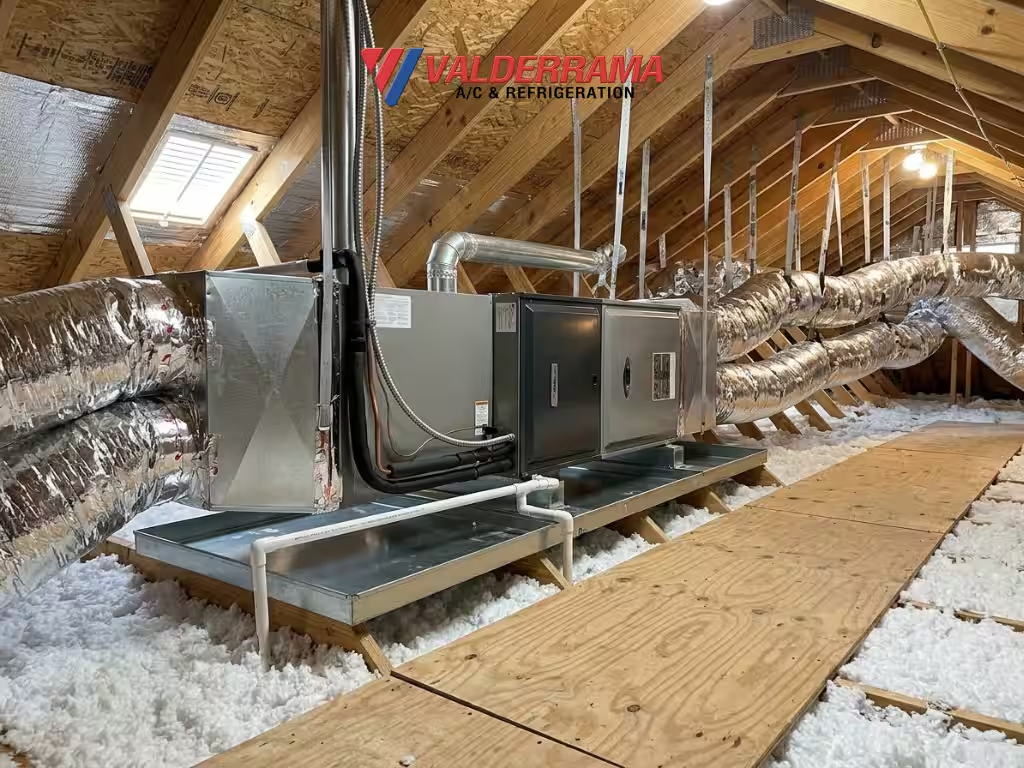
The Core Physics: Moving Heat Instead of Creating Cold
To grasp how an HVAC system operates, it helps to keep a core rule of thermodynamics in mind: cold cannot be created; cold is simply the absence of heat.
An air conditioner does not spray cold air into your home like a garden hose sprays water. Instead, your HVAC system acts like a mechanical sponge that continuously soaks up unwanted heat energy from your indoor rooms and carries it outside. In the winter, the process reverses: the system either extracts ambient heat from the outdoor air or ignites fuel to generate thermal energy, circulating that warmth through your living spaces.
The process operates through three clear physical stages:
- Stage 1: Indoor Heat Absorption: The evaporator coil absorbs heat from household air while condensing airborne humidity into liquid runoff.
- Stage 2: Outdoor Heat Rejection: The compressor pressurizes refrigerant gas, and the outdoor condenser coil releases the captured heat into the open air.
- Stage 3: Air Re-Circulation: The indoor blower fan pushes freshly filtered, conditioned air through sealed, insulated ductwork into every room.
The Three Core Cycles of an HVAC System
A central HVAC installation relies on three distinct operational cycles: cooling, heating, and continuous ventilation.
1. The Cooling Cycle (The Refrigeration Loop)
Cooling relies on a continuous loop of a chemical compound called refrigerant, which easily transitions between a liquid and a gas at low temperatures:
- Step 1: Evaporation (Indoor Heat Absorption): The indoor blower draws warm household air across the cold, finned evaporator coil. The chilled liquid refrigerant inside the coil absorbs heat energy from the passing air. As it absorbs this heat, the refrigerant boils into a low-pressure, warm gas, while the cooled air is pushed back into your living areas.
- Step 2: Compression (Outdoor Pressurization): The warm refrigerant gas travels through an insulated copper line to the outdoor compressor. The compressor tightly squeezes the gas molecules together, raising the refrigerant’s pressure and temperature (often above 140°F).
- Step 3: Condensation (Outdoor Heat Rejection): This hot, pressurized gas moves into the outdoor condenser coil. A large fan pulls exterior air across the metal fins, cooling the refrigerant down so it condenses back into a high-pressure liquid, releasing the heat it absorbed from your house into the outside air.
- Step 4: Expansion (Pressure Drop): The liquid refrigerant passes through a metering device or thermal expansion valve (TXV). This valve abruptly drops the refrigerant’s pressure, causing its temperature to plummet below 40°F before it enters the indoor evaporator coil to repeat the cycle.
2. The Heating Cycle (Combustion or Heat Pump Transfer)
When cooler weather arrives, your system shifts into heating mode through one of two methods:
- Combustion Furnaces: A natural gas, propane, or electric furnace ignites burners inside a sealed heat exchanger. This combustion warms the exterior metal walls of the chamber. The indoor blower fan pushes return air across this hot metal surface, heating the air before sending it into your ductwork, while combustion byproducts vent safely outside through an exhaust flue.
- Heat Pumps: An electric heat pump uses a specialized component called a reversing valve to flip the refrigeration cycle. In winter, the outdoor coil absorbs ambient heat from the outside air, and the compressor pumps that heat indoors to warm your rooms without burning an ounce of fossil fuel.
3. The Ventilation Cycle (Airflow and Filtration)
A system cannot heat or cool without moving air. The ventilation network serves as your building’s circulatory system. The indoor blower motor draws air from your rooms through large return grilles, forces that air through high-efficiency air filters to capture floating dust, dander, and pollen, and pushes the freshly conditioned air through sealed supply ductwork to ceiling registers in every room.
The Houston Factor: How Coastal Humidity Strains the Mechanics
Where a building is located dictates how hard its mechanical components must work, and Southeast Texas presents one of the most demanding operating environments in North America.
Houston’s heat and humidity place extreme strain on AC systems. Because our local warm season often stretches from late March through November, a central air conditioning network here logs double or triple the annual running hours of an identical system in a milder northern climate.
Our dense coastal climate introduces a massive “latent heat load.” Your air conditioner cannot focus solely on dropping the temperature reading on your thermostat; it must simultaneously act as an industrial-grade dehumidifier, wringing hundreds of gallons of raw liquid water vapor out of your indoor air every week.
When high humidity mixes with intense heat, your entire mechanical network is tested:
- If your ductwork has small leaks inside a 135°F attic, your return lines pull in superheated, moisture-laden air, which ruins energy efficiency.
- If your indoor evaporator coil is starved of airflow due to a dirty filter, the moisture it pulls from the air freezes into a solid block of ice.
- If your condensate drain lines lack proper pitch, biological algae quickly forms in the standing water, triggering safety float switches that shut down your entire system to prevent ceiling leaks.
Causes of System Breakdown: Why Equipment Fails Early
When an integrated heating and cooling network suffers an operational failure, the issue typically stems from a few root mechanical causes:
- Restricted Airflow and High Static Pressure: A neglected, dust-clogged air filter acts like a mechanical choke point. Starved of adequate airflow across the evaporator coil, the refrigerant cannot absorb enough heat, which causes coil temperatures to plunge below freezing and encases the system in ice.
- Degraded Electrical Components: Sustained heat causes capacitors and contactor switches inside the outdoor condenser to run under high internal temperatures. Over time, their electrical storage capacity degrades, leading to hard starts, tripped breakers, and eventual motor burnout.
- Blocked Condensate Drain Lines: Because an AC system pulls massive volumes of water from humid air, the primary drain pan stays constantly wet. Dust, skin cells, and biological algae collect in the standing water, forming a thick gelatinous clog that trips safety float switches and floods surrounding ceilings.
Symptoms: 5 Signs You Need HVAC Diagnostic Service
Watch for these five clear mechanical and environmental warning signs that your heating and cooling equipment needs professional attention:
- Weak or Lukewarm Vent Airflow: The indoor blower fan is running, but air movement through the ceiling registers feels weak, or certain rooms remain significantly warmer than others.
- Unexplained Utility Bill Surges: Your electric statements show a sharp, unexplained increase in energy consumption compared to the same month last year under similar weather conditions.
- Loud Mechanical Rattles, Squeals, or Grinding: The indoor cabinet or outdoor condenser produces metallic scraping, sudden banging, or high-pitched squealing when cycling on.
- Persistent Indoor Clamminess and High Humidity: The thermostat reads 72°F, but the air feels sticky, stuffy, and damp, or condensation regularly fogs up your window glass.
- Rapid System Short-Cycling: The system kicks on, runs for three to four minutes, shuts off abruptly, and cycles back on moments later without completing a proper cooling cycle.
If you oversee a corporate facility, warehouse, or retail space, climate disruptions directly threaten customer comfort, worker safety, and sensitive inventory. Review our specialized commercial HVAC to see how precision commercial maintenance prevents unexpected facility downtime.
Practical DIY Checks to Safeguard Your System
Before calling for technical service, perform these four safe, straightforward homeowner checks to rule out simple operational issues:
- Examine the Air Filter: Slide your return filter out of its slot and hold it up to a light source. If light cannot easily pass through the pleated material, the filter is fully saturated and must be replaced immediately.
- Verify Thermostat Settings and Power: Confirm the thermostat is set to the correct mode (“Cool” or “Heat”), check that the target temperature is set at least three degrees past the room’s current temperature, and ensure the screen does not display a low-battery alert.
- Inspect the Main Electrical Breaker: Go to your home’s breaker panel and look for switches labeled “A/C,” “Furnace,” or “Air Handler.” If a breaker has tripped, it will rest in the middle position between “On” and “Off.”
- Clear the Exterior Unit Clearance: Clear away tall grass, fallen leaves, loose brush, and outdoor storage from the outdoor unit. Maintain at least 24 inches of open clearance on all sides so the condenser fan can pull air freely through the fins.
When to Call a Licensed HVAC Professional
While basic filter changes and perimeter clearing are ideal DIY tasks, high-voltage circuits and pressurized chemical refrigerant lines require licensed tools, technical diagnostic instruments, and safety training.
Call an authorized HVAC technician immediately if you encounter:
- Refrigerant leaks, signaled by hissing noises, ice on copper lines, or air blowing warm in cooling mode.
- Acrid, burning odors coming from supply registers or the indoor air handler cabinet.
- A circuit breaker that trips instantly every time the system tries to turn on.
- Water pooling around the indoor furnace platform or dripping through drywall ceilings.
Prevention Tips: Maximizing System Longevity and Efficiency
A central HVAC system is a major capital asset, and routine preventative care is the best way to safeguard that investment over its operational lifespan:
- Stick to a Strict Filter Schedule: Replace basic 1-inch pleated filters every 30 to 60 days. If your home has thick 4- or 5-inch media cartridges, inspect them quarterly and replace them every 6 to 12 months.
- Keep Internal Supply Registers Unobstructed: Never close off more than 10% of the supply vents in your home. Closing registers does not save energy; it increases duct pressure, strains the blower motor, and disrupts airflow balance.
- Flush the Condensate Drain Line: Pour a cup of distilled white vinegar into the primary condensate drain line access T-pipe every two to three months to dissolve algae and prevent standing drain clogs.
- Schedule Biannual Professional Maintenance: Have an experienced technician inspect the system twice a year—performing a cooling tune-up in the spring and a heating safety check in the fall.
Why Choose Valderrama A/C & Refrigeration?
Keeping your property comfortable, safe, and efficient requires a dedicated mechanical partner who understands the unique engineering challenges of local architecture and climate. Choosing our family-owned company gives you access to:
- Clear, Upfront Flat-Rate Pricing: We deliver itemized written quotes before starting any mechanical work—eliminating hidden trip charges, unexpected add-ons, or surprise emergency fees.
- Licensed Texas Mechanical Specialists: Our technicians are background-checked, insured, and thoroughly trained in building science, dynamic airflow balancing, and the latest SEER2 efficiency guidelines.
- Complete System Care: From minor electrical switch repairs to complex, multi-zone heat pump and duct installations, we deliver durable, code-compliant solutions built to last.
Frequently Asked Questions About How HVAC Works
Q: Does an HVAC system bring in fresh outdoor air to cool a home?
A: Standard residential central air systems recirculate the air that is already inside your home. The outdoor condenser unit only rejects heat—it does not pull outside air into your rooms. Fresh outdoor air is introduced only if your property has dedicated mechanical ventilation, such as an energy recovery ventilator (ERV) or an automated fresh-air intake damper.
Q: What is the difference between a single-stage and a variable-speed HVAC system?
A: A single-stage system runs at one speed: 100% capacity. It turns on at full blast and shuts off when the thermostat is satisfied. A variable-speed system uses an inverter-driven compressor that can adjust its operating speed dynamically in tiny increments (between 25% and 100% capacity), running longer, quieter, and more efficient cycles that provide superior dehumidification.
Q: Why does my air conditioner create so much water outside?
A: The water draining from your home is humidity pulled from your indoor air. When warm, humid indoor air passes across the freezing evaporator coil, the moisture condenses into liquid water, collects in a drain pan, and exits through a PVC pipe outside your home. In humid climates, a system can easily drain 5 to 20 gallons of water daily.
Q: What does SEER2 stand for, and why does it matter?
A: SEER2 stands for Seasonal Energy Efficiency Ratio 2. It measures how efficiently a cooling system turns electricity into cooling power under realistic, modern duct static pressure testing. A higher SEER2 number means the system consumes less electricity to cool your building, lowering your monthly utility expenses.
Q: Can a dirty air filter really cause an HVAC system to stop cooling?
A: Yes. When an air filter becomes clogged with dust, it chokes off airflow across the evaporator coil. Without sufficient warm air moving over the coil, the refrigerant cannot absorb heat, causing the coil temperature to drop below 32°F. The moisture on the fins freezes into a solid block of ice, blocking all air movement and potentially damaging the compressor.
Take Control of Your Property’s Climate and Efficiency Today
You do not have to settle for uneven room temperatures, humid indoor air, or surprise mechanical failures in the peak of summer. Knowing how hvac works helps you make informed maintenance choices, protect your home’s air quality, and keep your mechanical infrastructure operating at peak efficiency year after year.
At Valderrama A/C & Refrigeration, we provide honest technical evaluations, skilled mechanical craftsmanship, and dependable service across the region.
Ready to optimize your indoor climate and lower your energy costs?
Schedule Your Precision HVAC System Inspection Now!
Call our team today at (281) 974 – 4599 to speak with an experienced specialist and confirm your service visit!