
In 2026, the average cost of a full HVAC system replacement in Houston ranges from $7,500 to $15,000 for a typical 2,000-square-foot home. A basic single-stage entry-level system starts around $5,500 to $8,500, while premium high-efficiency variable-speed networks paired with zoning controls or new ductwork can reach $16,000 to $23,000+.
The Shock of the Six-Figure Sticker Confusion
It is a heavy, humid Tuesday afternoon in Southeast Texas, and the indoor temperature is climbing past 82°F. Your phone rings with complaints from family members, or worse, your business tenants. Your facility technician drops the worst news possible: your aging central cooling network has suffered a total compressor burnout, and its core mechanical lines are finished.
You call a couple of local mechanical contractors for quotes. One tells you the replacement is $8,500. Another quotes you $14,000. A third hands you an enterprise proposal for $22,000.
Suddenly, you feel completely overwhelmed. Why are these numbers so wildly inconsistent? What is a normal price, and what is an inflated emergency markup?
For any property owner, finding an accurate line-item breakdown of how much does a new hvac system cost is the first step toward reclaiming structural indoor comfort without draining your capital reserves. At Valderrama A/C & Refrigeration, we believe in absolute cost transparency. Let’s look at the actual market data, major installation drivers, and financial strategies so you can make a sound, high-return investment in your property’s mechanical infrastructure.
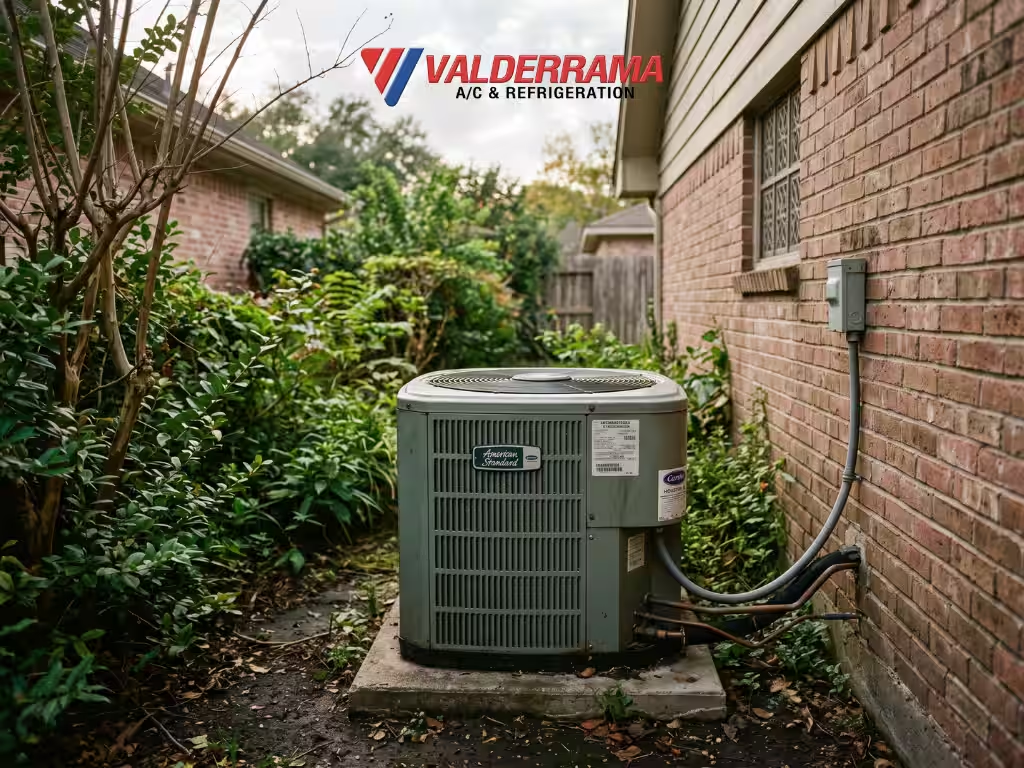
The Houston Factor: How Environmental Strain Dictates Your Equipment Investment
Specifying and deploying central climate networks in Southeast Texas requires managing extreme environmental stresses that standard northern systems never face.
Houston’s heat and humidity place extreme strain on AC systems. Because our local real estate requires near-continuous cooling for up to ten months out of the year, home comfort networks run on massive, continuous operational duty cycles. Our dense coastal humidity forces your building’s internal evaporator coils to wring out hundreds of gallons of raw liquid condensation every single day.
If a mechanical contractor throws an undersized or cheap single-stage system into a humid local property without performing a proper building energy audit, the new system will short-cycle constantly or run indefinitely. This leaves your indoor rooms feeling cold, sticky, and clammy while accelerating mechanical component wear and driving your monthly utility bills to astronomical levels. To ensure your investment operates reliably, the equipment must be robust enough to withstand our specific local climate realities.
Real Cost Breakdown: Houston HVAC Project Categories in 2026
We believe in open financial communication across all interactions. Every property features unique structural configurations—such as roof access lines, existing duct runs, and specific electrical panel capacities.
Below is a realistic look at standard, code-compliant central climate replacement investments across the Greater Houston market:
| System Tier & Description | Average Installed Price Range | Best Suited For |
| Standard Efficiency (14 – 15 SEER2 Single-Stage) | $5,500 – $8,500 | Budget-conscious property owners, rental properties, or mild-use layouts. |
| High Efficiency (16 – 18.5 SEER2 Two-Stage System) | $8,800 – $13,500 | Average local homes seeking a balance of lower utility bills and robust humidity control. |
| Super High Efficiency (19 – 23+ SEER2 Variable-Speed) | $14,500 – $22,000+ | Large multi-story properties, high-end custom builds, or maximum long-term energy savings. |
| Ductless Mini-Split Configuration (Multi-Zone) | $3,500 – $14,500 | Properties without existing ductwork, targeted room additions, or localized office zoning. |
Major Financial and Technical Drivers
- System Tonnage (Cooling Capacity): A larger property requires a higher cooling capacity (measured in tons). Moving from a 2-ton system to a heavy-duty 5-ton system alters the raw copper tracking, compressor size, and manufacturer cost.
- Ductwork Modifications and Installation: If your building’s internal sheet-metal or flexible air-distribution paths are unsealed, collapsed, or uninsulated for modern high-airflow standards, repairing or replacing them typically adds $2,100 to $5,000 to the total project scope.
- Thermostat and Building Automation Options: Integrating your new network into modern smart building controls or multi-zone digital balancing systems shifts the implementation cost but maximizes programmatic energy conservation.
5 Signs Your Property Needs a Complete HVAC Replacement
Before you approve another expensive temporary repair, check your utility infrastructure for these five indicators of terminal system wear:
- Ramped Up Monthly Operating Costs: Your building’s utility metrics reveal a steep, unexplained surge in energy use compared to the same operational months over previous years.
- Frequent, Expensive Technical Fixes: You are consistently paying premium emergency diagnostic fees to patch recurring electrical faults, failed capacitors, or worn blower fans.
- The System Relies on Obsolete R-22 Refrigerant: If your unit was built before 2010, repairing simple leaks is no longer cost-effective due to the global chemical production ban on Freon.
- Severe Indoor Moisture and Mildew Backups: Stagnant air or recurring water stains along acoustic ceiling tiles and vents point to a permanent breakdown in your system’s moisture-removal capacity.
- Terminal Mechanical Component Failures: Your core compressor pumps or primary heat exchangers are permanently locked up, cracked, or grounded out.
If you manage a business storefront, warehouse facility, or corporate real estate portfolio, handling an infrastructure upgrade requires deep commercial scale. We highly encourage property managers to browse our dedicated commercial HVAC service page to see how custom B2B mechanical engineering optimizes your corporate capital expenditure lifecycles cleanly.
Why Professional B2B and Residential Craftsmanship Matters
A code-compliant heating and cooling installation is a highly technical, regulated assignment that requires deep engineering depth.
Our professional process goes far beyond simple physical box swaps. We perform precise ACCA Manual J load calculations to size equipment exactly to your property’s thermal footprint, verify that your high-voltage electrical panels can handle the starting current without tripping, configure proper fresh-air intakes, and execute comprehensive airflow testing.
To ensure your investment operates smoothly for the next two decades, we make sure your system’s internal pressure curves track perfectly with your structural design. Cutting corners with an uncertified handyman to save a few dollars upfront can introduce severe insurance liability gaps, void your manufacturer protections, and result in permanent system short-cycling.
Why Choose Valderrama A/C & Refrigeration?
We understand that commercial facility managers and busy property owners have zero margin for error when managing their infrastructure assets. When you partner with our local Texas team, you secure:
- Guaranteed, Line-Item Invoicing: The written quote we deliver is the exact price your business or household pays—no sudden administrative markups or hidden surcharges.
- Fully Licensed Mechanical Experts: Our background-checked technicians are comprehensively insured and specially trained to engineer heavy commercial networks and advanced residential systems.
- Turnkey Engineering Management: From initial heat-load calculations to final municipal code filings and tax incentive sign-offs, we handle your comfort management flawlessly.
FAQ: Navigating Houston HVAC Replacement Costs
Q: Can I finance a new heating and cooling system upgrade?
A: Yes. We provide access to several flexible consumer and corporate lending platforms. Modern plans feature $0 down payment incentives, promotional 0% interest financing windows, and affordable monthly payments ranging from $75 to $250+ to fit your budget seamlessly.
Q: How much will a modern high-efficiency system lower my monthly electric bills?
A: Upgrading an outdated, ten-year-old 14 SEER system to a modern, code-compliant 18 SEER2 or variable-speed system can lower your cooling energy consumption by up to 30% to 50%. Over time, these utility savings directly offset your upfront installation costs.
Q: Do modern HVAC upgrades qualify for federal tax incentives or local rebates?
A: Yes. Under current energy frameworks, qualifying high-efficiency SEER2 heat pumps and central cooling split installations allow you to claim up to $2,000 in federal tax credits, alongside immediate cash-back incentives from local Texas utility providers.
Q: How long does a standard home or building HVAC installation take to finish?
A: For a standard change-out where existing ductwork is reused, our expert field crews can typically complete the physical installation, pull a deep system vacuum below 500 microns, and commission the system within 6 to 10 hours to minimize disruption.
Q: Why are cheap, undocumented HVAC replacement quotes highly risky?
A: Unusually low quotes usually mean the contractor is installing unbranded or gray-market hardware, skipping city safety permits, using uncertified labor, or neglecting vital airflow load calculations. This invariably leads to early compressor component failures and voids your factory parts warranties.
Protect Your Capital Budget and Restore Total Comfort Today
You do not have to put your tenant relationships, operational continuity, or property assets at risk by managing your property’s heating and cooling through guesswork. Securing a clear, engineered roadmap of your actual how much does a new hvac system cost baseline gives your home or enterprise the ultimate competitive advantage: the absolute peace of mind that comes with a perfectly balanced, code-compliant climate network built to perform flawlessly year-round.
At Valderrama A/C & Refrigeration, we are your local comfort advocates. We provide honest flat-rate pricing, exceptional technical diagnostics, and a total commitment to keeping your property safe, dry, and highly efficient.
Ready to upgrade your building’s efficiency and secure an honest, upfront quote?
Request Your Custom, Line-Item System Replacement Estimate Now!
Call our support group today at (281) 974 – 4599 to arrange an expert technical review of your property’s climate assets!