
A standard 2,000-square-foot property typically requires between 3.5 and 4.0 tons of central cooling capacity. However, the exact sizing cannot be determined by square footage alone; it requires a code-compliant Manual J load calculation analyzing insulation values, window types, and regional humidity strains.
The Guesswork That Hiddenly Restricts Your Comfort
It is a heavy, blinding Tuesday afternoon in Southeast Texas. You walk over to your wall-mounted digital thermostat, adjust the cooling target down to a comfortable 72°F, and wait for your home to cool down. But within just seven minutes, the outdoor condenser unit shuts down with a heavy thud. The thermostat reads the correct temperature, yet your living room feels uncomfortably cold, damp, and clammy. Within another ten minutes, the system abruptly fires back up again, repeating this exhausting loop all day long.
This frustrating phenomenon is known as short-cycling, and it is almost always caused by one hidden mistake: an improperly sized central air conditioner.
When homeowners prepare to invest in a new cooling layout, they naturally search online for a straightforward baseline, asking exactly how much hvac tonnage for 2000 sq ft home layouts require. Unfortunately, relying on generic internet charts or quick rule-of-thumb multiplication rules will often lead to a major system imbalance. Let’s break down the underlying physics of HVAC tonnage, see how our regional climate alters equipment demands, and look at how professional load calculations protect your financial investment.
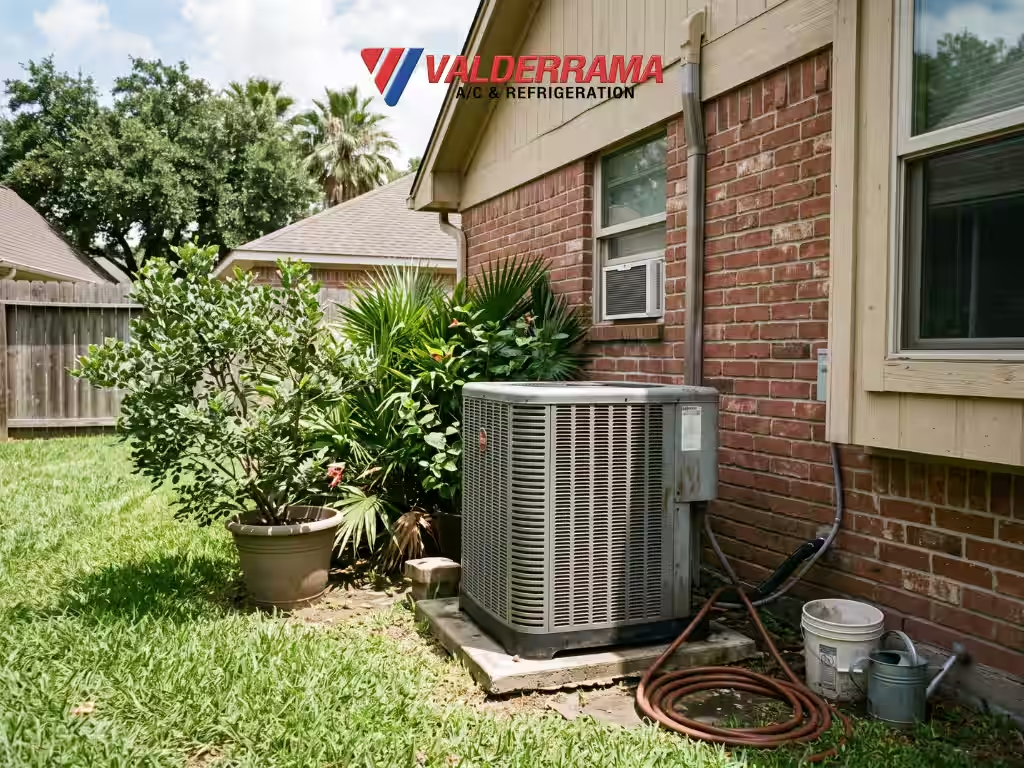
The Houston Factor: Why Dense Coastal Moisture Rips Apart Generic Sizing Rules
If you live in a dry climate like Arizona, sizing an air conditioner is relatively straightforward—you calculate the sensible heat load (air temperature) and add raw cooling power. But operating a central comfort system in Southeast Texas is a completely different engineering challenge.
Houston’s heat and humidity place extreme strain on AC systems. Because our local cooling season routinely stretches across nearly ten months of the year, a central system here manages a massive “latent heat load.” This means your air conditioner cannot simply focus on dropping the actual temperature reading on your wall; it must continuously pull hundreds of gallons of raw liquid water vapor from your indoor air supply every single week.
If a contractor uses a basic northern calculation chart, they might tell you that a 3-ton unit is plenty for a 2,000-square-foot space. While that system might keep a home cool in Ohio, a 3-ton unit in our hot climate will run continuously for 18 hours straight without ever satisfies your thermostat, burning out its compressor valves early.
Conversely, if an inexperienced technician sells you an oversized 5-ton system thinking “bigger is better,” the unit will blast cold air into your rooms so fast that it satisfies the thermostat in minutes and shuts off before the indoor evaporator coils can wring out the ambient moisture. This leaves your home feeling like a cold, sticky cave and sets the stage for toxic mold growth inside your dark attic duct pathways.
The Science of Tonnage: Moving Past Square Footage Rule-of-Thumbs
To understand how an air conditioner is sized, it helps to break down what an HVAC “ton” actually means. A ton of cooling capacity does not refer to the physical weight of the metal box sitting in your yard.
One ton of HVAC capacity equals the ability of a system to remove 12,000 BTUs (British Thermal Units) of heat energy from a property in one hour. Therefore, a 3.5-ton system removes 42,000 BTUs per hour, while a 4-ton unit removes 48,000 BTUs.
While old-school installers used to guess capacity by allocating 1 ton of cooling for every 500 square feet of living space (which lands a 2,000-square-foot home at exactly 4.0 tons), modern building science rejects this approach. Every home functions as an independent thermodynamic envelope. Two identical 2,000-square-foot properties can require completely different tonnages based on their architectural configurations, orientation to the sun, and structural sealing.
5 Critical Sizing Factors That Determine Your Property’s True Tonnage
When our licensed technicians size a system for your property, we look past your raw square footage numbers and evaluate five critical structural elements:
- The Orientation and Shading of Your Real Estate: A property with large, unshaded windows facing directly west absorbs significantly more solar heat energy than a structure shaded by mature local oak trees.
- The Quality and R-Value of Your Insulation: Homes built with modern spray-foam insulation hold conditioned air tightly, requiring significantly lower tonnages than historic properties utilizing thin fiberglass batts.
- Window Panes and Architectural Glazing: Older, single-pane aluminum window frames let in massive amounts of outdoor radiant heat, while modern double-pane Low-E glass filters out solar rays effectively.
- Ductwork Integrity and Thermal Leakage Rates: Sheet-metal or flexible duct loops running through a blistering 130°F unconditioned attic space introduce major thermal losses if they are unsealed or poorly insulated.
- Daily Indoor Occupancy and Heat-Generating Equipment: Every occupant in a home naturally radiates roughly 400 BTUs of heat per hour, and high-end kitchens or computer servers add to the internal thermal load.
If you manage a business storefront or light industrial space, calculating these technical load lines is even more complex due to strict fresh-air ventilation building codes. We encourage business coordinators and commercial facility operators to browse our primary commercial HVAC services to discover how precision load balance maps eliminate energy waste across large business footprints cleanly.
The Danger of Guesswork: What Happens When Sizing Fails?
Before you sign a contract for a new central air conditioner or heat pump, it is crucial to recognize the long-term operational costs of improper structural sizing.
The Consequences of an Oversized System
- Rapid Short-Cycling Fatigue: Turning on and off repeatedly subjects your starter capacitors and compressor motors to intense mechanical stress, cutting your system’s functional life span in half.
- High Indoor Relative Humidity: Because the system shuts off before running a full 20-minute cycle, it fails to drop indoor moisture levels below the critical 60% mold threshold.
- Inflated Daily Power Draws: Electric motors pull their highest amperage current during the first 60 seconds of startup; running constant short cycles drives your monthly utility bills through the roof.
The Consequences of an Undersized System
- Non-Stop Equipment Operation: The system will run continuously during hot afternoons without ever dropping your room temperatures down to your thermostat setpoint.
- Accelerated Component Breakdown: Constant operation causes internal lubrication oils to break down from intense heat, leading to locked compressor pumps and burned-out blower motors.
- Frozen Indoor Evaporator Coils: A system starved of proper heat-load capacity will drop its internal refrigerant temperatures below freezing, turning your indoor coil into a solid block of ice that completely blocks airflow.
How Professional Technicians Right-Size Your HVAC Investment
To guarantee your long-term comfort and protect your home equity, we utilize a rigorous, software-driven process called a Manual J Load Calculation, which is fully certified by the Air Conditioning Contractors of America (ACCA).
Our field crew measures your entire thermal envelope—inputting your precise ceiling heights, wall insulation densities, floor configurations, and regional weather parameters into a thermodynamic engine. This precise calculation provides a detailed line-item readout of the exact BTUs your property sheds in the winter and absorbs in the summer.
With this data in hand, we select an outdoor condenser and matching indoor air handler that satisfy your load lines perfectly, ensuring your system runs long, efficient, and smooth cycles that lower your power consumption.
Why Choose Valderrama A/C & Refrigeration?
We don’t believe in low-value visual walk-throughs, hidden fees, or high-pressure equipment sales scripts. When you choose our family-owned team to handle your home’s climate infrastructure upgrades, you receive an elite tier of professional support:
- Guaranteed, Line-Item Project Estimates: The written quote we hand your family is the exact price you pay—no sudden markups, surprise administrative fees, or hidden padding.
- Licensed Texas Engineering Specialists: Our field technicians are background-checked, comprehensively insured, and systematically trained in modern variable-speed inverter physics and ACCA sizing metrics.
- Turnkey Home Comfort Protection: From initial heat-load data logging to final municipal code inspection filings, we keep your building safe, dry, and highly efficient through any season.
FAQ: Navigating Houston Home HVAC Sizing Realities
Q: Can I replace my old 3.5-ton AC unit with a 4-ton unit just to get extra cooling power?
A: No. You should never increase your tonnage without a complete Manual J load calculation verifying that your existing ductwork can handle the extra air volume. Forcing a 4-ton system’s airflow through a duct loop engineered for a 3.5-ton unit will skyrocket your static pressure, create loud air noises, and quickly destroy your blower motor.
Q: What is a variable-speed inverter compressor and does it help with improper sizing?
A: Yes. Traditional air conditioners are either 100% on or 100% off. Modern variable-speed inverter systems can scale their output dynamically anywhere from 25% to 100% capacity to match your real-world heat load. This flexibility allows a 4-ton system to scale down to 1.5 tons on milder days, maximizing home dehumidification and cutting utility costs.
Q: How does a high SEER2 rating alter my system’s true cooling capacity?
A: SEER2 measures energy efficiency, not raw cooling capacity. A 4-ton system rated at 14 SEER2 removes the exact same amount of heat as a 4-ton system rated at 20 SEER2. However, the 20 SEER2 system utilizes significantly less electricity to achieve that cooling, lowering your monthly utility costs.
Q: Will installing premium whole-home dehumidifiers allow me to downsize my AC tonnage?
A: Yes. By installing a dedicated whole-home dehumidifier to handle your property’s latent moisture load, your air conditioner can focus strictly on dropping air temperatures. This can allow you to drop your AC sizing by a half-ton, lowering your upfront equipment costs and maximizing system efficiency.
Q: How long does a standard Manual J load calculation take to finish?
A: For most standard 2,000-square-foot properties, our certified technicians can completely measure your home’s thermal envelope and run the calculations in under 45 to 60 minutes right during your diagnostic visit.
Take Complete Control Over Your Home Comfort and Efficiency Today
You do not have to live with a clammy home, weak airflow, or worry about unexpected equipment breakdowns because a contractor used guesswork to size your system. Securing an engineered, code-compliant baseline of exactly how much hvac tonnage for 2000 sq ft home ecosystems require gives your household the ultimate operational edge: the absolute peace of mind that comes with a perfectly balanced comfort network built to handle our toughest seasons flawlessly.
At Valderrama A/C & Refrigeration, we are your local corporate and residential comfort advocates. We provide upfront line-item pricing, high-caliber technical diagnostics, and a total commitment to keeping your property safe, dry, and highly efficient.
Ready to drop your energy bills and ensure your new system is sized perfectly?
Schedule Your Precision Manual J Load Calculation Now!
Call our local support team right now at (281) 974 – 4599 to speak with a licensed system sizing engineer today!