
As a general rule, you should replace a standard 1-inch pleated air filter every 30 to 60 days. While the generic industry baseline is 90 days, factors like multiple household pets, chronic seasonal allergies, and heavy summer cooling seasons heavily reduce a filter’s effective lifespan, requiring more frequent changes.
The Invisible Stranglehold on Your Home Comfort
It is a blinding, heavy Tuesday afternoon in the middle of a prolonged Southeast Texas summer stretch. You walk over to your central digital thermostat and confirm it is set to a comfortable 72 degrees, but the air coming out of your ceiling supply registers feels remarkably weak, sluggish, and lukewarm. Worse yet, you notice fine particles of dust dancing in the sunbeams, and your family members are dealing with sudden, persistent sneezing fits—even though you just dusted the furniture yesterday morning.
Many property owners view the air filter as a minor cosmetic accessory that can be safely ignored for months at a time. In reality, a neglected, debris-saturated filter acts exactly like a tight mechanical blindfold over your entire heating and cooling network.
When you look up how often to change hvac filter tracks online, you aren’t looking for a vague, one-size-fits-all answer. You need an honest, realistic blueprint based on your lifestyle, your system type, and our demanding regional environment. At Valderrama A/C & Refrigeration, we manage home comfort loops with a technical engineering focus, helping you maximize system efficiency while completely clearing out indoor air pollutants.
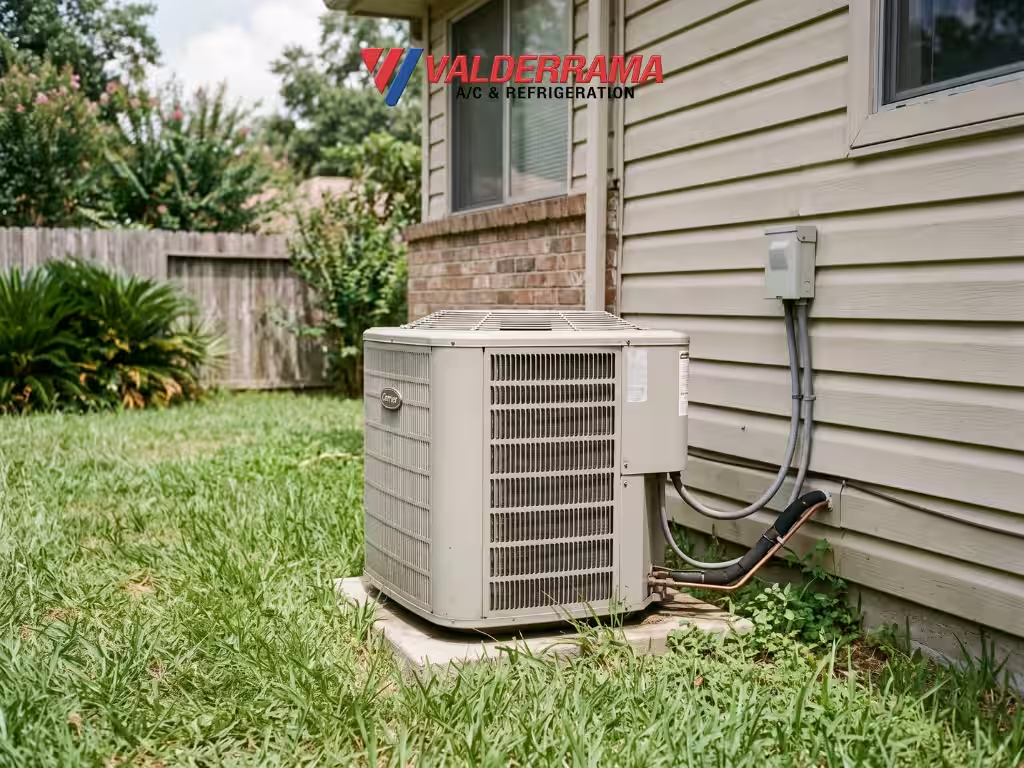
The Houston Factor: Why Dense Coastal Humidity Cuts Filter Lifespans in Half
Operating a central air filtration network in Southeast Texas presents intense environmental strains that traditional systems in northern states never encounter.
Houston’s heat and humidity place extreme strain on AC systems. Because our local cooling season routinely runs for up to ten months out of the year, your central system moves massive volumes of warm, moisture-laden air through dark duct lines every single hour. When our heavy spring pollen explosions, highway smog, and indoor pet dander hit your air handler, they come into direct contact with high relative humidity.
This moisture causes loose airborne dust to damp down, clump together, and form a thick, sticky mud cake over the face of your air filter. If this dirty barrier isn’t extracted and replaced, your variable-speed blower motor has to work twice as hard to draw air. This drives your monthly electricity costs to alarming levels and can cause your indoor evaporator coils to quickly freeze over into a solid block of ice.
30, 60, or 90 Days? The Real-World Lifespan Breakdown
The type of filter you buy and the occupants inside your real estate dictate your exact structural replacement schedule. Let’s look at the true target timelines based on modern home environments:
The 30-Day Cycle: High-Activity Environments
- Household Profile: Homes with multiple long-haired pets (like Golden Retrievers or Huskies), active indoor smokers, or family members suffering from severe asthma and chronic seasonal allergies.
- Filter Type: Basic 1-inch fiberglass mesh or lightweight pleated filters. These filters have limited storage capacity and clog rapidly under heavy particle loads.
The 60-Day Cycle: The Average Family Metric
- Household Profile: A standard suburban family home with one short-haired pet and typical weekly foot traffic.
- Filter Type: Standard 1-inch or 2-inch pleated filters rated at MERV 8 to MERV 11. This frequency provides an excellent balance between structural air purity and system airflow safety.
The 90-Day Cycle: Low-Demand Spaces
- Household Profile: Single occupants with zero indoor pets, or vacation properties and real estate assets that remain vacant for long stretches of the year.
- Filter Type: Premium 1-inch electrostatically charged pleated filters running under minimal daily system runtimes.
The 4-to-5-Inch Media Filter Exception: If your home features an advanced, deep-bed cabinet enclosure housing a 4-inch or 5-inch thick media filter, these robust systems feature massive surface areas. They are engineered to last 6 to 12 months before requiring a professional technical swap.
5 Signs Your Home Air Filter Is Completely Saturated
Your central climate network will show clear warning indicators when its filtration system has reached an absolute dead-end:
- Weak or Diminished Vent Airflow: The indoor blower fan is running at high speed, but you can barely feel air movement coming out of your registers.
- Rapid Dust Accumulation Across Rooms: A thick layer of fine gray particles forms on your electronics and tabletops within 48 hours of a deep cleaning.
- Surging Monthly Energy Bills: Your power statements reveal an unexplained, steep upward trend compared to the same weather patterns last year.
- A Distinct “Ghostly” Whistling Sound: A high-pitched whistling or flapping noise echoing from your return air grilles whenever the system cycles online, signaling the fan is starved for air.
- Allergy Flare-Ups Indoors: A sudden spike in morning sniffles, eye irritation, and congestion while spending time inside the property.
If you manage a business storefront or a light commercial asset, managing these airflow restrictions requires a deep operational focus to prevent business downtime. We highly encourage facility managers and commercial coordinators to browse our primary commercial HVAC systems service to see how custom B2B planned maintenance loops eliminate energy waste across large business footprints cleanly.
The Hidden Damage: What Happens When You Neglect Your Filter?
Before you delay your next filter swap, it is crucial to understand the long-term mechanical damage that a choked return line inflicts on your heating and cooling hardware:
- Frozen Evaporator Coils: When a filter chokes off airflow, your indoor coils are starved of heat. The refrigerant temperature inside the tubes plummets below 32°F, transforming your indoor air handler into a solid block of ice and knocking your cooling grid completely offline.
- Blower Motor Burnout: Your system’s fan motor must spin harder to force air through a blocked filter. This continuous electrical resistance causes the motor windings to overheat, leading to an expensive mechanical failure.
- Terminal Compressor Failure: Restricted airflow prevents liquid refrigerant from boiling off fully inside your indoor coil. This liquid refrigerant travels backward down the line and floods your outdoor compressor pump, destroying the mechanical heart of your system early.
A 60-Second Routine to Inspect and Change Your Filter
To protect your equipment assets and guarantee code-compliant indoor air purity, implement this simple monthly inspection routine:
- Kill Power at the Thermostat: Always switch your system to “Off” before sliding a filter out. If the fan stays running, loose dust and debris will be sucked directly into your open motor cabinet.
- Check the Airflow Direction Arrow: Look closely at the small arrows printed on your new filter’s cardboard frame. Always install the filter with the arrow pointing toward the air handler or furnace blower fan, never toward the room.
- The Quick Window Light Test: Hold your old filter up to a bright lamp or window. If the light cannot easily penetrate through the pleated fabric mesh, the filter is completely saturated and must be thrown away immediately.
- Date the Frame: Use a dark marker to write the exact installation date right on the outer cardboard edge so you can track your family’s real-world usage metrics at a glance.
Why Choose Valderrama A/C & Refrigeration?
We don’t believe in superficial diagnostic walk-throughs, hidden fees, or high-pressure equipment upselling scripts. When you partner with our local Texas team to secure your home’s climate infrastructure, you receive an elite tier of professional support:
- Upfront, Fixed Flat-Rate Invoicing: The written estimate we deliver before any physical mechanical or electrical work begins is the exact price you pay—no surprise add-ons or hidden fees.
- Licensed Texas Technical Experts: Our field crews are background-checked, comprehensively insured, and systematically trained in advanced airflow dynamics, static pressure metrics, and building environmental sciences.
- Turnkey Home Asset Protection: From simple scheduled maintenance optimizations to complete multi-zone system engineering, we ensure your building runs cool, safe, and entirely pristine through any season.
FAQ: Navigating Home Air Filtration Realities
Q: Can a high MERV filter rating actually damage my residential HVAC system?
A: Yes. MERV measures how tightly a filter traps fine particles. While a dense MERV 13 or HEPA filter removes exceptional amounts of allergens, it also creates high static pressure resistance. If your system’s ductwork or blower fan wasn’t explicitly engineered to handle that density, it will choke your system’s airflow and overheat your blower motor early.
Q: Is it safe to wash and reuse a standard disposable pleated air filter?
A: No. Disposable cardboard filters utilize specialized paper and electrostatically charged synthetic fibers that break down instantly when exposed to liquid water. Attempting to wash them will destroy their structural composition, ruin your filtration capacity, and promote rapid indoor mold growth.
Q: Why is my brand-new air filter turning black after just a single week of use?
A: If a clean filter turns dark gray or black rapidly, it usually points to a hidden gas line leak, a high volume of burning scented candles, unsealed attic ductwork pulling in dirty insulation soot, or active mold reproduction inside your dark air handler compartments.
Q: Do premium whole-home air purifiers eliminate the need for standard filters?
A: No. Whole-home in-duct purifiers and UV germicidal lights work in tandem with your filters—neutralizing microscopic biological viruses and odors while your standard filter handles the heavy lifting of capturing large dust, lint, and hair tracks.
Q: Does my system’s air filter require more frequent changes during the winter?
A: If our local Texas winter drops into a severe freeze and your central heat pump or furnace runs continuously for days to protect your home, you should check the filter. Increased runtime means the system processes a much higher volume of air over a shorter period.
Reclaim Complete Control Over Your Property’s Airflow and Purity Today
You do not have to live with sluggish vent airflow, thick layers of dust, or worry about unexpected equipment failures because your system is suffocating behind a dirty filter frame. Securing a reliable understanding of exactly how often to change hvac filter lines gives your household the ultimate edge: the absolute peace of mind that comes with a perfectly balanced, clean, and highly efficient comfort network built to perform flawlessly for decades to come.
At Valderrama A/C & Refrigeration, we are your local corporate and residential comfort advocates. We provide honest upfront pricing, high-caliber technical diagnostics, and a total commitment to keeping your property safe, dry, and highly efficient.
Ready to maximize your system’s lifespan and optimize your indoor air quality?
Schedule Your Comprehensive Property Performance Assessment Now!
Call our corporate support group right now at (281) 974 – 4599 to get an expert service vehicle heading straight to your driveway!